Showing posts with label hvac. Show all posts

Tuesday, November 29, 2011

Roman Cab Ride


The Fear of Open End Pricing & Getting Take For a Ride

Have you ever arrived in a city and worried about the cost of a cab from the airport into town?  Try it in a foreign country where you can't speak the language.  In my case, the foreign country was Italy.

My wife, in-laws, and I left Dallas at 7:00 p.m. and arrived in London the next morning.  After clearing European customs, we spent the next several hours in Heathrow Airport's Terminal 5, which may be the only airport terminal in the world where it's enjoyable to spend a few hours.  Late in the afternoon, we caught a flight for Rome and arrived, wrung out from traveling, at Rome's Leonardo da Vinci-Fiumicino Airport in the evening. 

Upon arriving, we discovered that the in-laws' 50 pound duffle bag was waiting while our luggage stayed in London, adding frustration to weariness.  We completed the necessary forms with British Air and hit an ATM before figuring out how to get to the apartment we rented for the week.

We planned on taking a taxi to the apartment.  The guidebooks all recommend taxis from the airport to take advantage of the fixed 40 Euro rate for four people and luggage.  By contrast, an airport shuttle to the main train station in Rome costs 11 Euros per person.  Not only is it more expensive, but once you're at the station, it's still necessary to figure out how to navigate the subway and bus system (or take a taxi) to get to your final destination.  As a party of four the cab was a no-brainer.  In fact, I never really considered anything else.

At the cab stand, I learned the flaw in my plan.  The fixed rate was to central Rome only.  The apartment was in a neighborhood located outside of "central" Rome.  When I tried to argue that the apartment was still in Rome, the guy at the cab stand's English started to disappear.  I felt like we were getting played.  Though our apartment was closer to the airport than central Rome, cab stand guy said it was going to cost us more to get there.    

"How much more?" I asked cab stand guy.

He shrugged and held out his hands out to his side as his English suddenly improved.  "Could be 80.  Could be more."

I did some quick math.  At 1.4 Euros to the Dollar that was $112 bucksplus.  Plus how much?  I didn't know.  

"You want a private driver?" cab stand guy asks.  "You save money.  You share a ride."

Cab stand guy motioned to a guy standing beside an unmarked van and engaged him in an fast dialogue, where the apartment's street was mentioned several times.  

Unmarked taxis are not recommended by the guidebooks.  

"Avoid unmarked, unmetered taxis," warns guidebook author, Rick Steves.  "These guys will try to tempt you away from the taxi-stand lineup by offering an immediate (rip-off) ride."

They didn't need to tempt us.  Cab stand guy was doing it for them.

"Quanto?" I asked, showing cab stand guy I memorized a few phrases in Italian.  This was a mistake.

"Cinquantacinque," he said.  I wasn't sure if this was either five, fifteen, fifty, or five hundred.

I switched back to English.  "How much?"

"Fifty-five."

Standing there, wrung out from travel, irritated by the lack of luggage, hungry, and uncertain, I had two choices.  We could take an official taxi that would cost who knows how much or take the unmarked one that cost a flat 55 Euros.

The driver of the unmarked taxi was better dressed and cleaner cut than the taxi drivers.  His van looked in better shape than the official taxis too.  He had an official looking photo ID hanging from a lanyard around his neck.

I bucked the advice of Rick Steves and went with the unmarked car.  We had to wait while he added other passengers heading to a hotel near our apartment, and then he took off.  The guy's driving skills lay somewhere between a NASCAR driver's and a lunatic's, but he got us to the apartment.

After helping take the luggage out of the van, the driver presented a card and offered us a special price of 50 Euros for the return trip.  At the end of the week we took him up on it.  We never even considered another option.

Standing in front of cab stand guy, I was in the same position as most consumers who are standing in front of your field service personnel.  They're anxious.  They're frustrated.  They're worried about getting taken for a ride.

The most reassuring thing you can do is offer them a fixed price.  It takes most of the uncertainty of the unknown away.  This can be complemented with a professional appearance, photo ID badge, and clean, late model service vehicle.  Each is a tangible clue that reassures the consumer about your legitimacy.

Some aspects of the service business are not hard.  Give a price upfront.  Wear uniforms.  Use ID badges.  Take care of your trucks.  Make the customer feel at ease.

Winning a customer's business the first time is the biggest challenge.  Once he's had a good experience with you, it's easier to do business with you again.  However, don't take it for granted.  Like our driver, ask for his business and give him a reason to call you back.  Give the customer a bounce back coupon or other repeat business incentive.


(c) 2011 Matt Michel

Friday, May 21, 2010

Your Brand Awareness is Higher Than You Think


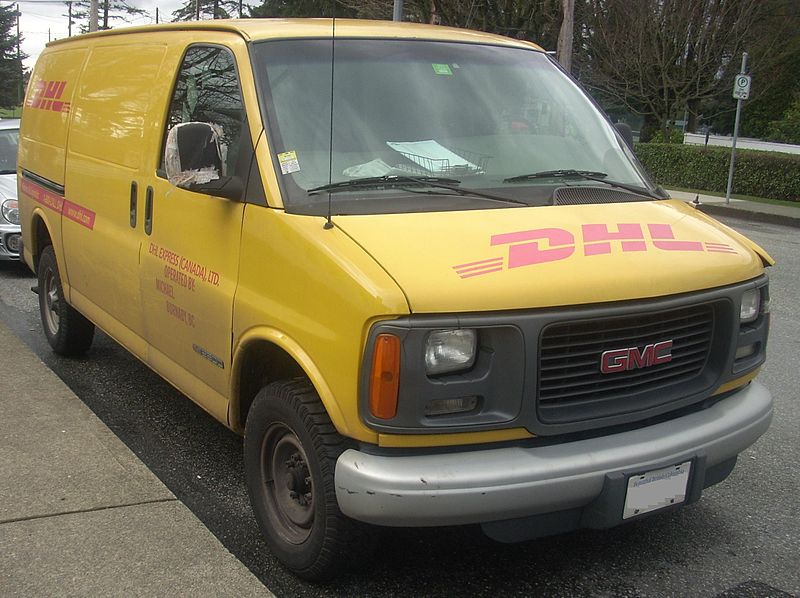
Ask most people what comes to mind when they think of DHL and the most common response is "big yellow trucks." Thus, it shouldn't be surprising to learn that those big yellow trucks helped give DHL a brand awareness of 60%, according to BtoBOnline.com, the web-based magazine for marketing strategists.


Of course, it wasn't just the trucks. After 20 years without any advertising, DHL launched a $60 million advertising campaign. The combination of the ads and the trucks vaulted brand awareness from 11% to 60% in two years. Since then, the company's scaled back on traditional advertising, but nevertheless has managed to maintain high levels of awareness.

To put things in perspective, DHL's brand awareness is double the brand awareness of the best known air conditioning manufacturer and four times the awareness levels of the second best known brand. While $60 million may seem like a lot of money, it's a drop in the bucket of the $108 billion radio and television advertising market. It's not enough to move the brand awareness needle that far, that fast. So how did they do it? Go back to the trucks.

Read the rest in Contracting Business Magazine

Thursday, April 8, 2010

The Hope in HVAC


This is from my latest Contracting Business Hotmail Column:

It was difficult to understand the voice on the other end of the phone. “I haven’t been able to work for six months,” he said. “My jaw’s wired shut.”

The contractor called me out of the blue after my phone number was listed in a magazine article. I think he called me because he was lonely. He relayed his story. The contractor was involved in a serious automobile accident. His truck was totaled and he wound up in intensive care. After he was released from the hospital he still couldn’t work.

As a single truck operator, he owned a job, not a company. When he couldn’t work, neither could his company. His wife was forced to refer his customers to a competitor. Goodbye customers. Goodbye business. In an instant, this contractor lost his business, much of his wealth, and most of his hope.

The phone call haunted me. Twenty years later I still think about it. At the risk of going “Bill Clinton,” I can still “feel his pain.”

I wondered how other contractors could avoid his fate. The answer to me seemed obvious. Grow! Build a business, not a job. Create a company that can exist without you. Anything else is not really a business.

Read the remainder of the article at Contracting Business.

Friday, February 26, 2010

"John Ward was broke in 1992, and then he met Frank Blau..."


That's the lead for an article in Contractor Magazine about John Ward. John is the magazine's 2009 Contractor of the Year. I wonder how many contractor stories start like John's... The contractor was broke, and then meets Frank Blau. The rest isn't history. It's profitability.

Read the story.

Thursday, February 18, 2010

Contractors Expect Growth in 2010


The Service Roundtable Contractor Expectation Index is 79 for 2010, indicating a broad expectation of business expansion (an index above 50 reflects positive expectations). The index includes the outlook of air conditioning, electrical, and plumbing contractors in the residential service market.

Expectations are strongest among plumbing contractors at 84. Electrical contractors follow closely at 83. Air conditioning contractor expectations are 78. When contractors who were expecting a better year in 2010 were asked why they see improvement, the most common answer was an increase in marketing on the part of the contractor, particularly to existing customers.

“We have increased our marketing dollars by 75%,” commented one contractor.

“We are concentrating more on marketing to our existing customer base and some social networking and website,” added another.

Contractors also cited an improving economy, pent up demand from homeowners delaying major expenses, the last year of the tax credits, better training, and pure hustle.

“I think the consumer will be slowly starting to spend money they have been holding onto in the past 18+ months,” noted one contractor.

“I am investing $100,000 in sales training to ensure that we will be ahead this year,” commented one contractor.

“We are learning new ways to sell smarter,” summed up another, “and have been actively working on bringing in new customers and retaining our existing customers.”

Not all contractors are optimistic. Those believing 2010 will be flat or in decline cite the economy, a lack of credit, consumers deferring major expenses, and Washington policy.

According to one contractor the economy will be down due to the “lack of consumer ability to get financed on simple consumer loans. Customers are fixing up rather than replacing.”

“Our customers either don't have a job and money to spend,” noted one contractor, “or even if they do have a job, they are still not spending their money.”

Contractors are less optimistic about the next month. Nevertheless, most expect month-to-month improvement in February and better February performance compared to a year ago. While contractors in the plumbing, electric, and HVAC trades appear to believe that more momentum will be generated as the year progresses, HVAC contractors are generally more pessimistic about February due to industry seasonality.

“February is always slower than January (less demand calls, fewer leads, etc.),” commented one contractor.


Service Roundtable Contractor Expectation Index

TotalHVACPlumbingElectrical
2010 vs 200979788483
Feb ’10 vs Jan ‘1060596267
Feb ’10 vs Feb ‘0972707971

The index is based on survey responses of 191 Service Roundtable members during the last week of January 2010. The survey is calculated by taking the percentage of contractors expecting growth and adding half the percentage expecting no change. An index of 50 reflects expectations for flat growth, over 50 reflects expectations of expansion, and less than 50 reflects expectations of contraction.

The Service Roundtable is the world’s largest private contractor business alliance with members in the electrical, plumbing, and heating and air conditioning trades. Members come from all 50 states, Canada, Australia, Europe, the Caribbean, and South Seas Islands. For more information visit www.ServiceRoundtable.com or call 877.262.3341.

Wednesday, February 3, 2010

Contractors Expect Growth in 2010

The Service Roundtable Contractor Expectation Index is 79 for 2010, indicating a broad expectation of business expansion among the home service trades (an index above 50 reflects positive expectations). The index includes the outlook of air conditioning, electrical, and plumbing contractors in the residential service market.


Expectations are strongest among plumbing contractors at 84. Electrical contractors follow closely at 83. Air conditioning contractor expectations are 78. When contractors who were expecting a better year in 2010 were asked why they see improvement, the most common answer was an increase in marketing on the part of the contractor, particularly to existing customers.

Read the press release at the Service Roundtable.

Tuesday, December 29, 2009

3 Questions With Steve Saunders


This edition of the 3 Questions For Small Business Podcast features Steve Saunders from Tempo Air and TexEnergy Solutions. Steve gives background on the spin off of Tempo Air from TD Industries, using an ESOP. Next, Steve addresses how Tempo has responded to the contraction of the new construction market by addressing home energy. Finally, Steve offers his projections for the future direction of the air conditioning industry.

Click Here to Listen

Tuesday, December 15, 2009

Mauzy New Customer Gift Card & Referral Card


Matt Mauzy from Mauzy Heating & Air Conditioning in San Diego shared the gift card program he uses with new customers and gave me permission to write about it.

The card works as a bounce back coupon and a referral card. The packaging causes it to stand out. The card is heavy plastic, like a retailer gift card. The bounce back coupon is on one side and the referral card on the other. The card is inserted into a small gift folder. Check it out...


This is the front of the gift presentation folder.


This is the back of the gift folder.


This is the open folder.


The front of the card with a $50 bounce back coupon.  Note that the card is "transferrable."  It can be given to a friend.


The back of the card is the referral program.  Note how the customer is directed to enter the information online, generating a referral lead.

If you do not want to go to the trouble and expense of creating a gift card, but like the concept, create a business card version.

Monday, December 14, 2009

Don't Keep It a Secret


Whenever I take shirts to my cleaners, the cleaners replaces any missing or broken buttons. Your cleaners probably does the same, but do you know about it?

The reason I'm aware is the cleaners sticks a small tag through the matching button hole and staples it. The tag declares, "Replaced Button."

The tag is a reminder of a small added value the cleaners provides. Without the tag, I might forget about there was a button missing or even be aware of it. The cleaners won't get extra credit if I don't know about it. Hence, the tag.

I bet there are little things that you do for your customers they are unaware of. A plumber might clean a faucet aerator. An HVAC technician might notice the time on a digital thermostat is off an hour due to a change in daylight savings time and set the time correctly. An electrician might casually test a GFCI outlet. A pool technician might cut out a small section of pool sweep hose where it's leaking.

Whatever the action, you won't get credit if you don't tell the customer what was done. Note it on the invoice and write, "No charge." And don't just note it. Tell the customer too. Think of the impact if the cleaners employee told me that three buttons were found missing and were replaced at the time I picked up my shirts.

When you do a good deed, even if it's part of the routine, don't keep it a secret.

Monday, November 23, 2009

Inside Contracting: How Top Contractors Win In HVAC


Inside Contracting, a new book from Service Nation Press, is a must for any HVAC contractor's library.


Why Go It Alone?

Building a successful HVAC service company is not without its challenges. Inside Contracting provides you with the collective wisdom of dozens of the country’s most successful contractors and consultants to help you meet those challenges head-on. This includes top HVAC professionals like Drew Cameron, Roger Costner, Ken Goodrich, Charlie Greer, Bob Haak, Dave Holt, Martin Hoover, Jeff Lee, Jeff Marl, Steve Miles, Tom Piscitelli, Matt Prazenka, Bob Ring, Ben Stark, Stan Stupor, Larry Taylor, Aaron York, and dozens of others.

The tips, tricks and traps within provide real-life examples—not unproven theories—of how to profitably grow, manage and one day, exit your business.

Inside Contracting presents the best practices of leading contractors including...

  • Internet Advertising: SEO vs. SEM

  • Private Use of Company Vehicles

  • Private Labeling - Selling Your Brand

  • Advice for the Desperate Contractor

  • Buying a Company: Valuing The Customer List & Phone Number

  • Buying Service Vehicles

  • Hiring Salespeople

  • Manufacturer Co-op

  • Reducing Yellow Page Advertising

  • Woman in HVAC Sales and Service


Build a Bridge From Your Island

One of the most challenging aspects of running a business is the isolation. Sometimes it feels like you are alone on an island with all of your employees. They’re looking to you for all of the answers, but there’s nowhere and no one for you to turn to. Inside Contracting is like a bridge from your island to top HVAC contractors and consultants from across the country.

Inside Contracting plugs you into the real world experience of other contractors representing hundreds of years of contractor experience. Learn from their best moves and biggest mistakes.

Inside Contracting is an essential reference in every HVAC contractor’s library. Topics include:

  • Advertising

  • Angry Customers

  • Branding

  • Callbacks

  • Co-op

  • Financing

  • Green Marketing

  • Hiring

  • Internet Marketing

  • Lead Generation

  • Management

  • Marketing

  • Mergers & Acquisitions

  • Motivating

  • Networking

  • Pricing

  • Referrals

  • Sales

  • Scheduling

  • Service Agreements

  • Succession Planning

  • Technician Selling

  • Women in HVAC

  • Yellow Pages

Inside Contracting is only $32.95 (contractors enrolled in Roundtable Rewards receive a $5 rebate) plus shipping & handling. Texas residents, unfortunately, get zapped for sales tax.

Click Here To Order Your Copy Today! Order several. It makes a great Christmas or Hanukkah present.

Inside Contracting was built from the Service Roundtable’s 85,000 record knowledge-base management archive.


About The Service Roundtable

Formed by leading contractors, the Service Roundtable® offers an incredible array of HVAC and Plumbing best practice tools and diverse communication outlets to help you generate leads, close more sales, market your company, recruit technicians and plumbers, price for profit, manage your service agreements, and create an exit strategy.

Every week contractors receive new tools to supplement the Service Roundtable's vast library of existing brochures, letters, post cards, pricing calculators, consumer newsletters, sales sheets, marketing guides, training tools, and more. They tap into the company's 24/7/365 Industry Roundtables with leading contractors and consultants. They save with the company's Roundtable Rewards buying program. And they get it all for just $50 a month! Learn more about the site HERE. Call toll free 877.262.3341 and request a FREE private tour.

The Service Roundtable is the one contractor business alliance without a long-term contract. CLICK HERE to try it for a month. If you don't like it, quit. It's that simple. Of course, you won't quit. Once you see all of the value, you'll wonder how the Service Roundtable is able to do it. Then, you'll wonder how you ever survived without it. Go ahead. Give the Service Roundtable a one-month trial.

Tuesday, November 17, 2009

The Social Media Leap of Faith


My new "Rant" is out...

Social media is sweeping the business community. Ford Motors, for example, is spending 25% of its marketing budget on digital/social media. Yet most contractors are slow to adopt it. Stunningly, there's apparently no shortage of industry skeptics willing to speak out and shout down digital technologies, proclaiming everything this side of email to be a fad.

Read More At ContractingBusiness.com

Monday, October 12, 2009

Is HVAC the Best Sales Job in the Country?


Auto industry analyst Ed Wallace doesn't come out and say it, but when he notes that financial sales incentives for new car salespeople are about half of what they were in 1975, he implies that reduced compensation has had an adverse impact on industry sales professionalism. Read Ed's column here.

Selling cars is a challenging job, but not more challenging than, say... selling air conditioners. Car salespeople deal with buyers who walk onto the car lot with a mix of apprehension and antagonism, but also with desire.

With HVAC, the buyer's desire is certainly less and maybe missing altogether. Plus, the location of the HVAC sale is the buyer's home turf. And, HVAC financing programs aren't as good. In contrast to the auto industry, the typical HVAC company doesn't have a financing manager who works with 20 different lenders to get C-credit prospects financed.

Yet, in contrast to the car industry, HVAC sales income has increased over the last 20 years. With industry standard commissions of 8% to 10%, company advertising, company generated leads, and escalating prices (thank you government) leading to fatter commissions, selling HVAC may be one of the more lucrative sales jobs around.

Sunday, October 11, 2009

It is time to "Just Do It"


Just Do It

I was sitting in a hotel restaurant in Nashville, at breakfast the Saturday of Comfortech. There were a few contractors who were eating but many had left and were on their way home while there were still two “learning” sessions that day (missed opportunities for them). I was by myself and had finished reading the newspaper; my ears were perked to several of the conversations that the contractors were having with associates at adjoining tables. It was no surprised that everyone that was just overwhelmed by the new ideas that they had received. They were fascinated by the success and growth of Morris-Jenkins Contractor of the year. They focused on the key points from earlier classes and they talked about the different things they learned at the social events from other peers and felt that it provided them with a wealth of insights.

Then it came, after all of the positive they had heard and learned the “Buts” and excuses started. For every good thing they talked about, they came up with a reason why these ideas would not work.

· We are too Small,

· We are too large,

· Our employees won’t change,

· The economy is bad, money is tight,

· We do not have or can not hire a person to do that.

· My customer will not accept those changes.

· Look at their results they are unbelievable, we could never implement that

Time after time I heard a great idea extinguished with a belief of an untruth. People who had spent thousands of dollars to attend this meeting of some the best contractors in country walking away thinking they could not achieve greater success. Have we been listen to the news too long where the negative message is the rule and the positive one is passed off as an aberration?

My favorite was “I am just not ready”. Do you think that the auto dealerships that were closed by GM and Chrysler were ready? My point is change is better when we decide to do rather than when forced upon us.

It’s time to take and Embrace the Nike mantra and “JUST DO IT”.

· You only need one reason to succeed and overcome obstacles and barriers “JUST DO IT”.

· It’s waking up with a focus that anything you believe in or conceive can be achieved “JUST DO IT”.

· Every journey starts with a single step and they do not require large strides “JUST DO IT”.

· Start with small ongoing step or increments to achieve the goal you are looking for “JUST DO IT”.

· It requires endurance and persistence, as life and running a business is a marathon not a sprint “JUST DO IT”.

· Once you start it, you finished it, you set milestones for way points and you hold to own deadlines. If you fail to meet your deadlines you impose on your self, then those you impose on others will be missed also “JUST DO IT”.

· Celebrate the wins no matter how small, no matter who it is “JUST DO IT”.

Change is always difficult, but is more frustrating when it pushed upon us. I had the opportunity to share with contractors last month the benefits of social networking and also some great offerings with based upon “cloud computing” better known as Software as a Service (SAAS). We showed people how to leave behind Microsoft and email servers and get access to products at a fraction of the cost. Professional tools that are now accessible to 3-10 man shop. We also shared how social networking cements a relationship with a client and keeps them loyal. All were pretty nifty things and to my surprise very much unknown to majority of attendees. There are many small steps that can be taken, most at low cost and little effort. Some actually will save you money on software.

This was one idea, but there were ideas on sale person recruiting, Marketing in conjunction with a social cause, Building and system performance, Private labeling just to name a few. You also will have ideas and opportunities pop up at dealer meeting, Local Trade association and even chamber meeting. Do not miss the chance to build your company up to be one step ahead of the competition. Just pick one thing and “JUST DO IT”. After you have that one going well time to “JUST DO IT” again with another idea. In many cases you have nothing to lose as the ideas already have a proven track record.

All this drove home and reinforced what I had seen and heard at lunch the day before. I had sat down with Mark Matteson (author and speaker http://bit.ly/BhgS3 ) and we had a contractor sit down next to us. We asked him, which was the best class he had attended. He said the one service agreement was great, but he could not implement any of the ideas for fear of losing customers. He stated that when he went to a prepaid service program he thought he had lost 200-300 clients, because he requested payment in advance to get the best price. We proposed that he considered a tiered service contract program, (good, better, best) and explained it to him. To which he said it would not work for him because he was not comfortable with it. Mark then ask him to fold his arms in front of him, ask him to note which arm was on top. Then Mark instructed him to fold his arms again but with the other arm on top. Mark asked him how that felt, the response was uncomfortable, ask him if there was anything that was really different between the two position other than comfort and the answer was no. The point is that you can change, it is not going to be comfortable, it will take effort, and you will make mistakes and sometimes lose a customer. In the long run you can become a better business person and more successful. You have to choose to do what others fail to do. Accept that you have to be uncomfortable from time to time to make the changes.

“JUST DO IT”.

Best Regards

Matthew R Prazenka


Abacus Business Leaders, LLC

Driving Shareholder Value through Hands-on Leadership

500 Lake Cook Rd. Suite 350. Deerfield, IL 60015

877.412.2228 x1030

mprazenka@abacusbl.com www.abacusbl.com

Tuesday, October 6, 2009

I Wanna Market Me (The Contractor's Song)

This is for HVAC contractors. You just gotta watch it...

Friday, October 2, 2009

How An HVAC Contractor Rebranded As Aloha Aire


In 2002, Texarkana contractor, John Price rebranded his company. After a trip to Maui, he changed his company name from "Price Service Company" to "Aloha Aire."

The new name spoke to the market about island breezes, comfort, and paradise. It promised benefits.

Changing a company name is not a casual move. If the existing name has equity in the market, the move should be made slowly.

John's decision was easier because his company was relatively new. He established it just seven years earlier. Plus, he put more effort into building equipment manufacturer brand equity over those seven years than in building equity for his own company's brand.

If John had 70 years of local presence rather than seven, he probably would have hesitated more. As it was, he didn't have much to lose.

Still, John proceeded methodically. He sought the council of friends who owned businesses. For months, he and his wife Marilyn considered the change. Then, he acted.

John launched Aloha. At first, he tried to operate both old and new brands, but quickly dropped that idea. Marilyn drafted a letter to existing customers explaining why the company was making the move.

If nothing else, employee and owner enthusiasm for the new brand won the day. They were excited and got the customers excited. Over time, the Aloha brand has grown and established a position.

Aloha Aire is a fun brand. Technicians wear Hawaiian shirts with embroidered company logos. Reach John's voice mail and he answers, "Aloha."

In time, John dropped the manufacturer identity entirely and focused exclusively on the Aloha brand. Today, he's even branded his own line of heating and air conditioning equipment through the Retail Contractor Coalition.

Shortly after rebranding, Aloha Aire's local brand awareness began to exceed Price Service Company's brand awareness. It's continued to grow by leaps and bounds. This shouldn't be a surprise. Look at the trucks.

If the shipping company DHL could build a national brand awareness of 60% by 2007, largely on the basis their fleet of delivery vehicles, how much brand awareness can John build for Aloha? Certainly it's more than he built when the Price Service Company brand was subordinated to an equipment manufacturer's brand.

Aloha's brand promise is "Come home to paradise." And the company delivers.

Wednesday, September 9, 2009

24 Ways To Boost Your Average Ticket - Part V


22. Dispatch Service Personnel With Discrimination

Should you discriminate among your employees? Well, not in hiring or promotion with regard to race, creed, national origin or other stupid and illegal means. But do discriminate based on effectiveness and potential.

When I worked for a marketing research and consulting firm, I was stereotyped by the company president. For example, when a metal building manufacturer wanted help, I was the go to guy. I got the construction and high tech clients. I got the clients who made computer chips, but not those making potato chips. Food, fashion, travel, entertainment, and other marketing oriented companies went to other client service personnel who had a better chance of converting the prospects into clients.

As a salesperson, I didn’t like it very much. I felt locked out of the best revenue opportunities. The only way around it was to make myself available when other client service personnel were not. Working late and taking calls when no one else was around helped me land People, In-Style, and Time Magazines. It got me an opportunity with the Oxygen Channel (our first meeting was scheduled on 9/11 - great timing).

I didn’t like being discriminated against. No one does. Yet, I could see the logic behind the assignments. I also knew I had to create and take opportunities to prove myself so I would get better prospects going forward. It made me work harder. It will make your field service personnel work harder too.

Technical field service is no different than marketing client service. If a homeowner with a 20-year old furnace calls in with a no-heat call do you send the next available technician or wait to send a technician who will do the best job communicating with the homeowner about a replacement option as well as the repair option? The answer is, “It depends.”

If the outdoor temperature is 10 degrees, the homeowner’s not going to wait for Ubertech. You need to position someone as fast as possible. That presents an opportunity for the eager, but less polished professional. If he does well when given a good call, he’ll get better calls in the future.

Of course, if it’s early fall weather and the customer has been loyal for years, she might be patient enough to wait for you to send the best guy. Meanwhile, the less polished tech gets another tune-up. Sorry.

So send the plumber who passionately believes in tankless water heaters on calls where a water heater tank is leaking. Mr. Tankless will have more success upgrading the purchase than Mr. Standard Recovery Storage Tank Fan.

Match your field service personnel with the available opportunities that will maximize company revenue. Some contractors hesitate to maximize revenue through dispatching. The most successful do not.


23. Use Props, Pictures, And Diagrams In Sales Presentations

When Lennox Industries introduced the Pulse furnace, it was a dramatic departure from conventional, condensing gas furnaces and carried a huge premium. On the outside, the furnace looked like any other. They were all big rectangular boxes (and still are). Yet, the heat section was very different.

To help introduce the furnace to contractors, someone in the marketing department had thousands of desktop models of the heat section made in a prototype shop. Each was a miniature of the heat section, complete with a blinking light to simulate pulse technology in action. It was a cool desktop toy and that’s where most of them went: to someone’s desktop.

A few enterprising contractors recognized the potential of the model as a sales aid. They used the models on sales calls to explain the differences between the Pulse and other furnaces. The models helped these contractors close more sales, and more high-end sales.

The models were effective because two people out of three are visual learners. This doesn’t mean they can’t learn by listening to the glib speeches of your sales and service personnel, only that most people learn better when they can see props, pictures, and diagrams.

If possible, bring the product into the home to let the homeowner see, touch, and hold it. Plumbers can hold a faucet by the spout and hand it to a homeowner so the homeowner can feel its weight. Plumbers can show homeowners the differences between a faucet sold through the trade and one sold through the retailers (i.e., lots of plastic parts).

HVAC contractors can hold a thermostat or humidistat against the wall for the homeowner to envision. They can cut sections from tubular and clamshell furnace heat sections. They can show a section of a spiny fin aluminum coil, 3/8” copper coil, 5 or 7 mm coil, and or microchannel coil. Cut a filter drier in half and glue clear plastic over it to show homeowners how this protects the compressor.

Electrical contractors can show homeowners the differences in higher quality switches and ballasts with lower end products offered in the big box retail stores. Pest management companies can display rodent bait boxes and traps. Pool contractors can use tile samples, sections of pool filters, and more.

All companies can use diagrams to show homeowners a typical plumbing, electrical, HVAC, or pool systems. Diagrams can also be used to show homeowners the scope of work, such as a pest control technician using a diagram of a home to highlight for a homeowner where he will apply treatment.

Brochures and fliers can help people visualize products that are too large for samples, that can’t be easily shown, or that require action. Examples include termite infestations, dust mites, air infiltration, pool fountains, and so on.

Show people the products or illustrate the service and you will close more sales and sell more add-ons.


24. Pre-frame

Pre-framing is pre-selling. It’s setting the stage. It’s like foreshadowing in a book. Some pre-framing works over the course of a service call. Some takes years. Everyone in your organization should pre-frame.

Your dispatcher, if unable to sell a service agreement, should pre-frame an opportunity for the technician. The dispatcher says, “Mr. Homeowner, after the repair’s complete, would it be okay if I ask our technician to show you how you can save another 15% off today’s work with a service agreement?”

If the homeowner agrees, it’s an open invitation to explain how a service agreement saves money and will likely result in a new service agreement customer.

The technician can also pre-frame. He says, “Mr. Homeowner, here’s some literature about a few products other customers have expressed interest in. Take a look at them. After I finish the repair, would it be okay if I go over these and why they’re a good idea?”

Ask politely and it’s tough to refuse. If the homeowner agrees, he or she is more likely to scan, if not read the literature. The homeowner starts to think about the add-on products and accessories, making the discussion to follow much more natural.

As Ron Smith points out in his book, HVAC Spells Wealth, technicians can always pre-frame forward. The technician sets the stage for future work by noting wear and tear, telling homeowners that they’re going to need to take action in the not-to-distant future.

Pre-framing sets up sales conversations and makes them more comfortable, which is especially important for service personnel who might be uncomfortable with the notion of selling in the first place.

© 2009 Matt Michel

More next time

Wednesday, August 26, 2009

Tales from the Little Red Truck: The Amazing Infiltrometer Letter

In the late 80's and all through the 90's, I was working with Ahron Katz at A-abc Appliance & AC in Dallas. Ahron was one of the pioneers of the service industry, and one of the first in our area to offer flat rate pricing, same day service and a 100% satisfaction guarantee -- as well as host of other unique and innovative marketing ideas. Our tagline, "The Company with the Little Red Trucks" was so effective at helping build our brand that marketing experts like Matt Michel started watching us very closely. Oh yeah, and it made us lots of money.

The best response we ever had to a sales letter was a 1994 promotion for the amazing new Infiltrometer. It was sent out to our HVAC Maintenance clients (Preferred Client Club Diamond Card holders).

The letter drew an amazing 36% response!

Of course, we were offering a very valuable, FREE service to a very hot, relatively small and trusting list, but it certainly raised the bar for all our future mailers, and led to my life-long frustration with never coming close to that number again!

The letter got us in the door and our salesmen/techs did the rest. We averaged over $1,000 for every FREE call we ran (we didn't run every call we set up, for various reasons). If only our list had been bigger! We only had about 400 Diamond members at the time.

The letter is included here and, as you can see, we didn't concern ourselves with keeping it short or "easy to read." In fact it broke a lot of other design "rules" too; it had an extremely long headline in sentence-case, it used a sans-serif font for the body of the letter, it made extensive use of underlining, bold and exclamation points and it was kind of cramped, especially on page 1.

Despite all that, the letter worked. It worked because the reader believed what we wrote and trusted us to deliver. A lot of that was due to the ongoing effort we made throughout all our marketing to promote Ahron as THE expert in the field. It was an extremely effective strategy and I'll write more about it in future posts.

Thursday, August 20, 2009

Brit Plan To Live Without A/C Fails


A year ago, I wrote a Rant for Contracting Business titled, Is Air Conditioning The Next Tobacco? in response to Joe Klein's screed in Time Magazine, Kill Your Air Conditioning. Well, the Brits tried it. It didn't work.

The UK's Direct.Gov website makes the following recommendation:

You could cool your home naturally instead of using air conditioning, which can damage the environment:

  • create a breeze through your home by opening the windows at the highest and lowest points in the house, or on opposite sides of the house
  • when it’s very hot, open windows at night to let cool air in; close windows and curtains or blinds during the day to trap the cool air inside

The notion of cutting air conditioning is apparently quite popular among British elites.

"Opening a window," exclaimed a London Assembly member, "is the cheapest, most climate friendly way of cooling a building."

So how is the British Department for Energy and Climate Change, which is responsible for cutting carbon emissions nationwide, going to meet its goal of reducing department carbon emissions 10% by March? Why cut the A/C, of course.

"As part of our efforts to save energy over the summer," they announced, "we decided to turn off the air conditioning and open the windows."

It lasted three days...

One...

Two...

Three...

That's a whole 72 hours.

The UK's Daily Mail reported...

The trial was abandoned after three days because officials complained about noise from building works, security risks and "the wrong kind of breeze."

An internal memo said: "We have therefore decided to revert to air-conditioned cooling for the building."

Staff were told other "innovative ways" to reduce the building's carbon footprint would be looked at instead.

Environmental campaigners said the decision sent a terrible message to the rest of the country.

I've lived in southern England. It doesn't get all that hot. Even with London's urban heat island effect, it's still not that hot. The chart below shows average monthly temperatures from Weather.com.


And the committed environmental bureaucrats still couldn't take it more than three days.

Tuesday, August 18, 2009

The Increasing Status of the Service Trades


I read the following joke on Twitter the other day...

What's the difference between an investment banker and a pigeon?

A pigeon can still make a deposit on a BMW.

The recession certainly has knocked the pedestal out from under many financial and Wall Street types. Sure, they'll return to earning salaries and bonuses all out of proportion to their contribution to society soon enough, but for the time being the I-bankers' stars have dimmed.

Guess whose stars are getting brighter by the minute? People working in the trades. Frankly, this makes sense. Take two people of equal ability, send one to school and the other to work. The first earns a degree and takes an entry level job. Gradually, he advances up the corporate ladder, winning a wife, mortgage, and car payments along the way.

The second fellow learns his trade and eventually starts his own company. He stumbles a bit, but latches on to industry publications, conferences, and success groups. He figures out how to make money and does.

The corporatist may progress to the executive level, though most do not. Even so, he's constantly at risk of being right sized, down sized, outplaced, and left out through no fault of his own. Any wealth he accumulates comes from savings and possibly stock options.

The small business owner lacks the corporatist's 200 square feet of class A office space in a downtown high rise, located at the end of a 45 minute commute. Instead, he's got freedom. The small business owner largely controls his own destiny. He can build his business into anything he wants. And as he builds his business, he's building wealth.

Two men (or women) of equal ability. One builds a career. The other, a fortune.

And why does society hold the former in higher regard? Is it because he wears a uniform from Brooks Brothers instead of Dickies?

It seems that the pendulum is swinging. According to The Sun, British women no longer want stock traders, they want tradesmen...

YOU have probably looked for a plumber in the Yellow Pages before.

But now, if you're single and female, you're more likely to be looking for him in the dating pages.

Women in the UK are pulling the plug on romances with rich bankers in favour of picking up plumbers and brickies, according to a recent survey by dating site mysinglefriend.com.

Thanks to the recession, City boys in pinstripe suits are out. Girls want to hook handymen with a stable income as their Mr Right.

Now, if we can just win over the high school guidance counselors.

Sunday, August 16, 2009

HVAC, Plumbing, & Electrical Salary Data by Zip


MyOpenJobs is providing salary data based on the last 12 months of hiring by zip code, radius, experience level, and type of job. According to the website...

The MyOpenJobs network of sites gather salary data from over 100,000 job seekers each year in the HVAC, Plumbing and Electrical Industries. The survey results include Residential, Commercial, Industrial, Building Facilities & Maintenance, Wholesale Supply and Engineering sectors.

Check it out.