Showing posts with label sales. Show all posts

Thursday, March 11, 2010

Did He Really Say That?: Improving Technician Communication


“Why can’t she understand,” the tech thought to himself. He was frustrated. He was trying to explain a problem to the homeowner, but this lady didn’t get it.

The tech knew he wasn’t the world’s most eloquent person, but what more was there to say? He looked at his feet. The homeowner made him uncomfortable. And now she was getting angry… at him! He started to explain it again, but why bother. She wasn’t going to understand. His attempt to say more broke down into a mumble.

Didn’t she know that he had other calls to make? He couldn’t stand around all day repeating the same thing over and over again. Why couldn’t she understand?

Read More At Contracting Business

Friday, February 19, 2010

Begging For Benefits


If someone asks why he should buy your product, can you provide a concise reason? Not everyone can.

At a green building conference, I stopped by a booth featuring organic roofs. Essentially, the vendor was selling plastic bins to hold soil. Put the bins on the roof and voila, it’s a “green” roof.

I thought it was interesting because it created a way to get some use out of unused space. For one of our company team building activities we participate in a local community garden. At lunch, we walk over and tend the garden, which yields tomatoes, squash, peppers, spices, etc. It would be more convenient if the garden was on our roof, though I doubt the hundred year old roof could handle the weight.

I listened as the exhibitor explained the product to a prospect. The prospect asked why he would want a green roof.

“You just gotta want it,” explained the exhibitor.

“Does it cut my utility costs?” asked the prospect.

“Not really.”

“Does it save me money?”

“Well, no.”

“Why would I want a green roof?”

“You just gotta want it.”

The prospect was practically begging the exhibitor for a benefit. I was surprised a green roof didn’t cut utility expense, but maybe it’s better to simply paint the roof white. Nevertheless, I thought of several benefits on the spot. The exhibitor might have talked about the value of a roof garden for making a property more attractive for tenants or employees, asked how much it costs to buy open space near his building, and if he believed that created a roof garden might not make the property more valuable. I bet ten minutes effort with Google would turn up dozens of other benefits that are better than, “You just gotta want it.”

How about you? Do you have a concise reason why someone should do business with your company? How about a second and third reason? How about the products and services you sell?

Wednesday, February 10, 2010

Rapidly The Truth Will Out - Today's Technology Means Realtime Fact Checking


The speaker was addressing nearly a thousand people and tossed out an incredible statistic. "Incredible," in this instance, does not mean fantastic, amazing, awesome, or terrific. It means lacking credibility, not believable, or improbable.

It smelled. I immediately shut down, tuned out, and hit the Internet to fact check the statistic on my web-enabled phone. I quickly found that it was overstated by a factor of four. It took a few minutes longer to confirm the error with a separate source.

I realize that it's possible the speaker simply misspoke. In fact, he probably misspoke. Yet while the speaker wasn't using a teleprompter, his remarks did appear carefully prepared, reducing the possibility of an unplanned error. Perhaps he ad-libbed poorly.

Whether planned, purposeful, or not, the error called every other statistic he cited into question. In fact, it made everything he said suspect.

If I was listening to the speaker ten years ago I might have doubted the stat, but couldn't check it real time. Today, it's different. As web-enabled phones become more ubiquitous, more people have the ability to fact check public speakers, advertising, and salespeople. And once found providing erroneous information, everything else is suspect.

Salespeople who are caught misstating facts on a presentation, blow their credibility with one person. It's worse for advertisers. Advertisers may find their ads the subject of blogs. It's even worse for speakers. They may find their error exposed before the crowd real time if the conference is being "tweetcast" on Twitter as more and more events are.

After confirming the correct statistic with a second source, I tweeted my finding using the conference hash tag. I don't know how many people were actively following the conference using Twitter, but at least a dozen were contributing to the tweetcast. I suspect others were following it remote because they couldn't attend the conference, and still others would search the hash tag on Twitter after the conference to read the tweetstream as a way of reviewing conference notes. The number of people engaged in a silent, running commentary during events will only grow as more people discover and use the new technology.

Technology is changing the game. Speakers, advertisers, and salespeople have got to be sure about their facts and stats because it's easy for customers, prospects, and audiences to verify them and spread the word to others.

The best approach is to always use sources. An erroneous source isn't good, but it won't kill your credibility. If you have no source, state clearly that you're making an estimate or basing a claim on personal experience.

Shakespeare wrote, "at length the truth will out." With today's technology the Bard might written, "rapidly the truth will out."

Tuesday, December 8, 2009

Mirroring to Build Rapport


Have you ever just clicked with a prospect? Everything worked from the minute you met. It was an easy sale.

More than likely, you and the prospect share similar social styles. You have natural rapport. You click.

It's great when you benefit from automatic rapport. Too bad it only happens around one time in four. Most of the time, your social style conflicts with the prospect's.

When your style conflicts with the prospect, you don't click. Yes, you can still make a sale, but it's more difficult. In fact, when the salesperson's social style is in direct conflict with the prospect's style, the sale is made in spite of, not because of the salesperson's efforts.

So what can you do? Well, one simple technique is mirroring. Match the prospect's verbal tone and pacing. Match the body language. If the prospect leans back, you lean back and vice versa.

Be careful not to mirror so closely that you mimic the prospect. If noticed, mimicking can be perceived as an insult.

Frankly, it's uncomfortable to mirror a prospect. It's counter to your natural social style, but it improves your focus on the prospect and helps the prospect become more comfortable. Give it a try.

Monday, November 30, 2009

Neil Rackham on Selling in a Recession


Many sales professionals have read Neil Rackham's book SPIN Selling. Rackham advocates a consultative sales approach with lots of questions. His approach is well suited to process sales and high ticket items.

Rackham was interviewed by Gerhard Gschwandtner, the publisher of Selling Power Magazine about selling in a recession. Rackham noted that the instinctive reaction of salespeople is to sell price during a recession. This is a mistake.

More than they want a good price during a recession, people want to avoid risk. In fact, people will spend more for a safer solution. Successful salespeople should show people how their solutions minimize risk.

This reminds me of a research study on air conditioning purchases in a Midwestern market that I read conducted 20 years ago. The conventional wisdom was that high efficiency was more likely to be purchased by affluent homeowners. After all, the affluent consumers had the money. Yet the study revealed that middle class and lower middle class homeowners were more likely to buy high efficiency. At the time, it was a head scratcher for me. It didn't make sense. My boss, Garry Upton, instantly knew the reason high efficiency sold better to people with less money.

"They can't afford a mistake," Garry said.

In other words, they didn't have enough money to risk losing it by making a bad decision. They would spend a little more to buy what was perceived was a better product. It was an inherent form of insurance.

In the interview, Rackham noted that salespeople feel pressured to close and communicate their nervousness to the prospect. In risk-avoidance mode, the prospects shy away from the nervous salesperson. Rackham advises sales managers to relieve some of the pressure on salespeople so that they feel safe in their jobs and communicate confidence, which is interpreted by the prospect that the company is a safe bet.

I agree with Rackham to a point. The absence of sales incentives usually results in lazy salespeople. By nature salespeople are usually money motivated and competitive. Keep them incented.

Rackham also notes that companies go into panic mode during recessions and flail around, mistaking activity for results. They chase every opportunity, but fail to devote the time needed to win more. Rackham suggests focusing on the sales you can win, not winning more opportunities.

But how can you identify winnable sales opportunities in advance? Personally, I advocate the pursuit of every possible opportunity to the point where you can determine the potential for a payoff. Always pursue those you have a good shot at winning. Drop the long shots unless pursuing them doesn't interfere with higher payoff activities. This works in good times and bad.

In summary, Rackham's advice is sound...

  • Minimize buyer risk

  • Be confident, not nervous

  • Focus and optimize your effort.

By the way, if you're in sales and haven't read SPIN Selling, you owe it to yourself to pick up a copy.

Wednesday, November 25, 2009

33 Approaches to Overcoming the Price Objection


The most feared objection for most salespeople is the price objection. The salesperson might hear a prospect state outright that it’s too expensive, that someone else offers similar products or services for less, or simply demand a better number.

The price objection never goes away. I’ve encountered it when selling HVAC products in the high rise plan & spec market (about as competitive as it gets), when selling pure intangible products like consulting services, and when selling a product (i.e., the Service Roundtable) that costs 1/20th of some competitive products. People complain about price at every price level. The absence of any price objections is taken as a sign by most business people that the price is too low.

Price objections are normal, expected, and even welcomed by top sales professionals. Stated objections can always be addressed and overcome. It’s the unstated ones that concern most professionals.

Price objections are really buying signals. The prospect is telling you he’s ready to buy if you’ll give him a little help. According to research studies, price is the most important factor in roughly one out of seven purchases. In six out of seven, it’s secondary! Nevertheless, the price objection remains the most feared of all objections.

Here are 33 approaches to overcoming the price objection for in-home sales. Some are very similar and simply represent different ways of saying the same thing. Others are formulistic, like “feel, felt, found.” They come from different sources, such as Ziglar, Hopkins, Tracy, Novak, McCart, Greer, McCormick, Cunningham, Howard, Piscitelli, Cameron, and dozens of other sales professionals who have influenced me through the years. Each should be used situationally, based on your read of the prospect, your comfort level with the response, and your internalization of the response.

Pick a few that you like and practice. Make them yours. Adjust them for your company and industry. When appropriate weave stories around them. Ziglar tells a great story about buying a cheap bike for his daughter that broke after a few months and had to be replaced. He describes how he figured he better spend more for a bike that would last. He notes how his daughter rode the more expensive bike for years. He then drives the point home by breaking down the monthly cost of ownership for each bike.

Here are the responses…

  1. Really? My price is too high? [Then, shut up.]

  2. What do you mean by “too high?”

  3. If I may ask, what is your budget?

  4. Compared to…?

  5. Is price the only factor in your decision? Is it the most important factor?

  6. Okay, let me recap. We sat down and built this system together, taking into account utility costs / health concerns / comfort / safety / home value. We didn’t account for price. Is it more important that one of your other factors? What should we remove?

  7. This is a beautiful home. Since others in the area cost less, price must not have been the only factor or even the most important factor when you bought this home. Now, you’re faced with one of the most important decisions you’ll make for your home. You don’t want to make this decision based on price alone do you?

  8. It’s a fair price and I can’t lower it without taking something out of the job. Do we need to see what we can cut to meet your budget?

  9. I know this sounds trite, but it really is better to spend a little more than you planned to get what you want than to spend too little and risk losing everything [or being miserable for the next 15 years].

  10. If we can arrange for financing, would that make it more affordable / attractive / comfortable?

  11. Of course it is. Let me explain why.

  12. It’s true that the initial cost or first cost is higher, but when you factor in operating and maintenance costs over the life of the product, you’ll find a different story. First cost may be a little higher, but the total cost of ownership is far less.

  13. Why do you think it’s higher?

  14. That’s interesting. How do the price, products, and other companies you’re considering compare?

  15. Most companies in our industry have comparable net profit margins so price shouldn’t vary much from one company to the next. If it does, there’s a reason. Did you ever see the movie, The Towering Inferno? The movie is about a fire in a skyscraper. The fire started when project costs were running over budget and the electrical contractor cut costs by using lower quality wiring. It’s the type of thing few people would notice. Unfortunately, the wiring didn’t handle the load and short circuited, resulting in a devastating fire. I’m not saying that other companies are using substandard materials, but there’s got to be something different.

  16. You’re right. We do charge a little more. Do you know why? We’re worth it.

  17. If you can show me a cheaper proposal, I would be happy to match it item for item with identical warranties and guarantees.

  18. Years ago, quality expert Phil Crosby wrote a book entitled, “Quality is Free.” Crosby noted how higher quality pays for itself, the savings are hidden. Here the savings are breakdowns you’ll avoid, emergency service calls you won’t have to pay, and hassles you’ll miss. The point is that it’s worth spending more for better quality.

  19. I understand that my price may be a little higher. A long time ago when I started my company I made a decision. I decided I’d rather explain a higher price every now and then, than apologize for poor quality forever.

  20. Hmm. I suppose I could lower my price. What would you like me to take out to get the price down?

  21. You’re right to be concerned about the price you pay. It’s a big decision and most people can’t afford to make a poor choice. Do you think there’s a difference between our company and the others you’ve talked with?

  22. Do you want me to show you something cheaper?

  23. Yes, our price is higher but you won’t have any regrets with us. It’s why we offer such a strong guarantee. Isn’t it better to invest a little more than to invest too little and risk your entire investment?

  24. I understand how you feel. Mr. Jones, one of your neighbors felt the same way a year ago, but after buying he found that the added performance we delivered, the quality of our work, and the support we provided after the sale was worth far more than any money he might have saved with someone else.

  25. Yes, it is a little more expensive. It’s the best on the market. Don’t you and your family deserve the best?

  26. How much is the difference? You say that we’re $500 high? Well, this product carries an average life of 15 years. That works out to $33 a year or 64 cents a week. Isn’t it worth an extra 64 cents a week to get exactly what you want and do business with an established, reputable company like ours? After all, that’s what… a cup of Starbucks every month?

  27. Am I offering more than you want?

  28. It is a significant investment and not the type most homeowners make very often. But, you’re going to have to live with this decision for years. Isn’t it worth a little more to be sure?

  29. I bet you hear the same thing in your business. You know, I can probably get [high school kid / offshore programmer / Legalzoom or other website / etc.] for less than it costs to hire you. [Then, shut up.]

  30. I’m sure it’s tempting to select a company desperate for business and willing to work for less. However, may I suggest that anyone who charges more than a couple of hundred dollars less is probably either cutting corners or cutting profits? You don’t want the first and may not care about the second. You should. It’s a sad fact that a lot of companies in our industry close every year. A year from now you probably won’t remember what you paid but five years from now you may take great comfort from the fact we’re still around to honor our warranty.

  31. My price may be higher, but I offer you something no one else can match. Me. You get my personal service and attention now and in the future.

  32. If you don’t mind, let me ask, have you ever paid a premium for a product or service? Why did you pay it?

  33. I’m sure they believe they match up with us. When I was in junior high I loved baseball and looked up to one of the high school pitchers. This kid could do it all. I was sure he would go pro and pitch in the World Series. After practice he used to talk with us, telling stories about the home runs he hit and the batters he struck out. One day he bragged that he could strike out anyone. “What about Hank Aaron,” asked one of my friends.

    “Sure, I could strike him out,” he said casually. “I’d take him down with three pitches.”

    Wow, I thought. This kid was so good he could strike out Hank Aaron. A few years later, I was watching a home run derby on television when I remembered the comment about striking out Aaron and laughed out loud. There was no way he could’ve managed to get one strike. The greatest home run hitter of that day would have shelled him. The competition is a lot like this high school kid. I liked the kid and know he believed his boast when he made it. Likewise, I’m sure the other company believes they can match us. That doesn’t mean they can.

Do you have any you would like to add? Email me!

© 2009 Matt Michel

Monday, October 12, 2009

Is HVAC the Best Sales Job in the Country?


Auto industry analyst Ed Wallace doesn't come out and say it, but when he notes that financial sales incentives for new car salespeople are about half of what they were in 1975, he implies that reduced compensation has had an adverse impact on industry sales professionalism. Read Ed's column here.

Selling cars is a challenging job, but not more challenging than, say... selling air conditioners. Car salespeople deal with buyers who walk onto the car lot with a mix of apprehension and antagonism, but also with desire.

With HVAC, the buyer's desire is certainly less and maybe missing altogether. Plus, the location of the HVAC sale is the buyer's home turf. And, HVAC financing programs aren't as good. In contrast to the auto industry, the typical HVAC company doesn't have a financing manager who works with 20 different lenders to get C-credit prospects financed.

Yet, in contrast to the car industry, HVAC sales income has increased over the last 20 years. With industry standard commissions of 8% to 10%, company advertising, company generated leads, and escalating prices (thank you government) leading to fatter commissions, selling HVAC may be one of the more lucrative sales jobs around.

Tuesday, September 29, 2009

PreCall Planning With Linked In

Photo: Esparta

Matt Prazenka offered up a great idea at HVAC Comfortech. Use LinkedIn for pre-call planning.

Duh. This is so obvious, I can believe I didn't consider this before, but I didn't. I think of LinkedIn as a B2B resource, but it can also work for B2C.

If your CSR captures the customer's email address (and your CSR should) or if you receive a lead from an established customer, simply enter the email address into LinkedIn and check out the public profile. Look for clues about the prospect.

  • Does the prospect appear to value high-end products? Or does the prospect look like a value buyer?

  • What groups and organizations does the prospect belong to? Do you have any contacts with those groups? Do you have any affinity programs?

  • Do you have any LinkedIn contacts who are also contacts with the prospect? If so, can they shed insight or maybe, make a referral.

The profiles people provide to LinkedIn offer many clues that can aid a good salesperson. Plus, it only takes a few minutes to do the research.

Wednesday, September 16, 2009

"Vision Trumps All Other Senses"

Photo: Dreamglow

We recall information better when we see it. How much better? Try SIX TIMES better.

In his book Brain Rules, John Medina cites a study by LJ Najjar, about information recall. If we hear something, we remember 10% of it three days later. If we see something, we remember 35% of the visual. If we see and hear the information, we remember 65%. Adding a visual increases recall by a factor of six!

What does this mean for your company?


1. Marketing

Long copy's not dead. Remember, long copy still sells. Long copy, by itself, may even be effective. But it's not as effective as it could be. Graphics and/or images make marketing more striking and more memorable.

If someone is still peddling all-copy direct mail or newspaper ads to you, remind the ad peddler that we're living in the 21st century. We can do more with images today. It's easier than ever, though never easy. And we know it makes our marketing more effective. Tell the ad peddler to put more effort into his craft can come back with visually appealing, graphically exciting support for the persuasive, sales-in-print copy.


2. Training

If you want better recall of your training, add visual support. Seeing may or may not be believing, but it is remembering.


3. Coaching

What works for service meetings also works one-on-one. Maybe you won't whip out a computer and LCD projector when coaching individuals, but you can draw diagrams.


4. Managing

Rather than simply report performance numbers, create visuals. These can be as simple as a bar chart or pie chart. Charting performance improves recall and drives home the results.


5. Selling

In sales presentations, seek ways to make points visually. This can be through the use of props (mentioned in an earlier Comanche Marketing post), presentation books, sales literature, and/or physically pointing something out to the homeowner.

Note: I got the statistics from Medina's book by way of the following presentation. This is worth watching if you ever give a PowerPoint presentation.

Wednesday, September 9, 2009

24 Ways To Boost Your Average Ticket - Part V


22. Dispatch Service Personnel With Discrimination

Should you discriminate among your employees? Well, not in hiring or promotion with regard to race, creed, national origin or other stupid and illegal means. But do discriminate based on effectiveness and potential.

When I worked for a marketing research and consulting firm, I was stereotyped by the company president. For example, when a metal building manufacturer wanted help, I was the go to guy. I got the construction and high tech clients. I got the clients who made computer chips, but not those making potato chips. Food, fashion, travel, entertainment, and other marketing oriented companies went to other client service personnel who had a better chance of converting the prospects into clients.

As a salesperson, I didn’t like it very much. I felt locked out of the best revenue opportunities. The only way around it was to make myself available when other client service personnel were not. Working late and taking calls when no one else was around helped me land People, In-Style, and Time Magazines. It got me an opportunity with the Oxygen Channel (our first meeting was scheduled on 9/11 - great timing).

I didn’t like being discriminated against. No one does. Yet, I could see the logic behind the assignments. I also knew I had to create and take opportunities to prove myself so I would get better prospects going forward. It made me work harder. It will make your field service personnel work harder too.

Technical field service is no different than marketing client service. If a homeowner with a 20-year old furnace calls in with a no-heat call do you send the next available technician or wait to send a technician who will do the best job communicating with the homeowner about a replacement option as well as the repair option? The answer is, “It depends.”

If the outdoor temperature is 10 degrees, the homeowner’s not going to wait for Ubertech. You need to position someone as fast as possible. That presents an opportunity for the eager, but less polished professional. If he does well when given a good call, he’ll get better calls in the future.

Of course, if it’s early fall weather and the customer has been loyal for years, she might be patient enough to wait for you to send the best guy. Meanwhile, the less polished tech gets another tune-up. Sorry.

So send the plumber who passionately believes in tankless water heaters on calls where a water heater tank is leaking. Mr. Tankless will have more success upgrading the purchase than Mr. Standard Recovery Storage Tank Fan.

Match your field service personnel with the available opportunities that will maximize company revenue. Some contractors hesitate to maximize revenue through dispatching. The most successful do not.


23. Use Props, Pictures, And Diagrams In Sales Presentations

When Lennox Industries introduced the Pulse furnace, it was a dramatic departure from conventional, condensing gas furnaces and carried a huge premium. On the outside, the furnace looked like any other. They were all big rectangular boxes (and still are). Yet, the heat section was very different.

To help introduce the furnace to contractors, someone in the marketing department had thousands of desktop models of the heat section made in a prototype shop. Each was a miniature of the heat section, complete with a blinking light to simulate pulse technology in action. It was a cool desktop toy and that’s where most of them went: to someone’s desktop.

A few enterprising contractors recognized the potential of the model as a sales aid. They used the models on sales calls to explain the differences between the Pulse and other furnaces. The models helped these contractors close more sales, and more high-end sales.

The models were effective because two people out of three are visual learners. This doesn’t mean they can’t learn by listening to the glib speeches of your sales and service personnel, only that most people learn better when they can see props, pictures, and diagrams.

If possible, bring the product into the home to let the homeowner see, touch, and hold it. Plumbers can hold a faucet by the spout and hand it to a homeowner so the homeowner can feel its weight. Plumbers can show homeowners the differences between a faucet sold through the trade and one sold through the retailers (i.e., lots of plastic parts).

HVAC contractors can hold a thermostat or humidistat against the wall for the homeowner to envision. They can cut sections from tubular and clamshell furnace heat sections. They can show a section of a spiny fin aluminum coil, 3/8” copper coil, 5 or 7 mm coil, and or microchannel coil. Cut a filter drier in half and glue clear plastic over it to show homeowners how this protects the compressor.

Electrical contractors can show homeowners the differences in higher quality switches and ballasts with lower end products offered in the big box retail stores. Pest management companies can display rodent bait boxes and traps. Pool contractors can use tile samples, sections of pool filters, and more.

All companies can use diagrams to show homeowners a typical plumbing, electrical, HVAC, or pool systems. Diagrams can also be used to show homeowners the scope of work, such as a pest control technician using a diagram of a home to highlight for a homeowner where he will apply treatment.

Brochures and fliers can help people visualize products that are too large for samples, that can’t be easily shown, or that require action. Examples include termite infestations, dust mites, air infiltration, pool fountains, and so on.

Show people the products or illustrate the service and you will close more sales and sell more add-ons.


24. Pre-frame

Pre-framing is pre-selling. It’s setting the stage. It’s like foreshadowing in a book. Some pre-framing works over the course of a service call. Some takes years. Everyone in your organization should pre-frame.

Your dispatcher, if unable to sell a service agreement, should pre-frame an opportunity for the technician. The dispatcher says, “Mr. Homeowner, after the repair’s complete, would it be okay if I ask our technician to show you how you can save another 15% off today’s work with a service agreement?”

If the homeowner agrees, it’s an open invitation to explain how a service agreement saves money and will likely result in a new service agreement customer.

The technician can also pre-frame. He says, “Mr. Homeowner, here’s some literature about a few products other customers have expressed interest in. Take a look at them. After I finish the repair, would it be okay if I go over these and why they’re a good idea?”

Ask politely and it’s tough to refuse. If the homeowner agrees, he or she is more likely to scan, if not read the literature. The homeowner starts to think about the add-on products and accessories, making the discussion to follow much more natural.

As Ron Smith points out in his book, HVAC Spells Wealth, technicians can always pre-frame forward. The technician sets the stage for future work by noting wear and tear, telling homeowners that they’re going to need to take action in the not-to-distant future.

Pre-framing sets up sales conversations and makes them more comfortable, which is especially important for service personnel who might be uncomfortable with the notion of selling in the first place.

© 2009 Matt Michel

More next time

Monday, August 31, 2009

Men Are Less Bargain Conscious Than Women

Photo: ohadweb

An AdweekMedia/Harris Poll asked consumers what mattered more...

"Getting the very best bargain" or

"Getting the very best product or service"

Women and younger consumers are much more bargain conscious. However, a substantial number of consumers buy the best, regardless. How can you find out what people want?

It's simple. You ask them. In today's economy, everything is uncertain, including the sales process. Don't rely on what worked robotically in the past. Ask questions. Qualify. Trial close.


Friday, August 21, 2009

24 Ways to Boost Your Average Ticket – Part III


12. Offer a No-Breakdown Guarantee

Steve Miles, at Jerry Kelly Air Conditioning in St Louis, MO raised service agreement prices $25 during a downturn. Worried about the potential for price resistance, Steve offered a “no-breakdown guarantee.” Once a Jerry Kelly technician has performed a tune-up, the company would pay the repair costs for any breakdowns through the end of air conditioning season.

The customer response was immediate and dramatic. By the thousands, people loved the idea of the breakdown guarantee and gladly paid more.

The guarantee is not as risky as it seems. If the technician finds deficiencies in the customer’s air conditioner, these are noted. The customer can either authorized the company to correct the deficiencies or exclude them from the guarantee. Most opt to correct the problems, which results in additional work for Jerry Kelly.

Next, Jerry Kelly’s technicians are among the best in their area. They are unlikely to miss much under normal circumstances. The presence of the guarantee caused them to slow down and be even more thorough in their maintenance. Few problems, if any, were missed that jumped up and bit the company as the summer progressed.

The company did have to make a number of repairs for free, but the number was insignificant financially. Think about it. With the average repair in the air conditioning industry costing consumers between $350 and $500, Jerry Kelly will make money if fewer than one system out of ten breaks down in the following season after a comprehensive tune-up is performed.

Another benefit of the no-breakdown guarantee is its timing. The guarantee doesn’t take effect until the tune-up is performed. Normally, scheduling spring tune-ups is a hassle for an air conditioning company. People are busy, hard to reach, and scheduling air conditioning maintenance, even if aware of the need, is hardly top-of-the-list. The guarantee put a sense of urgency to the tune-up. The sooner the work was performed, the sooner the homeowner was covered against unpleasant repair expenses. Suddenly, homeowners were going out of their way to be available for tune-ups.

The no-breakdown guarantee drops added revenue straight to the bottom line with little accompanying risk. Steve Miles is excited about the program and tells everyone who will listen how it works, including direct competitors. Yet, few contractors and no competitors offer a similar program. Their response to the risk is emotional, rather than rational.


13. Create “Leave Ahead” Brochures To Give To Customers During Diagnostics


Few service company owners would send people into the field to make repairs without the proper tools and training. Yet, owners think nothing of sending service personnel into the field without sales and marketing tools and the training to use them.

Create informational brochures for service personnel to hand to customers at the start of a diagnostic or service call. The brochures should inform people about products and services your company offers in a dispassionate manner. Because they are handed out at the start of a service call, they’re called “leave ahead” brochures, rather than leave behind brochures.

Most service company owners would agree that the best opportunities for boosting average tickets are for field service people to sell add-on products and services during a service or maintenance call. After all, the customer’s already paid to get the truck and mechanic to the door. It costs less (or should) to sell the add-on today than a week from now.

Unfortunately, most service personnel are not very good at selling add-ons. They could be, but they hesitate to tell customers about all of the wonder opportunities the company provides. The best way to keep a customer from buying a product or service is to keep the customer in the dark about its existence. This is where the leave aheads come into play.

The brochures give the homeowner something to look at while the repair is performed. This can be an uncomfortable time for both homeowner and serviceperson. The homeowner is worried about the repair and cost, even if given a price upfront, and is uncomfortable with a stranger in the home. The brochure relieves anxiety by briefly focusing the homeowner’s attention away from uncertainty.

The mechanic may be comfortable performing a repair, but is uncomfortable with the homeowner who follows him around. The brochure helps redirect the customer away from the mechanic so he can get his job done.

Few homeowners are open to the possibilities of additional work until the current problem is addressed to their satisfaction. Once the repair is complete, the cost is known, homeowners are relieved and ready to consider other products and services. If the leave ahead brochure highlighted a problem the homeowner feels or something the homeowner desires, it’s natural to ask the serviceperson about it.

The mechanic only needs to answer the homeowner’s questions honestly to sell with conviction (assuming the mechanic believes in the product or service, which is where shop training comes in). Service personnel are great answering questions and sharing expertise.

Spend 50 cents per call to provide your people with leave ahead collateral that they are motivated to hand to homeowners to keep the homeowner occupied during the repair and you will invariably boost add-on sales over time.

Your effectiveness will improve if you focus on one or two common issues a month, train your personnel on the products and services you offer to address the issues, train your team on the homeowner benefits from your offering, run a limited time special promotion for the month, and focus that month’s leave ahead collateral on the issue and/or your offering.


14. Create A DVDs For Customers To Play During Diagnostics

A more modern version of the leave ahead is the leave ahead DVD. This offers you the opportunity to fully address an issue, such as water conservation, indoor air quality, comfort problems, carbon monoxide, termite infestations, power quality, salt water pool systems, and so on. Homeowners can better see the process and visualize the outcome when video is used.

Of course, creating a DVD is more expensive than creating a 3-panel brochure. However, mass producing DVDs isn’t much more costly than printing today. And with desktop video, it’s possible to create your own videos in-house. Your risk with DIY video is the result might bore the audience to tears. For this reason, it’s often better to hire a professional. If the budget is tight, consider hiring students from the closest college.

Once the DVD is mastered, it can be repurposed. The video can be uploaded to YouTube and similar sites, with links and tags pointing back to your company website. You can embed the video at your side.

The DVDs can be mailed to mailed to existing customers, offered as free public relations bait pieces, played and distributed during home shows, and sent to customers in advance of a replacement or remodel sales appointment.


15. Create A Page Listing All Options, Their Features, And Benefits For Quotes

One of the biggest reasons people fail to buy upgrades is a lack of awareness about the upgrades. Create a single page listing upgrade options for common repairs, for replacements, and for remodels. Include the features of the upgrades, the concurrent benefits, and the buyer’s investment (total and additional cost via monthly payments).

Options sheets serve three purposes. One is to inform buyers what’s available.

The second is to lay out the options in an easy to understand manner. Thirty-eight percent of the population learns, at least partially, by visual means. Laying out the options so people can “look at them” improves sales.

The final reason is to remind your service and sales personnel about the options. There’s a lot to think about during a sale and even the most seasoned professional will skip things every once in awhile. An options sheet helps ensure no one skips the presentation of upgrades by accident or forgetfulness.


16. Hire Women Service Personnel
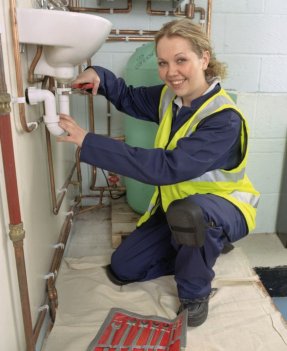

There are many arguments service company owners make to avoid hiring women for field positions…

Most women can’t lift a compressor.

I can’t send a woman into a bad neighborhood.

I can’t send dispatch a woman at night.

I can’t find women who want to work in the field.

Yada, yada, yada. The truth is there are times a woman service technician or plumber or electrician might need special accommodations. Those are obstacles, not barriers.

All of the reasons people give for NOT hiring a woman are trumped by the single most powerful reason FOR hiring a woman. Women sell more.

Women sell more because women are usually the decision makers for home service. Ask your call taker who phones in the most service requests, women or men. Ask your field service personnel who’s usually home on a service call, a woman or a man.

Women are service decision makers and women trust other women more than men. In focus groups, women and men both say they are less likely to believe a female mechanic will take advantage of them. While the empirical research is mixed about empathy differences between genders, women are more likely to relate well to other women. Relating better translates into selling more.

My personal experience from running a national franchise organization is women technicians generate higher customer satisfaction scores than men. This is consistent with Ron Smith’s experience at Modern Air Conditioning and Service America. It’s also been echoed dozens of times by contractors I’ve talked with in seminars and on the Service Roundtable.

An added advantage of hiring women for the field is distinction. Because field service is male dominated, women electricians, plumbers, and technicians stand out. Hire them and your company stands out.

Finally, if added sales, more satisfied customers, and more distinctive service are not reason enough to consider women for field service, hire them because there’s a shortage of skilled labor in the U.S., Canada, Australia, and the UK. We can’t whine about the shortage of skilled labor and continue to overlook slightly more than half the population.

(c) 2009 Matt Michel

Thursday, August 20, 2009

Stated Simply: Blogging Drives Traffic


According to Hubspot, blogging gives companies more website visitors, more links, and more pages indexed on search engines.

If you've got a good business blog, let me know. Email me at matt.michel@serviceroundtable.com. I'll share link here. Also, let me know about any related success stories, the time you spend, etc.


Monday, August 17, 2009

Would You Rather Call a Strange Plumber or Visit a Strange Mosque?


I saw this whine by Jenny Allen and found some truth in it...

Our house is an old farmhouse, and it has three bedrooms and two bathrooms, except the shower in the upstairs bathroom doesn't work. The shower per se works, but if you use it water streams from the ceiling down below into the living room, and then you have to stick a bucket underneath to catch the water. It's like living in a Frank Lloyd Wright house, only with much lower property values. So please limit yourselves to the downstairs
shower. Thanks!

Speaking of the downstairs bathroom, sometimes the toilet doesn't flush. That's because that piece of wire that connects the bulb thing inside the tank to the rod thing sometimes comes unhinged. The wire is actually a replacement for the real piece of hardware; in fact, it's a bit of coat hanger wire that our friend Augusta rigged up when the toilet broke years ago. She got tired of waiting for our plumber, who promised to come and fix it but never did. Just lift the tank and hook it up again.

Try not to call our plumber unless it's an emergency. I'm afraid of our plumber, who barks at me, but plumbers call all the shots here. You do not want to rankle your plumber, because the other plumbers are all tied up, and then you won't have any plumber. Our plumber has been coming to our house longer than I have, which is twenty-six years, and he seems to think I am some kind of interloper, a Janey-come-lately.

"Jeff," I said on the phone when I asked him to come and turn the water on this spring, "I've known you for twenty-six years, and I'd like to ask you a favor."

"Depends what it is."

"I always call you by your name, and you never call me by my name, and I wonder if you could call me by my name."

"I know yah name!"

"Well, thank you for turning the water on," I said.

"All right," he said, and hung up.

Jeff's phone number is on the attached list of other repair and service people, who will not bark at you but will probably not come. They are too busy in August to come. Whatever the problem, you'll have better luck just fixing it yourself.

"I'm afraid of our plumber, who barks at me," writes Allen.

"Whatever the problem, you'll have better luck just fixing it yourself," she adds.

Wow. Is there any more damning criticism of the state of service companies than that? I think a large segment of the DIY market exists not out of consumer cheapness, but that consumers perceive it's simply easier to fix it yourself.

Calling a contractor, for most people, is unsettling. It's filled with uncertainty and unknown.

  • Will you get a responsive company that will treat you well?

  • Will the serviceperson be pleasant or gruff, treating you like an idiot?

  • What kind of person will show up? Will he or she be honest?

  • How long will it take to get someone to show up?

  • Will someone arrive when promised or will you wait and wait and wait?

  • Will the work take days to complete?

  • Will it be done right the first time, or will you have to call the company back again and again?

  • Will the serviceperson make a mess and not clean up?

  • Will you get ripped off?

  • Will you know what the costs are before the work begins or will you get an unpleasant surprise?

  • Will there be an unpleasant conflict?

These are some of the questions that cross consumers' minds. Your marketing should address these issues. You should address them on your website, in your yellow pages ads, and in your direct marketing.

Finding a new service company is unpleasant and unsettling. To give you a sense of the discomfort, imagine walking into a church, temple, or mosque during services for the first time. That feeling of unease is similar to the consumer's feeling of unease when calling you.

Now, imagine a friend recommends his or her church/temple/mosque. The friend tells you what to expect, how to act, and what to wear. You might still approach the service with trepidation, but you would feel much better about. Your friend's attended and survived. You can too.

It's similar when a friend recommends a service company. This is why people turn to friends and neighbors first when looking for companies. This is why referral marketing, affinity marketing, and social media are so important for service companies.

Let's say you know the pastor/rabbi/imam from a civic club. You mention something about he pastor/rabbi/imam about attending a service and receive a warm welcome and personal invitation. You feel much better about attendance.

Similarly, people who know you personally, as the owner of a company, are going to feel far more at ease calling your company for service. This is why it's so important to get involved in civic clubs, networking groups, the chamber of commerce, and more. The more people you know, the more opportunities you will create. And to make sure everyone knows what you do, always wear logoed shirts.

And when you are fortunate enough to be invited into someone's home, act like a guest. Be polite. Be friendly. Be helpful.

It's hard to imagine a worse example of service than Jenny Allen's plumber, Jeff. The guy's been serving her home for more than a quarter century and the upstairs shower is unusable. The toilet downstairs doesn't flush and was jury-rigged years ago.

What do you bet Jeff is the type of tradesperson who sips coffee at the supply house, complaining about his customers, griping about DIY, moaning about how cheap people are, and lamenting his lack of business.

(c) 2009 Matt Michel

Friday, August 14, 2009

24 Ways to Boost Your Average Ticket – Part II


4. Sell Six Packs

One of the classic approaches to boosting your average ticket is to sell packages. The plumbing contractor can approach the restaurant to offer six drain cleanings for the price of five (i.e., a six-pack). The same approach works with pest control, carpet cleaning, pool cleaning, air conditioning tune-ups, sprinkler head replacements, and so on.

Instead of billing by the quarter for pest treatment, pre-sell a year at a discount. Clean the carpets of six rooms for the price of five. Offer a discounted air conditioning tune-up for three years.

Will everyone buy a package? No. Of course not. But some will, especially if the customer believes he will take full advantage of the package and can save money. The advantage to you is the customer is locked up for a period of time and you get paid up front.


5. Create a Checklist of Common Problems

Depending on the neighborhood, type of home, builder, or common area practices, certain problems are likely to be repetitive. Often, these are problem in the making. Let me share an example.

We were at the beach house this summer when a capacitor failed on one of the condensing units. After the technician replaced the capacitor, he asked if we had a drain pan. He then proceeded to explain that whoever installed the HVAC in our beach development neglected to include drain pans.

The evaporator was located in a closet direct above the stairs. If the condensate line ever stopped up, the tech explained, it could ruin the ceiling over the stairs, affect the carpet, and stain the walls. The repair costs could easily run into the thousands and even if insurance were to cover it, we would still be out the deductible and the hassle.

We looked. There was no drain. I told him to put one in. As a consumer, it was a no-brainer.

As a contractor, it’s a no-brainer to alert your customers to common or repetitive problems. The best way to do that is to create a checklist for your dispatchers and your field service personnel.

“Mr. Homeowner, do you have problems with toilet stoppages? I thought so. When this neighborhood was built the low flow toilets weren’t all that good. We’ve got some super toilets now that simply will not clog. If you’re tired of plunging, let me know. Since I’m already here, it’ll save you some money.”

“Mr. Homeowner, I noticed some carpenter ants in a couple of your trees. These guys can do some real damage to your trees and possibly to your home if they infest it. Do you want me to treat the trees while I’m here?”

“Mr. Homeowner, your pool filter’s looking a little long in the tooth and might affect the pump if left unchecked. Do you want me to replace the filter while I’m here?”

“Mr. Homeowner, have you had any problems from lightening strikes? We’ve gone on a few calls around here where ground lightening strikes fried some computer power supplies and TVs. Have you ever thought about a whole house surge suppressor? It’ll add another layer of defense to protect you home. Since I’m already here, it’ll save you some money.”


6. Expand Your Offering

One way to boost your average ticket is to simply boost the number of products and services your customers can buy from you. Air conditioning contractors have long dabbled in the fireplace insert market and many sell stand-by generators. Why not ceiling fans or solar panels or condensing unit covers? For that matter, many contractors fail to offer the full range of conventional HVAC products, such as performance diffusers, geothermal, and zoning.

Many plumbing contractors look down their noses at sprinkler systems. Running a complementary check and offering to replace a few broken heads seems like a simple add-on to other work. Plumbing contractors can also pipe gas for backyard grills. They can offer decorative fountains inside and out.

Electrical contractors could get into the solar and wind turbine business. They can also add home automation, security, and home entertainment wiring.

Pool contractors may have the greatest expansion opportunities of all. Not only can pool contractors continually expand home pools with fountains, water slides, ponds, and so on, but there’s a near infinite amount of pool toys. Plus, pool contractors are in the perfect position to create a backyard oasis, complete with barbecue pits, cooking areas, cabanas, and more.

Pest control companies can do much more than spray and set out rodent bait boxes. They can offer to install squirrel proof bird feeders, vent cages to prevent birds from nesting in dryer vents, and so on.


7. Ask, “Would Like A…?”

Before Ray Kroc entered the picture, the McDonald brothers figured out that asking, “Would you like fries with that?” resulted in add-on sales to three out of ten customers. Okay, you don’t sell fries. What do you sell as an easy add-on?

Washing machine hoses? Water alarms? Extra filters? Pool toys? Outlet insulators? Bug spray? Service agreements?


8. Ask, “What Else Can I Do?”

At the end of every service call, every plumber, technician, electrician, and pool cleaner should ask, “What else can I do for you today?” Then, smile, freeze, say nothing, and wait for the homeowner.

While it’s not quite as good as asking, “Would you like fries with that,” it does hold open the possibility to strike up additional conversations with the homeowner. It only takes a couple of seconds.


9. Offer Upgrades

Southwest Airlines allows up to 15 Business Select fliers to pay $20 to move to the front of the line for a better shot at the airline’s unreserved seating and carry-on space. The $20 also includes a beverage and frequent flier credits.

Southwest’s Beth Harbin said, “We wanted to add value rather than slap on a fee for everyone. But the reason was to boost revenue.”

And it has. Southwest sold $100 million worth of $20 “upgrades.”

How much would your customers pay for the next available truck? Could you offer a $50 service upgrade for a faster response? You could limit the number of available upgrades to the number of trucks in your fleet.


10. Present Replacement As An Option

Field service personnel like to make repairs. It’s why they’re doing what they’re doing. Yet, repairs are not always in the homeowner’s best interest or even desirable by the homeowner. It’s the height of arrogance to plow right in and start on a repair without giving the homeowner the option to replace a product.

“I can rebuild your pool sweep or I can replace it. What would you prefer?”

“What would you recommend,” asks the homeowner.

“Well, I can rebuild it and it’ll work fine… for awhile. But it’s probably going to act up again later this season or next. When it does, I may be able to rebuild it again or you might have to get a new one. With a new one today, you probably won’t have any problems for five years or so. It’s your choice.”

The last sentence is key. It is the customer’s choice. Some customers value their time enough that five years of trouble free operation is reason enough to replace the product. Others may be planning a move in six months and want the lowest cost alternative. It’s the homeowner’s choice, but in order to make it, the technician has to present the option.


11. Present Upgrades As A Third Option

Why not go one step beyond offering replacements as an option. Offer upgrades.

“I can rebuild this faucet, but before I do, I thought I’d give you the option of replacing it or upgrading. You know those new pull out spray faucets are really nice and would look great in your kitchen.”

Instead of repair, offer the option to repair or replace. Instead of repair or replace, offer the options to repair, replace, or upgrade.

© 2009 Matt Michel

Thursday, August 13, 2009

News That Doesn't Depress You: Consumer Confidence Is Up


The following is from Rasmussen...

The Rasmussen Consumer Index, which measures the economic confidence of consumers on a daily basis, rose a tenth of a point on Thursday peaking yet again to its highest reading so far this year. At 80.0, the index is also at its highest level since September 17, 2008, just days after the Lehman Brothers collapse and the start of the financial crisis. Today's reading is up five points over the past week and up eight points over the past month. Consumer confidence is now up 20 points from the beginning of 2009.

The Rasmussen index had been trending down for some time. The chart below plots it from January 2008 through July 2009.


Click on the Chart For a Larger Image


The daily tracking poll (shown below) starting picking up in August as the media began reporting good news and the politicians realized that talking down the economy was impeding passage of favored legislation and thus, began exuding upbeat dialogue.


Click on the Chart For a Larger Image


The bottom line for you is that consumer confidence has returned to the same level it was before the financial meltdown. People are feeling better about things, though there's still caution. In this atmosphere, consumers will continue to seek value.

To encourage spending, continue to offer coupons, sales, and special promotions. In personal selling situations, stress the long term investment return from reduced energy expense, greater home valuations, and so on. While people ALWAYS want to indulge themselves, today they want a practical rationale underlying their indulgences. Present your products and services as smart moves and you will help consumers give themselves permission to buy what they want.

Saturday, August 8, 2009

What's Your Twitpitch?


Could you describe your company in 140 characters? This is the equivalent of a text message or a Tweet.

Stowe Boyd, the guy who coined the term, "social media" works with start-up companies as a consultant. He's in the enviable position that his mere name to a company as an advisor makes any drop out lacking a product, but with an idea for one, credible enough to attract serious money. Accordingly, every half-wit with a half-baked idea seeks his blessing.

For the Web 2.0 conference, Boyd announced he would be scheduling meetings with start-ups, which created a problem. "I am getting an ungodly amount of email from PR folks," blogged Boyd, "and it's extremely random: some have attachments, some have big, stupid, old fashioned press releases copied in their entirety. Gah."

So Boyd announced that he would only respond to the 140 character messages allowed by Twitter. People who wanted to meet with him had to communicate by Twitter to keep the request succinct. And Boyd would only allow one accompanying Twitter message about the business, which he called a "twitpitch."

BusinessWeek picked up on the term and we're likely to have a new entry into the popular culture business lexicon. The twitpitch is the compressed elevator speech, just 140 characters, roughly 20 words in length. It has advantages. Here's what BusinessWeek had to say...

Boyd's experiment offers a lesson for small companies that want the attention of potential investors, clients, and press: Get to the point. And it applies in almost any business setting, not just on Twitter. It's no secret that less is more in the age of information overload, no matter how you're trying to reach people. That's why Boyd also calls it the escalator pitch. "It's something you can say in 10 seconds while he's going up the escalator and you're going down the escalator," he says.


BusinessWeek noted that Google founders, Sergey Brin and Larry Page, approached a venture capital firm as students lacking money, experience, and proven results. What the pair had was passion and a vision, which they boiled down into eight succinct words anyone could immediately grasp. They said Google would "access to the world's information in one click."

To me, the twitpitch is somewhere between a unique selling proposition and an elevator pitch. It answers the question, "Why should I do business with you?"

The answer is because my company... [FILL IN THE REST]

Complete the sentence using 140 characters or less. I'm going to work on a twitpitch for the Service Roundtable. Why don't you work on one for your company? Send them to me by posting on the Comanche Marketing blog, direct messaging me via Twitter @ComancheMktg, sending me a message on Facebook, or emailing me at the Service Roundtable. If I get enough, I'll post them in the future.

(c) 2009 Matt Michel

Friday, August 7, 2009

No Scent Makes Sense


Every year, Jerry Thomas, the CEO of the marketing research and consulting firm, Decision Analyst hosts a company wide training sessions on do's and don'ts. These are lessons company employees have learned the hard way through the years.

Several deal with odor. Not only should client service personnel use breath freshener prior to meeting with clients, but they should avoid cologne for men and perfume for women.

The need for breath fresheners is especially important for smokers. Many smokers are not even aware of the effect smoke has on their breath and clothes. If possible, smokers should try to light up in places where they can minimize the amount of smoke that will collect on their clothes. Lately, these are practically the only places where smoking is permitted.

Cologne and perfume should be avoided. The scent you find appealing will assuredly repulse someone else.

When it comes to the personal hygiene of field sales and service personnel, no scent makes sense.

(c) 2009 Matt Michel

Thursday, August 6, 2009

What Alex Walter Says About The Service Roundtable

"Having been a Service Roundtable member for some time I...

1) Receive many times my monies worth.

AND...

2) I continue to get very good new ideas related to marketing, sales and technical issues.

AND...

3) I realize that it would be a big mistake to do without the Service Roundtable as it continues to remind me of the things I should be doing and need to be doing to have my business thrive. It's like having a friendly tap on the shoulder when I need it most."


Alex Walter
President
Absolute Home Comfort
Aurora, CO


Only $50 per month with no contracts.
Why not try it for a month? If you don’t like it, quit.

Click To Join The Service Roundtable

Thursday, July 30, 2009

Creating An Elevator Speech

We had a request on the Service Roundtable for help writing an elevator speech. I grabbed the following video by Frank Furness. I like his simple approach and his emphasis on what's in it for the customer.


If all else fails, try the 15 Second Pitch Wizard. Fill in the blanks and it creates your elevator speech.