Friday, August 21, 2009

Snakes on a Service Call

Field service personnel of all trades have plenty of stories about the unpleasant critters they encounter from time to time on service calls. Because this one includes some dramatic pictures, it's been circulated around the Internet.

Apparently, unpleasant and dangerous critters are such as problem in some states that utilities warn homeowners to be cautious when opening breaker boxes with open access holes. The pictures below, taken by an unknown utility linesman or electrician, illustrate what happens when a mouse scurries through a breaker box knockout hole, followed by a pursuing snake. If you look carefully in the final picture, you can see that the neither ultimately fared well.


Negotiating Price


In the old Popeye cartoons, Wimpy never had enough money for a hamburger. He would offer to pay for today's hamburger in the future. Wimpy was trying to negotiate the terms of a fixed price sale.

It seems ridiculous when it occurs in a cartoon. It should seem just as ridiculous when your customers similarly attempt to negotiate with you. When your customer compares your price to a competitor's, is the customer comparing apples to apples or a filet mignon from a nice restaurant with the taco stand? After all, both are using beef. What's the difference?

When your customer wants to throw in something for free or only pay for your hard costs, is this like a consumer asking the hair stylist to add highlights for free? After all, the direct cost of the coloring isn't much. How much of a mark up does the stylist need?

When you customer wants you to cut your price, to "work with you," is this like a consumer asking the DVD store employee to cut the price of a new release by 60%?

If you think these examples are silly when reading them, try watching this video...


Once you offer a price, you simply cannot discount it. For years, Comfortech Idol was held as a competition between salespeople during the HVAC Comfortech Conference. Sales trainers role played as customers and a panel of judges evaluated each salesperson's performance (Greer was in the role of Simon, of course). During one Comfortech Idol, sales trainer Jim Hinshaw, played the role of customer.

"Come on," said Jim, "if you can just come down another $500, I think we can do a deal."

"Done," sighed the salesperson with relief that he finally closed Jim while a hundred of his peers looked on.

Jim rubbed his chin. "Well, you know, if you can find $500 that easily, I'll be you can find another $250..."

Once the salesperson compromised, he acknowledged the price he quoted wasn't the real price. Now, the only question left was how far he would compromise.


How To Discount

In truth, there will be times you will want to negotiate. You will willingly give something up to take the job. Yet, how do you do that while maintaining your credibility?

1. Discount by Addition - Don't change the price, but maybe you do throw in something extra.

2. Discount by Substitution - Substitute a less expensive product, procedure, or materials.

3. Discount by Subtraction - Cut the price, but take something away from the job to justify the cut.

4. Discount by Consideration - Cut the price, but require the customer to do something for you in return (like leave the yard sign up for six months).

5. Discount by Permission - Call someone at the office to get special permission to offer the job at a lower price (note: this won't work for the owner).

These are rational ways to discount. They allow you room to move without compromising your integrity. What if you discount without a rational approach? I'm confronting that very issue from the buyer's side today. Two companies want to print a book for me. The first is a specialist in book production. The company prints lots of books, is professional, and will do a good job.

The second really wants the business. I haven't met the printer, but everyone else in the company has and really likes the guy. He's local, which is a huge advantage. All things being equal, I'd give the job to the local guy everyone likes. But all things aren't equal. His initial price was 60% higher than the first company. When presented with the first company's quote, he said he'd match it.

While the second guy's done good work for us, his expertise isn't book production. Aside from quality concerns, I wonder if I'll get reprints for the same price after his other, more profitable business picks up. I wonder if I'll get prompt turnaround.

Here's the hole the second printer dug for himself. First, I'm nervous that he discounted 60% for this job and wonder if he'll cut corners. Or maybe, I wonder where he'll cut corners.

Next, I wonder if I've overpaid for other work he's performed. After all, he just lowered his price 60%. If he'll compromise 60% on this job, maybe he'll do it on every job. While meeting the first guy's bid may or may not win the job for the second guy, it has made all of his other pricing suspect.


Holding Your Price

Most of the time, you will simply want to hold your price and maintain your integrity. Sometimes this will cost you business. It's wise to continually inform your your customer base about your quality differences. Below is the header of an email marketing piece used by the Service Roundtable(R) to highlight the vast differences in similar seeming services that result in price variation. While you shouldn't go overboard with this message, it is good to remind your customers every now and then that you truly get what you pay for.


Another approach is shown below. This is another Service Roundtable example that was developed at the suggestion of Bobby Ring from Meyer & Depew for commercial service. The strategy here is to compare your service with other industries, such as copier service and forklift service. In light of what other quality service businesses from other industry's charge, your service is probably a good value.


When You Don't Give Fixed Prices

Flat rate pricing makes it easier to hold the line on prices. After all, you and the customer agree to a set price before work begins. Since you will hold that price even if the job runs long, you have every right to expect the homeowner to similarly hold up his end by paying you in full.

If you charge time and materials, it's mushy to the homeowner. There's no commitment on your part, which some homeowners interpret as a call for negotiation when the final bill comes due.

(c) 2009 Matt Michel

Thursday, August 20, 2009

Brit Plan To Live Without A/C Fails


A year ago, I wrote a Rant for Contracting Business titled, Is Air Conditioning The Next Tobacco? in response to Joe Klein's screed in Time Magazine, Kill Your Air Conditioning. Well, the Brits tried it. It didn't work.

The UK's Direct.Gov website makes the following recommendation:

You could cool your home naturally instead of using air conditioning, which can damage the environment:

  • create a breeze through your home by opening the windows at the highest and lowest points in the house, or on opposite sides of the house
  • when it’s very hot, open windows at night to let cool air in; close windows and curtains or blinds during the day to trap the cool air inside

The notion of cutting air conditioning is apparently quite popular among British elites.

"Opening a window," exclaimed a London Assembly member, "is the cheapest, most climate friendly way of cooling a building."

So how is the British Department for Energy and Climate Change, which is responsible for cutting carbon emissions nationwide, going to meet its goal of reducing department carbon emissions 10% by March? Why cut the A/C, of course.

"As part of our efforts to save energy over the summer," they announced, "we decided to turn off the air conditioning and open the windows."

It lasted three days...

One...

Two...

Three...

That's a whole 72 hours.

The UK's Daily Mail reported...

The trial was abandoned after three days because officials complained about noise from building works, security risks and "the wrong kind of breeze."

An internal memo said: "We have therefore decided to revert to air-conditioned cooling for the building."

Staff were told other "innovative ways" to reduce the building's carbon footprint would be looked at instead.

Environmental campaigners said the decision sent a terrible message to the rest of the country.

I've lived in southern England. It doesn't get all that hot. Even with London's urban heat island effect, it's still not that hot. The chart below shows average monthly temperatures from Weather.com.


And the committed environmental bureaucrats still couldn't take it more than three days.

Telephone Customer Service Fundamentals

This is a great presentation to review with your CSRs and dispatchers on customer service over the phone. The only beef I have is the admonition to avoid ever telling the customer, "I don't know."

It's okay to say, "I don't know," as long as it's followed by, "But I'll find out."

Watch the presentation in full screen...

Stated Simply: Blogging Drives Traffic


According to Hubspot, blogging gives companies more website visitors, more links, and more pages indexed on search engines.

If you've got a good business blog, let me know. Email me at matt.michel@serviceroundtable.com. I'll share link here. Also, let me know about any related success stories, the time you spend, etc.


Wednesday, August 19, 2009

How not to Sell

How not to sell

Every so often someone will ask how they can either put a sales program together, and/or improve their sales skills. There a hundreds of people and programs that will help them do that, you just have to find one that floats your boat. I would like to take a little different approach to this, and talk about what I feel you should do, and what not to do. For the past 8 weeks or so, we Americans have been subjected to possibly the worst sales program ever conceived by man. That would be the Government Health Care Program. This post has nothing to do with politics and which party is right or wrong, as I am a registered Independent voter, and do not have a dog in this hunt. It has to do with how inept they are in trying to convince people to buy what they are trying to sell, and how you can put together a successful Sales Program for yourself.

The first thing you should do when putting together your Sales Program, is to make sure it covers everything you want to say about your product and/or services in a very short, concise, and simple manner. Next you have to make sure that everyone involved with the program truly believes in it, and can answer any and all questions concerning how it works, as well as what it will do for the customer. They must be able to overcome any questions or objections they may receive during the presentation in a confident unflappable manner, and then give short intelligent answers in return. They also need to break out and memorize the Features and Benefits of the program, as humans almost always purchase the Benefits of something, not the Features. Finally, you must accept that fact that nothing will be sold until the perceived value of the product or service exceeds the price being asked, and you must always work toward that goal. If you fail to incorporate all of these things every single time you present your program, it will no-doubt fail.

Now let’s take the Health Bill, it does none of the above. The House bill is 1,112 pages, and the Senate Bill is 600 pages plus. Both bills are chock full of government bureaucratic super babble, which is hardly simple. As a result, very few people really seem to understand all of it. In fact, some of the people trying to sell it have stated they have not even read the entire Bill. Then it seems that every 10 minutes or so, someone comes on TV and explains or denies what one of the other salespeople has said about the program. The more they try and explain what the message really is, the worse it seems to get. On top of that, they keep backing down and/or changing their original message; the result of which is total chaos and confusion. As far as the price of the program goes, no one really has an answer for that one either. They are asking you to just trust them, oh ya! When you then add-in all of the bickering, backbiting, squabbling, denying, and disagreeing between the two parties as well as within their own parties, you have a recipe for disaster. As a result, it appears that many voters are put off, and are not buying what the Health Bill is currently selling, is it any wonder?

So when you want to come up with your own Sales Program, just look at the Health Bill, and then do everything 180 degrees differently, and you will come up with a good one.

Just my thoughts

Gene B

Economic Fundamentals: The Role of the Rich


There's been a lot of bashing of the well-to-do in the last decade. I don't get it. Society shouldn't try to denigrate the successful. It should aim to expand their ranks.

Personally, I don't want to trash the rich. I want to join them (and not by reducing their wealth to my level).

Even if you don't like the wealthy, you need them. They play an important role in our economy. The poor won't give you a job. And without a job, you're unlikey to give to the poor.

W. Michael Cox was chief economist of the Dallas Fed and is now the director of the Center for Global Markets and Freedom at SMU's Cox School of Business. Yesterday, he nailed the value of the rich in three paragraphs of an Investor's Business Daily op/ed piece...

Let's look at what the rich do for the economy. They're overwhelmingly the investors and entrepreneurs that start new businesses. These activities make the rich the economy's leading employers, providing millions of jobs and the payroll that goes with them.

The rich are big spenders, contributing a large share to the consumer demand that keeps the economy percolating. Every dollar they spend becomes income to somebody else.

From telephones and cars generations ago to cell phones and plasma TVs more recently, the rich are also the early adopters of new technologies. They encourage innovation by paying the high prices that cover producers' startup costs. Their money lets companies expand output, driving prices down for middle-class consumers.


Next time you hear someone attack the wealthy ask, "Why attack the rich? Why not join them? The great thing about this country is, you can!"

Are You Afraid To Let Your People Speak?


Corporations are scared. They're scared of their employees. They're scared of email. They're scared of social media. They're scared of YouTube. They're scared of SMS. They're scared of employees using email, social media, YouTube, and SMS to communicate. They're scared of employees communicating. They're scared of the loss of control.

Corporations want to control the message. They want to control every byte and bit of the message, so they smother the message and silence the speaker.

In Proofpoint's latest annual study of, Outbound Email Security and Data Loss Prevention in Today's Enterprise (Download The Report - pdf), Osterman Research surveyed the guys (or gals) in charge of email at 220 corporations with over 1000 employees. Here's some of what they found...

  • According to the study, 19.7% of outbound email poses a "legal, financial or regulatory risk."

  • A little more than half of the respondents (51.2%) are concerned or very concerned about that confidential and/or proprietary information will be divulged by email "sent from your organization’s SMTP email system."

  • The same number (50.5%) are worried about email sent from phones (i.e., mail that may not pass through the corporate server).

  • Similar numbers (49.8%) worry about third party webmail services, such as Gmail, Yahoo, and Hotmail.

  • Blog and message board postings have 46.2% "highly concerned."

  • Social networking worries 45.1%.

  • Instant messaging poses a "high" level of concern for 44.6% of respondents.

  • SMS or text messaging worries 44.1%.

  • Media sharing sites like YouTube worry 42.1%.

  • Twitter, a web based SMS system, has 41.5% concerned.

Okay, this level of paranoia seems a bit over the top. Do corporate executives really think that one out of five emails poses a risk? If every fifth email poses a risk, employees are spending so much time on non-productive activities that it's hard to see how anyone could get anything done. Risk aside, the productivity cost of email would exceed its benefits and CEOs would simply shut off the pipe for most employees.

And do nearly half of corporate decision makers really worry about 140 character messages texted or tweeted? Apparently.


Big Risk Or Much Ado About Nothing?

Significant numbers reported real problems with data loss...

  • One third of companies (33%) have had customer information "exposed" (whatever that means).

  • Over one quarter (28%) have had intellectual property "exposed."

That seems serious, but these are companies with 1,000 or more employees. Of the 220 companies, 145 had more than 5,000 employees and 60 had more than 20,000 employees.

Take a company with 10,000 odd employees. Chances are good someone's going to say something he shouldn't from time to time, though it's probably not going to be anything that will damage the company.

The report didn't define how serious the "exposures" were. All we know is a significant number of huge companies felt something about customers or intellectual property was exposed that shouldn't have been.

When I worked as an automation engineer at a Fortune 500 level durable goods manufacturer, I presented a paper at an international robotics conference. A guy from a semiconductor magazine liked what I had to say and wanted to interview me. Before granting an outside interview, I was supposed to involve corporate PR, and did.

The level of micromanagement was incredible. It frustrated me and I'm sure irritated the time pressed editor of the semi-conductor magazine. I wasn't sharing secrets or even non-secrets. I was simply offering technical opinions about factory automation with a trade magazine in a wholly different industry.

Eventually, the piece ran. The semi-conductor guy never called again and intimated that our PR department was too difficult to work with. I understood.

Years later, with a different manufacturer, I was given the opportunity to write a guest column for a trade magazine. My superiors analyzed every word, looking for ways each could be twisted like a pretzel into some obtuse indicator of corporate weakness that would cause customers to switch business to a competitor. It was so frustrating that I didn't attempt to write again until I changed jobs.

I suspect that much of what gets classified as the exposure of customer or proprietary information is about as secret and confidential as the yellow pages. Corporations have a need for control and the bigger the corporation, the greater the control reflex becomes.


Big Corporations Go Big Brother

In response to their concerns about data loss, nearly all of the corporations adopted acceptable use policies regarding email, social media, etc. That's not a bad idea.

Make sure the troops know what concerns you. People are generally smart enough to avoid crossing the line if someone takes the time to draw it and explain it.

Is a greater response needed? Apparently corporate decision makers think so...

In this year’s survey, more than a third of all US respondents—38.4%—reported that they employ staff to monitor (read or otherwise analyze) outbound email content. An additional 23% of companies surveyed said that they intend to deploy such staff in the future. This technique is even more common in the largest organizations—48.3% of US companies surveyed with more than 20,000 employees employ staff to monitor the content of outbound email (and 21.6% say they intend to deploy such staff in the future).

Does this seem a little creepy to you? It's not simply email that's checked. These guys are monitoring YouTube, Facebook, Twitter, Linked In, MySpace, and so on.

If your "job" is to find a problem, you will. Thus, the monitors look long and hard until they find a "violation." The miscreant is then disciplined or fired, justifying the need for continued corporate oversight.

I realize that corporations operate in a litigious environment today, but come on! This big brother behavior strikes me as a waste of resources. Worse, it sends the message that the company doesn't trust its people. The company doesn't trust their discernment. It doesn't trust their integrity.

What happens in this environment? People do what I did. They shut up. The don't try. They refuse to engage. Eventually, they leave. And the company is the big loser every step of the way.


Large Corporations Aren't On The Cluetrain

Shortly after launching the Service Roundtable, I read The Cluetrain Manifesto. I found it powerful. It explained what I was observing in the online world and experiencing with the Service Roundtable. Below is the preamble before the 95 theses of The Cluetrain Manifesto.

A powerful global conversation has begun. Through the Internet, people are discovering and inventing new ways to share relevant knowledge with blinding speed. As a direct result, markets are getting smarter—and getting smarter faster than most companies.

These markets are conversations. Their members communicate in language that is natural, open, honest, direct, funny and often shocking. Whether explaining or complaining, joking or serious, the human voice is unmistakably genuine. It can't be faked.

Most corporations, on the other hand, only know how to talk in the soothing, humorless monotone of the mission statement, marketing brochure, and your-call-is-important-to-us busy signal. Same old tone, same old lies. No wonder networked markets have no respect for companies unable or unwilling to speak as they do.

But learning to speak in a human voice is not some trick, nor will corporations convince us they are human with lip service about "listening to customers." They will only sound human when they empower real human beings to speak on their behalf.

While many such people already work for companies today, most companies ignore their ability to deliver genuine knowledge, opting instead to crank out sterile happytalk that insults the intelligence of markets literally too smart to buy it.

However, employees are getting hyperlinked even as markets are. Companies need to listen carefully to both. Mostly, they need to get out of the way so intranetworked employees can converse directly with internetworked markets.

Corporate firewalls have kept smart employees in and smart markets out. It's going to cause real pain to tear those walls down. But the result will be a new kind of conversation. And it will be the most exciting conversation business has ever engaged in.

Does it sound like most of the corporations surveyed in the Proofpoint study are on or off the cluetrain? Personally, I don't think most have a clue.

As a small business owner, you don't face PR executives more concerned with avoiding the utterance of the wrong thing than saying the right thing. You can speak to your customers with a real voice... yours.

And you can let your employees speak. Sure, someone might say the wrong thing. That comes with humanity. Humanity separates your company from the stainless steel, monolithic, unfathomable, cold corporation. Yours is a company of humans; humans your prospects and customers can relate with.

Your voice, your true, real, authentic voice can be a competitive advantage for you, as can the voices of your employees. Speak. And encourage your employees to speak. Speak through email lists. Speak on blogs. Send tweets. Join Facebook. Connect with LinkedIn. Sign up for Plaxo. Make a video and host it on YouTube.

When your customers ask questions, engage them. Start a dialogue. Don't worry if others might see you deal with an upset customer. Don't worry if you find yourself forced to acknowledge a mistake.

Everyone knows people get mad. What's better, to have an angry customer spewing venon while you hide and fret, or to have an angry customer engaged by a concerned empathetic owner? Your good response (note: good response) with an upset customer in a public forum can do more for your business than 10,000 direct mail pieces.

Everyone knows companies make mistakes from time to time. What's unusual is the company that stands up, acknowledges error promptly and without coercion, and fixes the problem fast. Look, if you screw up you're going to fix the problem anyway, so why worry about public exposure of the problem if its accompanied by a rapid, proactive response? That won't make you look like a sucker. It will make you a hero.

Speak with authenticity. And allow your team to speak. But before you start, read The Cluetrain Manifesto. Order it from Amazon in print or audio versions or read in online for free. Read it and either review it with your employees or buy them copies.

(c) 2009 Matt Michel

Tuesday, August 18, 2009

Charge What The Pain Is Worth

I recently stayed in the most expensive hotel room I've ever been in in my life. The problem is it was also probably the poorest hotel room I've ever seen. The floors were not comfortable, the bed was extremely uncomfortable, the noise from the corridor was outrageous, and I got one of the worst nights sleep I've had in years.


To add insult to injury I was awaken every four hours and stuck with needles, I had to listen to the snoring sound of my bedmate as they spent the night next to me recently in a hospital room. The room cost me over $500 a night, more than I would ever pay for a high-end establishment hotel, or timeshare. However while I was stuck in his hospital bed I began to realize an important idea that ties in very well with pricing service related business.


When I was wheeled into the emergency room with slurred speech and tremors and my arm there was little discussion about what the cost of the hospital service would be. The CAT scan was immediate and since there was no indication of a stroke an overnight hospital stay was recommended with monitoring. The next morning I was awakened and received a courtesy ambulance ride to an outpatient MRI facility, where I received both an MRI and an MRI brain scan, surprisingly showing that I have a brain!


Considering the frightening symptoms I was showing the last thing on my mind when they came to pick me up and take me across the street to the MRI facility was to say "excuse me, what is this going to cost me?" It was really irrelevant since it could be a matter of life or death.


All things considered it turned out to be a false alarm probably related to a new medicine that I was taking and now have withdrawn from and the symptoms have slowly disappeared. This reiterates a point that I often times discuss with business owners who in asking me as a consultant what they should charge for their services my reply is "I don't know, what do you need to charge?"


Many companies are afraid of charging what they really should because they have a great internal resistance to their organization to the thought of raising their prices. "If I raise my prices, I'll lose my business!" It is just this type of reasoning that runs service related businesses out of business every year. My hospital had calculated its cost of expenses, even over inflating it realizing that many of the patients would be unable to pay the full amount for services provided, and it's serious discounts are given to insurance companies. The very fact that I was presented with a $13,000 bill for a 24 hour stay in the hospital is mind-boggling, yet my insurance company settled for less than $3000 still a high amount for less than 24 hours at the hospital and for a five-minute ambulance ride and 30 minutes in a machine that clunked, thumped, and whirled.


What this demonstrates is if there is enough pain perceived by the customer then the expense to rectify the problem is irrelevant. The pain does not have to be physical but perceived as either inconvenience, damaging, or just plain annoying. When service companies have to price their work based on what the market demands they will lose profitability. If you are in a service business price your work based on what you need to recoup to meet your expenses, projected gross profit, and projected net profit. Calculating these numbers may be surprising to you yet why do work just for practice, charge like a hospital! Charge what you must to remain in business. Even if you lost 10% of your customers the offset in raising your rates would more than pay for those customers in the long run would make you more profitable.


I hope that you don't have to spend a night in one of the most expensive hotels around if it's a hospital. Price your services and goods correctly in the high-priced room that you stay in will be a luxury resort and certainly you won't be sharing a room with someone else unless you want to!


Jeremy Lowe

Callahan Roach Business Management

1-800-528-0212

The Increasing Status of the Service Trades


I read the following joke on Twitter the other day...

What's the difference between an investment banker and a pigeon?

A pigeon can still make a deposit on a BMW.

The recession certainly has knocked the pedestal out from under many financial and Wall Street types. Sure, they'll return to earning salaries and bonuses all out of proportion to their contribution to society soon enough, but for the time being the I-bankers' stars have dimmed.

Guess whose stars are getting brighter by the minute? People working in the trades. Frankly, this makes sense. Take two people of equal ability, send one to school and the other to work. The first earns a degree and takes an entry level job. Gradually, he advances up the corporate ladder, winning a wife, mortgage, and car payments along the way.

The second fellow learns his trade and eventually starts his own company. He stumbles a bit, but latches on to industry publications, conferences, and success groups. He figures out how to make money and does.

The corporatist may progress to the executive level, though most do not. Even so, he's constantly at risk of being right sized, down sized, outplaced, and left out through no fault of his own. Any wealth he accumulates comes from savings and possibly stock options.

The small business owner lacks the corporatist's 200 square feet of class A office space in a downtown high rise, located at the end of a 45 minute commute. Instead, he's got freedom. The small business owner largely controls his own destiny. He can build his business into anything he wants. And as he builds his business, he's building wealth.

Two men (or women) of equal ability. One builds a career. The other, a fortune.

And why does society hold the former in higher regard? Is it because he wears a uniform from Brooks Brothers instead of Dickies?

It seems that the pendulum is swinging. According to The Sun, British women no longer want stock traders, they want tradesmen...

YOU have probably looked for a plumber in the Yellow Pages before.

But now, if you're single and female, you're more likely to be looking for him in the dating pages.

Women in the UK are pulling the plug on romances with rich bankers in favour of picking up plumbers and brickies, according to a recent survey by dating site mysinglefriend.com.

Thanks to the recession, City boys in pinstripe suits are out. Girls want to hook handymen with a stable income as their Mr Right.

Now, if we can just win over the high school guidance counselors.

French Plumber Threatens to Cut Service Over Unpaid Bill

Jack In The Box' Stupid Marketing Trick


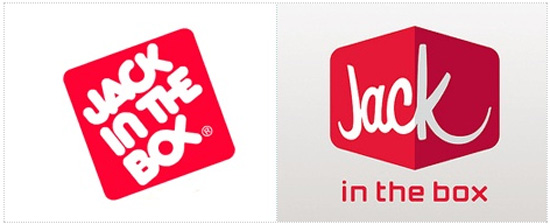
A few months ago, I noticed a new Jack In The Box restaurant being constructed... with an entirely different logo. Some ad genius decided to update the brand, whether it needed it or not.

Actually, this isn't an update. It's a redesign. And as several advertising analysts have pointed out, the new brand logo looks more like a video game logo than a fast food hamburger restaurant logo. It hasn't been doing well in the unscientific preference surveys I've seen.

Personally, I don't have strong feelings one way or the other about the new logo. I do have strong feelings about radically redesigning a familiar and heavily advertised brand. If I ran Jack In The Box, there is NO FREAKING WAY I would allow some ad agency to jack with the Jack In The Box image.

I don't know who brought in the agency, Duffy & Partners, to redo the logo and I'm not questioning the work the agency did. I just wonder, "Why?"

Look at the cost the chain will have to endure. Look at the cost its franchisees will suck up to change the signage. I'm all for aggressive marketing during a downturn, but this isn't aggressive. It's a foolish expense.

Clearly something is wrong in the land of Jack if reports by ad guru, Jim Edwards are correct and Jack In The Box is buying local media in the New York market when the closest restaurant is in North Carolina.

Jack In The Box has benefitted from great advertising by the agency, Secret Weapon. The Jack character has been described as the anti-Ronald McDonald. Distinction is necessary for a player with a much smaller ad budget than its competitors. The Jack In The Box ad spots are designed to appeal to the 18 to 35 year old age group who finds shows like The Simpsons and Southpark amusing. Sometimes, however, I wonder if the ads use too many inside jokes about corporate life.

Still, the spots have been well done, always included an explicit or implicit call to action, and helped distinguish the company. On the whole, Jack has benefitted from solid work by its agency.

Fortunately for Jack, the competition leaves much to be desired. McDonalds is politically correct and bland. And the worst Jack In The Box commercial is far better than anything featuring the creepy Burger King. I bet the Burger King creeps you out too.

Jack In The Box will survive the logo change. But survival is not the same thing as benefitting.

Logo changes should be gradual, made over time, and made so that anyone familiar with the old logo won't doubt its connection with the new logo. This is true for any business, but especially small business. Small business owners simply do not have the budget to instantly redo a brand image that's been built over years.

Monday, August 17, 2009

Innovate or Die


This short presentation by the ad agency, North, lists ten ways brands fail and ten of the agency's recommended fixes. While the examples are not the best for the service trades, the presentation does make you think. It's worth downloading and spending a few minutes flipping through it.

Download The Presentation From BrandChannel (pdf)

Comanche Marketing Expands, Adding Nine New Writers


(DALLAS, Texas) – The popular Comanche Marketing ezine focused on helping service businesses boost sales and profitability has been converted to a blog format, adding a number of leading plumbing and HVAC writers.

Comanche Marketing has always been written by Service Roundtable CEO, Matt Michel. Now, in addition to Michel, the follow industry experts will contribute to Comanche Marketing:

  • Michael Bohinc of Keeping Score

  • Gene Burch of GB Associates

  • Charlie “Tec Daddy” Greer

  • David Heimer of the Service Roundtable

  • Andrew Oser of Cropp-Metcalfe

  • Ed O’Connell of O’Connell Plumbing

  • Matt Prazenka of Abacus Business Development

  • HVAC Spells Wealth author Ron Smith

  • Bob Viering of the Service Roundtable

“The ezine was getting too lengthy,” explained Michel about the switch, “Plus, it wasn’t social media friendly and wasn’t compatible with audio and video. The blog at www.ComancheMarketing.com gives us a host of rich media communication tools.”

“The ezine has 7,500 subscribers,” noted Michel, “We’ll continue to send it, but it will be a lean edition with one main story and links to the other stories posted on the blog during the week. The ezine will be more efficient for the harried contractor who’s reading on the run. The blog will be far richer with a diversity of opinion, topics, writers, and media.”

The blog is updated several times a day so that contractors will almost always find fresh material, usually in a variety of formats. Articles are cross posted to the Service Roundtable, where discussion takes place among the members of the alliance.

Michel opened up the possibility for adding new writers once the current cast is comfortable with the blog format and posting requirements.

“I’m really excited about the expanded role of Comanche Marketing and the addition of all of these terrific writers. Almost all of the writers have extensive backgrounds in sales, service, or management of plumbing and air conditioning companies. Comanche Marketing isn’t business theory, but no-nonsense, hard hitting, practical advice that helps business owners boost sales, drop more to the bottom line, and save time doing it.”

Comanche Marketing is a publication of the Service Roundtable. The blog can be found at www.ComancheMarketing.com. Ezine subscription information is available at www.ServiceRoundtable.com/cm or by emailing Matt Michel at Matt.Michel@ServiceRoundtable.com. Serving the HVAC and plumbing industries, the Service Roundtable is world’s largest and fastest growing independent contractor alliance. Memberships are available for $50 on a monthly basis or less on an annual basis. For more information visit www.serviceroundtable.com.

Would You Rather Call a Strange Plumber or Visit a Strange Mosque?


I saw this whine by Jenny Allen and found some truth in it...

Our house is an old farmhouse, and it has three bedrooms and two bathrooms, except the shower in the upstairs bathroom doesn't work. The shower per se works, but if you use it water streams from the ceiling down below into the living room, and then you have to stick a bucket underneath to catch the water. It's like living in a Frank Lloyd Wright house, only with much lower property values. So please limit yourselves to the downstairs
shower. Thanks!

Speaking of the downstairs bathroom, sometimes the toilet doesn't flush. That's because that piece of wire that connects the bulb thing inside the tank to the rod thing sometimes comes unhinged. The wire is actually a replacement for the real piece of hardware; in fact, it's a bit of coat hanger wire that our friend Augusta rigged up when the toilet broke years ago. She got tired of waiting for our plumber, who promised to come and fix it but never did. Just lift the tank and hook it up again.

Try not to call our plumber unless it's an emergency. I'm afraid of our plumber, who barks at me, but plumbers call all the shots here. You do not want to rankle your plumber, because the other plumbers are all tied up, and then you won't have any plumber. Our plumber has been coming to our house longer than I have, which is twenty-six years, and he seems to think I am some kind of interloper, a Janey-come-lately.

"Jeff," I said on the phone when I asked him to come and turn the water on this spring, "I've known you for twenty-six years, and I'd like to ask you a favor."

"Depends what it is."

"I always call you by your name, and you never call me by my name, and I wonder if you could call me by my name."

"I know yah name!"

"Well, thank you for turning the water on," I said.

"All right," he said, and hung up.

Jeff's phone number is on the attached list of other repair and service people, who will not bark at you but will probably not come. They are too busy in August to come. Whatever the problem, you'll have better luck just fixing it yourself.

"I'm afraid of our plumber, who barks at me," writes Allen.

"Whatever the problem, you'll have better luck just fixing it yourself," she adds.

Wow. Is there any more damning criticism of the state of service companies than that? I think a large segment of the DIY market exists not out of consumer cheapness, but that consumers perceive it's simply easier to fix it yourself.

Calling a contractor, for most people, is unsettling. It's filled with uncertainty and unknown.

  • Will you get a responsive company that will treat you well?

  • Will the serviceperson be pleasant or gruff, treating you like an idiot?

  • What kind of person will show up? Will he or she be honest?

  • How long will it take to get someone to show up?

  • Will someone arrive when promised or will you wait and wait and wait?

  • Will the work take days to complete?

  • Will it be done right the first time, or will you have to call the company back again and again?

  • Will the serviceperson make a mess and not clean up?

  • Will you get ripped off?

  • Will you know what the costs are before the work begins or will you get an unpleasant surprise?

  • Will there be an unpleasant conflict?

These are some of the questions that cross consumers' minds. Your marketing should address these issues. You should address them on your website, in your yellow pages ads, and in your direct marketing.

Finding a new service company is unpleasant and unsettling. To give you a sense of the discomfort, imagine walking into a church, temple, or mosque during services for the first time. That feeling of unease is similar to the consumer's feeling of unease when calling you.

Now, imagine a friend recommends his or her church/temple/mosque. The friend tells you what to expect, how to act, and what to wear. You might still approach the service with trepidation, but you would feel much better about. Your friend's attended and survived. You can too.

It's similar when a friend recommends a service company. This is why people turn to friends and neighbors first when looking for companies. This is why referral marketing, affinity marketing, and social media are so important for service companies.

Let's say you know the pastor/rabbi/imam from a civic club. You mention something about he pastor/rabbi/imam about attending a service and receive a warm welcome and personal invitation. You feel much better about attendance.

Similarly, people who know you personally, as the owner of a company, are going to feel far more at ease calling your company for service. This is why it's so important to get involved in civic clubs, networking groups, the chamber of commerce, and more. The more people you know, the more opportunities you will create. And to make sure everyone knows what you do, always wear logoed shirts.

And when you are fortunate enough to be invited into someone's home, act like a guest. Be polite. Be friendly. Be helpful.

It's hard to imagine a worse example of service than Jenny Allen's plumber, Jeff. The guy's been serving her home for more than a quarter century and the upstairs shower is unusable. The toilet downstairs doesn't flush and was jury-rigged years ago.

What do you bet Jeff is the type of tradesperson who sips coffee at the supply house, complaining about his customers, griping about DIY, moaning about how cheap people are, and lamenting his lack of business.

(c) 2009 Matt Michel

Eat That Frog!

Get more done...

Sunday, August 16, 2009

The Impoverished Craftsman


This is an audio version of a Comanche Marketing article called, "The Impoverished Craftsman." It was written for the craftsman who cares about his work and customers, but who can never seem to get ahead.

The file was prepared as a Windows Media Audio (wma) file. Download it from the Service Roundtable's Free Stuff section.

HVAC, Plumbing, & Electrical Salary Data by Zip


MyOpenJobs is providing salary data based on the last 12 months of hiring by zip code, radius, experience level, and type of job. According to the website...

The MyOpenJobs network of sites gather salary data from over 100,000 job seekers each year in the HVAC, Plumbing and Electrical Industries. The survey results include Residential, Commercial, Industrial, Building Facilities & Maintenance, Wholesale Supply and Engineering sectors.

Check it out.

The Race

It's not how often you fall down that matters. It's how often you get up.

Saturday, August 15, 2009

Good Contractor PR


Steve Miles at Jerry Kelly Air Conditioning in St Charles, MO wanted to help someone in the community who needed a new air conditioner, but couldn't afford one. The challenge is finding someone legitimately in need.

Miles turned to a public relations firm to help find a good candidate. The added benefit is that the PR firm could get the word out about the company's charity. The following is a sampling of the news coverage the company received...

Initial press release @ PR Newswire

AOL Money & Finance

Examiner

Street Insider with links from USA Today

St Louis Today

Lincoln County Journal

Channel 11

In addition, Jerry Kelly was featured on the evening news. Unfortunately, the video is no longer available on the station's website, though Miles may upload a copy to YouTube.

Some small business owners hesitate to take credit and to trumpet their good deeds. This is foolish. Only profitable, successful companies can afford to do good deeds. When you help people through your company, don't be afraid to let the public know.

If you really want to get the word out, use a public relations professional, apart and distinct from any ad agency you might use. The added exposure will more than cover the expense.

If you think the media is filled with negative stories about business, give the news something positive to report. It's good for the people you help. It's good for the consumers who appreciate positive stories about companies like yours. And it's good for your company.