Tuesday, February 16, 2010

The Use of Video Case Studies


Yesterday, I posted a video of Jay Conrad Levinson where he talks about nanocasting, which is advertising to a very tightly defined audience using cable for segmentation. The step beyond nanocasting is broadcasting via the Internet. This is real nanocasting because the audience chooses to watch messages that are of interest. Typically, that means the audience is considering a purchase discussed in the video or facing a problem addressed in the video. Furthermore, because the interest is higher, you get the opportunity to discuss the issue at greater length.

YouTube is a great venue for case studies. It allows you to show customers sharing their experience (talk about strong!). It allows you to offer detailed explanations. It allows you to show problems and solutions. In short, it gives you an opportunity to set yourself apart.

There are a number of video hosting services, but YouTube is the best or videos under 10 minutes. Why? Because it has become the Internet's second largest search engine behind Google. It's also easy to embed the videos on your website, raising your image in search engines, which are looking for video.

Alan Givens at Parrish Services created the following video after repairing problems on a geothermal installation.


"I am so fed up with these low ball idiots doing horrible work and screwing the customer just because they don’t know better," explained Alan, "I had the following video created to show how bad it gets."

Personally, I thought the video avoided excessive criticism. For example, a Parrish Services technician is shown wheeling away an old air-to-air condensing unit left by the installing contractor without a word being said. I doubt many consumers would pick up on this, though contractors might.

As a rule, it's generally good to avoid criticizing the competition. It makes you sound petty and might be seen a criticism of the homeowner's original judgment. Besides, any contractor can follow any other contractor and find something wrong.

I liked the way the video utilized the customer to describe the problems from his perspective. The Parrish technician focused on the company's solutions.

The homeowner invested another $10,000 to get the geothermal system operating correctly. Based on the comment he left on the YouTube page, I don't think he's thinking about the money:

I would like to add one more thing: Parrish Services did all this in one day. All the work was completed, they were cleaned up and gone by 5:30pm. When my wife got home from work the house was warm and comfortable for the first time in weeks. The system was so quiet I had her put her hand over a vent to feel the heat coming from the system to prove it was running. It brought tears to her eyes. We were so happy, and still are.
Alan invested $3,000 to have the video made. He can use it at homeshows. He can embed it on his website. He can host it on a number of video sites. He can put it on a DVD with a sales proposal. He can email links to customers and prospects.

If you lack the money to produce a professional video, you can still use a $99 flip vid to capture customer comments about your work and to show and explain the work. With desktop video software, you or a high school film student can create an effective video that gets the job done.

Monday, February 15, 2010

Trends in Local Marketing For 2010

This is a good presentation on local marketing trends. It's consistent with the things I see.


The presentation was created by Balihoo, which helps national companies who market through franchisees and dealer organizations get their dealers to market the national brand. For franchises who share the national brand this makes sense all the way around.

Dealers with their own brands who lack local exclusivity with the national brand need to carefully evaluate the value of promoting brand they do not own. If the co-op is sufficient and/or the competition is sparse and/or the public cares about the national brand, promoting your affiliation may make sense.

However, I would still build the local brand first. After all, it's the only brand you own, the only brand you solely benefit from, and the only brand that cannot be take from you.

Jay Conrad Levinson on Guerrilla Marketing


Most small business owners and marketers are familiar with Jay Conrad Levinson, author of the Guerrilla Marketing series of books. Levinson addressed the "Rock Your Business Gadgets & Growth Showcase" in Orlando, Florida and one of the attendees grabbed these videos. The video quality's not great, but the message makes them worth watching.

Levinson says that you do not need to invest money in marketing if you invest 1. time, 2. energy, 3. imagination, and 4. information. Levinson says guerrilla marketing is geared towards cash strapped small businesses.

The only measure that Levinson says should matter is profit. Companies can set sales records and lose money. Only profit matters.

Ninety percent of purchase decisions are made by the unconscious mind and the way to access the unconscious mind is repetition.

Traditional companies grow by adding customers one-at-a-time. This is expensive and takes time. Levinson advocates geometric growth by:

  • Enlarging the size of each transaction by selling upgrades and accessories.
  • Increasing the number of transactions with each customer during the year.
  • Tapping the referral power of your network of customers.
  • Adding new customers one at a time.
Levinson advocates finding companies to cooperate with and working together for mutual benefit. This is "fusion marketing." Levinson says sell solutions, not benefits. People want solutions to problems. Market to individuals, not groups. Individuals buy. Instead of broadcasting, practice nanocasting. Nanocasting is narrowing the focus to the 4% of people who want what you are selling.


This last video is a little different. Levinson explains a "meme" and why he thinks memes should supercede logos.


Saturday, February 13, 2010

Economic Fundamentals: Great Myths of the Great Depression


Do you think we are in the midst of "unprecidented" times? Hardly. Consider the following...

Washington was rife with both fear and optimism as [the president] was sworn in…fear that the economy might not recover and optimism that the new and assertive president just might make a difference. [A humorist] captured the popular feeling toward [the president] as he assembled the new administration: “The whole country is with him, just so he does something. If he burned down the capitol, we would all cheer and say, well, we at least got a fire started anyhow.”

[The president] did indeed make a difference, though probably not the sort of difference for which the country had hoped. He started off on the wrong foot when, in his inaugural address, he blamed the [economy] on “unscrupulous money changers.” He said nothing about the role of the Fed’s mismanagement and little about the follies of congress that had contributed to the problem. As a result of his efforts, the economy would linger in [a downturn].

At Harvard University… [former Director of the Bureau and Budget, Lewis W.] Douglas made it plain that America was facing a momentous choice:

Will we choose to subject ourselves — this great country — to the despotism of bureaucracy, controlling our every act, destroying what equality we have attained, reducing us eventually to the condition of impoverished slaves of the state? Or will we cling to the liberties for which man has struggled for more than a thousand years? It is important to understand the magnitude of the issue before us. ... If we do not elect to have a tyrannical, oppressive bureaucracy controlling our lives, destroying progress, depressing the standard of living ... then should it not be the function of the Federal government under a democracy to limit its activities to those which a democracy may adequately deal, such for example as national defense, maintaining law and order, protecting life and property, preventing dishonesty, and ... guarding the public against ... vested special interests?

The above was written by economist Lawrence Reed for the Mackinac Center for Public Policy. Reed isn't referring to today, but to Franklin Roosevelt and the 1930s. These are the times that forged "The Greatest Generation" who later stormed the beaches at Normandy and Iwo Jima. Somehow they managed to survive the folly of Hoover and cynical machinations of Roosevelt, leaving behind an historical record we can study so we avoid similar errors.

Today, the government is making a mess of things, but it's not on the scale of Hoover/Roosevelt. Hoover signed Smoot Hawley, which all but killed international trade. Roosevelt's first budget called for Federal spending that was 333% greater than Federal revenues.

Hoover raised income taxes from 24% to 63%. Roosevelt further raised them to 79%, then 90%. After Congress balked at his attempt to levy a top marginal tax rate of 99.5%, Roosevelt issued an Executive Order to tax all income over $25,000 at 100% and to lower the personal exemption to a level where nearly everyone would get hammered by income tax! Fortunately, Congress intervened and rescinded the Executive Order.

The illogical John Maynard Keynes held sway over economic thought. The Federal Reserve was run by clueless, bumblers who contracted money supply when the economy contracted.

Even though the Roosevelt era has been whitewashed by historians from FDR's administration, the economic actions that characterized the Depression seem insane today. We are unlikely to repeat them because we have the benefit of past experience and more mediums to use to communicate that experience.

No doubt, there are individuals who believe they can make things turn out different. Fortunately, it's unlikely they will be given the time to do much damage.

Economists and historians have been reassessing the Great Depression of late and examining the economic policies of Hoover and Roosevelt. While not the conventional wisdom, Roosevelt has to be the worst president in our nation's history with Hoover close on his heels. They are much worse than the hapless Carter because Carter was, well, hapless.

For small business owners the lesson is that the current downturn will not last and it's unlikely that it will get worse. While it's not fun, we've endured much darker times and pushed through them. We will push through these.

We may not benefit from the same peacetime expansion that occured after Truman became president but we will, without doubt, experience a something akin to an economic boom in the future. Now is the time to position your company to take advantage of it.

If you are not already, market aggressively. Build your company's brand in your market. Take share from competitors who falter. Start revamping your management systems and controls so they will serve a much larger company. Ignore and avoid peers and the press preaching doom and gloom.  Stay positive and prepare for a wild ride!

To better understand the Depression, I strongly encourage you to download Reed's essay, Great Myths of the Great Depression (pdf). It's only 19 pages long and is very readable.

Friday, February 12, 2010

This Week's New Service Roundtable Content

Several new marketing pieces added to the Service Roundtable member's area this week. We created a Money Mailer coupon for both electrical and plumbing. The plumbing promo had a pitch for a Tankless Water Heater, and the electrical featured a discount on a Residential Generator Set.

In HVAC we added an Invoice Insert to let the customer know they still had a 2nd chance to make that new equipment purchase decision. We also put out a faux-check coupon mailer for all 3 industries.


Top 10 Cities For Coupons


The top ten cities for coupons according to Coupons Inc are:

1. Atlanta, GA 918 Index (100 = National Average)
2. Tampa, FL 522
3. Cincinnati, OH 511
4. Saint Louis, MO 468
5. Minneapolis, MN 351
6. Nashville, TN 308
7. Charlotte, NC 306
8. Cleveland, OH 272
9. Pittsburgh, PA 254
10. Kansas City, MO 254
Atlanta residents are 9.18 times more likely than the average citizen to redeem coupons. 

Coupon Marketing is Up 27%... Are You Offering Coupons?


Are you looking for a marketing strategy that works in the current economy, try the tried and true coupon. In fact, coupon use is up 27% according to the nation's leading coupon processor, Inmar.

2009 was first year in the last 17 where coupon redemption increased. Part of the increase may result from marketers' increased use of coupons as a promotional vehicle to drive sales during the downturn. Manufacturers increased the number of coupons by 30%.

According to Inmar's Matthew Tilley, “Brands saw coupons as a key to maintaining brand strength. If they reduced their promotional presence, they stood to lose sales to lower priced competitors and store brands – so they doubled down hoping to create brand loyalty once the economic dust settles.”

Jesse Aversano from News America Marketing, a coupon book publisher, notes, “manufacturers understand that in a tough economy, coupons are an effective and efficient way to spend their advertising dollar.”

In short, market more during a downturn, not less, When customers are harder to find, increase efforts to market to new and existing customers.

Coupons represent an effective tactic because people are looking for value and savings and marketers are looking or results.

Not surprisingly, given their lower costs, digital coupons usage is up dramatically. Coupons Inc reports an increase of 170% in the printed value of coupons.

Citing Simmons Market Research studies, Coupons Inc notes that "more than 45 million American consumers are now using online coupons, up from 38 million in 2008. Of the 45 million online coupon users, almost one third (13.1 million) does not clip coupons from their Sunday newspaper, a 140 percent increase over 9.4 million in 2008."

What does the digital coupon redeemer look like? Here are a couple of characteristics...

  • Higher income ($97,000 household income, which is 23% higher than average)
  • Better educated (34% have a college degree, compared to 27% of the general population)

When was the last time you advertised, mailed, or emailed a coupon?

Thursday, February 11, 2010

Email Deliverability: It's Worse Than You Think


According to Return Path's "Global Deliverability Benchmark" of 600,000 email compaigns, one email out of five sent in the U.S. and Canada is not delivered.

What happens to the mail? Three percent ends up in junk mail folders and 16% goes poof. It simply disappears.

Europe does a little better with 4% junk and 11% disappearing. Asia/Pacific delivery rates are highest with 3% getting junked and 10% vanishing.

If you think your results are better because you get reports with a high "delivered" metric, guess again.

According to Return Path president, George Bilbrey, "This is not the Inbox Placement Rate - the percentage of mail that actually arrives in the inbox. Rather it is simply a reporting of the number of messages sent minus the number that returned a hard-bounce message. This creates a false impression that nearly 100% of email messages arrive as intended."

Bilbrey says senders can improve deliverability by focusing on good email practices like clear and simple opt-out methods, welcome messages, cleaning lists, and so on. Reputation matters when it comes to email delivery.

You can check your company's reputation at SenderScore.org. You need to know your IP address. Here's how to find it if you use Microsoft Outlook...

  • Find an email from someone in your company or send one to yourself.
  • Right click on the email in Outlook and select Options.
  • In the Internet Header box you will see something like the following...
Received: from AspEmail [216.167.118.180] by serviceroundtable.com (SMTPD-9.20) id AC310694; Mon, 08 Feb 2010 11:30:41 -0500 From: "The Service Roundtable" To: "##### #######" Subject: [Mgmt] SR New User Signup Date: Mon, 08 Feb 2010 11:30:41 -0500 MIME-Version: 1.0 Content-Type: text/html Message-Id: <201002081130125.SM07316@AspEmail> Precedence: bulk Sender: Mgmt-owner@serviceroundtable.com Reply-To: Mgmt@serviceroundtable.com X-RCPT-TO: Status: X-UIDL: 565604625 X-IMail-ThreadID: 3c3100001e8064b5
The IP address is the series of numbers on the top line of the header: 216.167.118.180. Simply copy this and paste it into the IP box at SenderScore.org. It will give you a score from 0 to 100. You can also check to see if your IP address is blacklisted by any of the myriad of blacklisting services.

"When we take a look at senders with good reputations (Sender Score of 90-100)," says Bilbrey, "inbox placement rates are over 50% higher at Yahoo!, Hotmail and Google than senders with mediocre reputations (Sender Scores of 40-60)."

I checked the Service Roundtable. We score 95 out of 100, which is pretty good, though not perfect (obviously). We were also absent from any blacklists, which is also good. Of course, we work hard on deliverability and keeping off blacklists. So should you.

National News Magazine Declares Plumbing One of the Top Careers in 2010


U.S. News & World Report gives plumbing some love. The magazine considers plumbing a top career for this year and the next decade as demand increases 15% and plumbers retire.

"Few jobs are as necessary to everyday life as a plumber's," declares U.S. News. "Every sip of water from a school fountain, every pitcher of water poured from a faucet, each time a clean plate comes out of the dishwasher or a clean body climbs out of a shower—a plumber is, in large part, responsible."

The article notes that plumbers have plenty of upward mobility, with the potential to start their own companies. Plumbers, according to U.S. News have lots of activity and low stress.

I want the article writers to explain how is running a small business is low stress. Especially when, as the writer notes, there's a shortage of plumbers.

I think I also take issue with the story's claim that a key for advancement is learning Spanish. Hey, I'm all for learning Spanish. Since a growing segment of the labor pool may know English as a second language, I can see the advantages of becoming bilingual, but I don't know that it's "key" and noted that the writer didn't back up the claim.

Still, it's a pretty positive article. Thanks to Mike Enright for the heads up.

Read the article here. Better yet, forward the link to your town's high school guidance counselors.

Wednesday, February 10, 2010

One Out of Three Consumers Opt to Replace Rather Than Repair


According to a report from Consumer Reports, one out of three consumers with broken products, such as electronics and appliances, didn't even bother to seek a repair or stopped somewhere in the repair process. Instead, they simply replaced.

"If your appliance is eight or more years old, usually it makes sense to buy a new one," recommends Consumer Reports.

Accordingly, you should always offer customers a replacement option with every repair on every product. While you might be able to repair it, the customer might prefer a bright, shiny, new one.

Few companies excel at the promotion of product replacements like Apple. As an article appearing on Yahoo notes, Apple's made replacing batteries next to impossible by soldering them to the casing of iPods and iPhones.

The Yahoo article quoted Anthony Magnabosco, the owner of San Antonio based Milliamp, which repairs iPods and iPhones. Magnabosco said, "When Apple sealed up the first iPod in 2001 with a battery that you couldn't remove, they were sending a signal that they were not intended to be repaired. I believe they want people to come in and buy a new one when the device isn't charging anymore."

Apple has clearly benefitted from its emphasis on product replacement.  The Yahoo article notes, "Soaring stock prices and ramped-up revenues aren't built on third-party maintenance and consumer patience."

When presenting a replacement option, be prepared to address the environmental considerations.  As Consumer Reports notes, "Although junking nearly new products can make economic sense, it makes no environmental sense."

Consumer Reports is referring to consequences of disposal and the energy consumed in the manufacture of the new product. Thus, your replacement option should include a disposal plan for the old product that recycles as much of the product as possible and responsibly disposes the rest. Since most new products tend to use less energy or water than those being replaced, you should note the savings. Greater efficiency reduces homeowner utility expenses and the impact on the environment.

By reducing the environmental consequences of product disposal and noting the beneficial consequences of more efficiency, you reduce the guilt that might impede environmentally conscious consumers from doing what they really want to do, which is replacing the old, breakdown prone product with a bright, shiny, new one.

Rapidly The Truth Will Out - Today's Technology Means Realtime Fact Checking


The speaker was addressing nearly a thousand people and tossed out an incredible statistic. "Incredible," in this instance, does not mean fantastic, amazing, awesome, or terrific. It means lacking credibility, not believable, or improbable.

It smelled. I immediately shut down, tuned out, and hit the Internet to fact check the statistic on my web-enabled phone. I quickly found that it was overstated by a factor of four. It took a few minutes longer to confirm the error with a separate source.

I realize that it's possible the speaker simply misspoke. In fact, he probably misspoke. Yet while the speaker wasn't using a teleprompter, his remarks did appear carefully prepared, reducing the possibility of an unplanned error. Perhaps he ad-libbed poorly.

Whether planned, purposeful, or not, the error called every other statistic he cited into question. In fact, it made everything he said suspect.

If I was listening to the speaker ten years ago I might have doubted the stat, but couldn't check it real time. Today, it's different. As web-enabled phones become more ubiquitous, more people have the ability to fact check public speakers, advertising, and salespeople. And once found providing erroneous information, everything else is suspect.

Salespeople who are caught misstating facts on a presentation, blow their credibility with one person. It's worse for advertisers. Advertisers may find their ads the subject of blogs. It's even worse for speakers. They may find their error exposed before the crowd real time if the conference is being "tweetcast" on Twitter as more and more events are.

After confirming the correct statistic with a second source, I tweeted my finding using the conference hash tag. I don't know how many people were actively following the conference using Twitter, but at least a dozen were contributing to the tweetcast. I suspect others were following it remote because they couldn't attend the conference, and still others would search the hash tag on Twitter after the conference to read the tweetstream as a way of reviewing conference notes. The number of people engaged in a silent, running commentary during events will only grow as more people discover and use the new technology.

Technology is changing the game. Speakers, advertisers, and salespeople have got to be sure about their facts and stats because it's easy for customers, prospects, and audiences to verify them and spread the word to others.

The best approach is to always use sources. An erroneous source isn't good, but it won't kill your credibility. If you have no source, state clearly that you're making an estimate or basing a claim on personal experience.

Shakespeare wrote, "at length the truth will out." With today's technology the Bard might written, "rapidly the truth will out."

Monday, February 8, 2010

The ROAD - A secret to small business success

This is a nice, short, motivational video you can watch to give your week a good start!

Sunday, February 7, 2010

Seth Godin on Marketing to Stand Out


Seth Godin talks about marketing at a "Technology, Entertainment, Design" (TED) conference. This is a relatively long video (around 20 minutes), but worth watching.

Godin stresses the need to be boldly different to attract attention. According to Godin, playing it safe is risky. This is a message most contractors can benefit from. If you doubt it, just flip through a yellow pages.

Godin also talks about attracting the early adopters because they're passionate and talk to other people, lots of other people. As you watch the video, think not only how you can make your company stand out from your competitors, but what products and services you can offer that appeal to the early adopters in your community.

Saturday, February 6, 2010

Google Executive Offers Search Engine Optimization (SEO) Tips.

This 10 minute interview was shot at a conference in 2007, so it's somewhat dated, but the advice is still relevant and clearly explained. A lot of search engine optimization (SEO) is really simple. Provide good content for users in a manner that the search engines can read.

Note the emphasis on local search through Google. At the Service Roundtable we've been pushing contractors to stress local search and have offered several tools to help.

Friday, February 5, 2010

How to Guarantee You'll Buy a Winning Lottery Ticket


Doug Vickery from AirPlus Inc. in Corona, California shared this story with me and I thought I'd pass it along. Here it is in Doug's words...

This weekend I was in San Diego with my wife and she wanted to visit "The Worlds Largest" Bead Store - they offer wholesale discounts to the public. Huge place, well lit and organized, and I was wondering how many beads you'd have to sell monthly to cover the lease on 25,000 s.f.

While she was shopping this older guy approaches me and has in his hands a dozen 'quick pick' lottery tickets - all fanned out like a deck of cards. I'm immediately wary of some scam - but his explanation surprised me.

"This week the lottery is drawing for $43 Million and we'd like one of our customers to win it, so please pick one ticket, preferably the winning one."

Then, he adds, "If you win, all we ask is that you have a party here with the employees, they'd love to celebrate your good fortune."

Turns out he owns the place and uses this promotion (and a bunch of others) whenever the mood strikes to liven the place up.

I selected a ticket (wife has custody now) and we talked about it for 30 minutes on the drive home. It left an indelible impression - and I would guess it did the same for every customer that got one. All for $1.00. That fits my current budget and seems easy and original. The thing that set it apart was that he delivered it face to face (something my sales guy could easily do) and now I felt some desire to stay connected.
The lottery doesn't hold much appeal to me. I can still remember a business professor using the lottery as a way of explaining decision trees and expected value. We calculated the odds of winning the lottery and multiplied this times the cost of the $1 ticket. In the end, the lottery ticket was worth around 50 cents. Whenever I see people buying lottery tickets in the store, I'm always tempted to give them a 50% better return by taking their dollars and giving them 75 cents for each. However, giving lottery tickets to customers to build relationships, strengthen memorability, and strengthen the potential for future business seems like a winning strategy.

Finally, there's a way to buy a lottery ticket and guarantee you will win. Thanks Doug for sharing!

Incredible Promotional Video Goes Viral


To promote reading, the New Zealand Book Council commissioned a stop motion video where Maurice Gee's book, Going West, literally comes out of the page.  This was a stop motion video that was all hand cut.  It consists of 3,000 frames and took eight months.  The camera work was done by a pair of single lens reflex cameras.

Imagine someone with a 10-A surgical knife making each cut by hand, positioning the paper, setting the lighting, and snapping the shot. I wonder how much it cost.

The video was designed to be shown in theaters and packaged on DVDs. Thus, it was designed for visual venues to encourage reading. As such, it's been highly effective.

A bonus for the New Zealand Book Council has been the viral nature of the video. It's been seen around the world and probably has near universal penetration in New Zealand.

Take a look. It's incredible...

Thursday, February 4, 2010

Creating Positive Imprints on the Self-Image


For most of us, just competing in the Olympics would be a lifetime highlight. Winning an Olympic medal would be the thrill of a lifetime. After Lanny Bassham won an Olympic Silver Medal in rifle shooting he says he spent the next four years apologizing for being number two.

“A silver medal in the Olympics is the best you can do in the world and still lose,” says Lanny. “You are the world’s best loser.”

Lanny didn’t like losing. He decided he wanted to do something about it.

He says, “I came home from the Olympics motivated to find out, how do you manage the mind under pressure?”

“My problem was not holding the rifle,” he adds. “My problem was thinking. My problem was the mental game.”

After trying a sports psychologist, Lanny decided to talk with the people who were the best in the world. He talked Olympic Gold Medalists. He talked with a lot of them and based on the things he learned, he created a system he calls “Mental Management®.”

Lanny applied his system to himself. He returned to the Olympics and took home the gold, followed by a several world championships. Today, his company trains athletes, performers, and business professionals on the mental game.

One element of the mental game is the imprinting we do on the self-image. Our self-image constrains our performance and it is influenced by imprinting.

There are two types of imprinting. First is the imprinting of actual performance. Once we accomplish something, we are confident we can do it again.

The second type of imprinting is imagined. It’s our self-talk. Do you see yourself achieving a goal or failing to achieve it? Either image is imprinted on your self-image.

Your self-image cannot distinguish between an actual imprint and an imagined one. As individuals, we need to focus on the outcomes we desire, not our mistakes. As parents and managers, we similarly need to direct people to focus on positive solutions and outcomes.

Unfortunately, we live in a society that focuses on the negative more than the positive. Even if you are an upbeat person, you are likely to fall into the trap of focusing on the negative.

“Ask people how they did after a performance and they’re likely to talk about what they did wrong,” says Lanny. “We live in a culture where it’s become socially acceptable to talk about what we did wrong first, and to talk about what we did wrong more than what we did right.”

Don’t focus on the mistakes your people make. Focus on the things each can do to perform better. That is creating a positive imprint. That is building the self-image.

“We build self image by what we cause them to picture,” notes Lanny.

If you want to learn more about Lanny Bassham or order his books, CDs, DVDs, or other products, visit his website at Mental Management®.

Wednesday, February 3, 2010

Faith and Fear For 2010


“Faith and fear are different aspects of the same thing,” said Gina McWilliams.

Wow. I’d never thought of it that way. Gina had. Gina lost her right leg below the knee in an automobile accident at age 25. Her left foot was severed and reattached. Since the accident, she had 37 different surgical procedures.

As a single woman and an athlete, Gina knew fear. She says that fear can be an overwhelming companion. If she let fear take over, she would never leave her bed. She faced fear of falling when she got into her wheelchair, fear of falling when she got into her van, fear of not being able to find a handicapped spot, and on and on. Fear can be a constant companion.

Fear is belief in a negative future. Fear is a belief in the unseen. It is belief in things that may or may not be realized.

Gina rejected fear. She chose faith...

Read more at Contracting Business Hotmail.

Contractors Expect Growth in 2010

The Service Roundtable Contractor Expectation Index is 79 for 2010, indicating a broad expectation of business expansion among the home service trades (an index above 50 reflects positive expectations). The index includes the outlook of air conditioning, electrical, and plumbing contractors in the residential service market.


Expectations are strongest among plumbing contractors at 84. Electrical contractors follow closely at 83. Air conditioning contractor expectations are 78. When contractors who were expecting a better year in 2010 were asked why they see improvement, the most common answer was an increase in marketing on the part of the contractor, particularly to existing customers.

Read the press release at the Service Roundtable.

Improving Your Loyalty Program

"Deeper engagement and personalized contact drive loyalty, not mass blast communications and gimmicks," writes Marketing Charts about a new report from the Chief Marketing Officer Council

The classic loyalty marketing program is an airline's frequent flyer program. For service contractors a service or maintenance agreement program is a loyalty program, even though many do not think of them as such.

Marketers think loyalty programs make sense and make money for their companies, but that they're not doing a good job executing.  According to Marketing Charts:
According to the survey, most marketers (61%) believe that loyalty program participants are the best and most profitable customers with 65% of respondents viewing customer loyalty program investments as an essential, or quite valuable part of the marketing mix.
However, only 13% of respondents believe they have been highly effective in leveraging loyalty and brand preference among club members, and nearly 20% don’t even have a strategy for this. Another 25% admit they have not mobilized brand loyalists to become active advocacy agents.
Yikes.  Here are the problems (click to enlarge)...


A few key stats from the report are:

  • Loyalty programs do generate buzz with 50% of customers in loyalty marketing programs talking about the brand some of the time and 20% outright cheerleading.
  • One out of two (54%) customers will drop out of the loyalty program following a bad service experience.  It's surprising it's not higher and indicates a degree of forgiveness among loyalty participants.  Still, the company must deliver or lose, regardless of a loyalty program.
  • Even though customers complain about spam, nearly two out of three (64%) want electronic communication.  The good news is you can reduce costs with customers who want electronic communication.  The bad news is you can't use electronic communication across the board.  A mix is required and it's necessary to ask customers what's preferred (and it may be both).
Service agreement programs are strong loyalty marketing programs. They can be enhanced by the inclusion or a "rewards" element, such as the Service Roundtable's "Comfort Cash" program.


Click here to read the full article from Marketing Charts. Click here to learn more about the Service Roundtable.

Friday, January 29, 2010

Tips to Improve Your Direct Mail Results


My January Column in Contractor Magazine...

With a gazillion cable channels and the ability to record and fast forward through the ads, satellite radio and personal music players, the increasing replacement of the Yellow Pages by the Internet, and the decline of newspapers, many traditional marketing methods are falling by the wayside. One, however, remains. It's direct mail. Plumbers often complain about direct mail. It's no wonder — most plumber direct mail stinks. Here are 10 tips to improve your direct mail results.

Read The Rest In Contractor Magazine

Wednesday, January 27, 2010

Lean Management

This is a nice presentation on lean management, which can be applied by companies of any size. Essentially, view every activity through a customer prism. Does it improve the value proposition for the customer? If not, why are you doing it?

Booth Babes Are Distractions


Whenever I attend a trade show, there's guaranteed to be one or more booths with "booth babes," who are local models or actresses hired to dress provocatively and stand in an exhibitor's booth. Why are they there?

Presumably, booth babes attract prospects to the booth. In reality, they attract suspects... people suspected of being buyers, but who come to the booth to look at the booth babes, not to buy.

As a rule, booth babes hurt exhibitors. Real prospects are looking for information. Booth babes and the people they attract simply get in the way, driving prospects to go away.

Some prospects will avoid the booth simply because they don't want anyone to even think they are attracted by the booth babes. This is especially true if the prospect is male and attending the show with a spouse.

Visiting a booth with booth babes conflicts with the value system of others. Seriously, I've heard plumbers complain openly about a woman "on display" at a plumbing show. And the plumbers who were complaining ran large companies. They were the heavy hitters every exhibitor wanted.

Another issue with booth babes is the effect on an exhibitor's staff. I've seen the staff focused on the booth babe rather than the prospects.

Face it. Booth babes are a distraction. They may attract a crowd, but not the right crowd. Ditto for celebrities or a hot sports car, which is the mechanical equivalent of a booth babe (unless the car is being given away at the show).

There are exceptions. The exceptions are when the booth babe is part of a live marketing program that reinforces the message of the booth. An example is the cave woman hired by Juan Cardona (JC Heating and Cooling in Crossroads, WV) who pops out of a cave he creates to reinforce the Jurassic air conditioner theme, encouraging homeowners to register for his oldest air conditioner contest. Click here to download a free turnkey oldest appliance kit from the Service Roundtable.

Probably the worst  aspect of using a booth babe as eye candy is the messages the exhibitor sends without realizing it...

  • "I have nothing interesting to offer so I'm using a booth babe to drive traffic."

  • "I think so little of my prospects' intelligence, character, and motivation that I believe a booth babe will drive sales."

Whether at a trade show or a home show, booth babes are distractions.

Tuesday, January 26, 2010

More Stupid Marketing Tricks at Ford

A little over a year ago, I wrote about Ford's use of the David Bowie song, "Ground Control to Major Tom," for the Lincoln MKS (read post here).  It seemed incredibly stupid to promote a car using a song that featured the following lyrics...

For here am I sitting in a tin can… Your circuit’s dead, there’s something wrong.

Guess what?  They're doing it again.  Here's the new ad for the Lincoln MKZ...


Cool ad, right? This time the song is "Major Tom (Coming Home)" by Shiny New Toys. Check out the full lyrics...


The lyrics read...

Standing there alone, the ship is waiting.
All systems are go. are you sure?
Control is not convinced,
but the computer has the evidence
No need to abort.
The countdown starts

Watching in a trance, the crew is certain.
Nothing left to chance, all is working.
Trying to relax, up in the capsule
"Send me up a drink.", jokes Major Tom.
The count goes on

4, 3, 2, 1
Earth below us,
drifting, falling, floating weightless
calling, calling home

Second stage is cut.
We're now in orbit
Stabilizers up, runnning perfect.
Starting to collect requested data.
"What will it affect when all is done?"
thinks Major Tom

Back at ground control,
there is a problem.
"Go to rockets full"
Not responding.
"Hello Major To,. are you receiving?
Turn the thrusters on.
We're standing by."
There's no reply.

4, 3, 2, 1
Earth below us
drifting, falling, floating weightless
calling, calling home

Across the stratosphere, a final message
"Give my wife my love."
Then nothing more

Far beneath the ship, the world is mourning.
They don't realize, he's alive.
No one understands, but Major Tom sees.
Now the light commands
this is my home, I'm coming home."

Earth below us,
drifting, falling.
Floating weightless
coming home
(repeat)
home...

Why promote the technological advancements of a car with a song about the technological failure of a spaceship? Did any executives at Ford listen to the whole song before giving the agency approval? Apparently not.

Ignoring Prospects at Trade Shows


It's expensive to attend a trade show or home show.  The costs ratchet up with each increase in the size of the booth and the number of employees attending the show.  So why do so many exhibitors ignore prospects?

Yesterday, a team from the Service Roundtable spent nearly seven hours at the AHR Show in Orlando.  We were focused.  We had an agenda and a mission.  We were very conscious of time. 

Yet, time after time, we walked into booths and were totally ignored by exhibitor employees who were engaged in conversation with each other!  The most irritating instance was the employee who was actively engaged in deep conversation with the rented "booth babe" while ignoring us (more on "booth babes" later).

To get the attention of employees at some booths required us to interrupt the employees' conversations.  As a rule, these tended to be the biggest booths with the most employees.  I can remember two instances of actually thanking people for taking the time to talk with us.

Why exhibit at all if you're going to ignore (and irritate) prospects?

Monday, January 25, 2010

McDonald's Dirty Trick


I had to catch a 6:20 a.m. flight to Orlando this morning, which meant I was in the airport around 5:30 a.m., looking for a place to grab breakfast. My choice was McDonald's or... um... well... nothing.

McDonald's was the only restaurant that was open. None of the others looked close to opening. I doubted any would open before 6:30 a.m. at the earliest, leaving McDonald's with a competition free hour.

What a dirty trick by Mickey D, staying open longer hours than the competition!

Given the length of the line in front of McDonald's, I suspect any other restaurant would peel off one third of McDonald's customers based on the line alone. The restaurant owners/managers don't even know how much business they're missing by not opening an hour or two earlier.

A lack of operating hours does not only affect airport fast food. It also impacts service contractors who do not want to stay open an hour or two later or who seek to avoid Saturday service. Like the closed fast food restaurants, they have no idea how much business they're losing.

If a homeowner loses a water heater Friday evening, calls your company and gets an answering machine, do you really think he's going to wait until you get around to calling him back sometime on Monday?

Some service contractors make a conscious decision to shut down at 5:00 p.m. and on the weekend. This is okay if the company has plenty of business during normal operating hours and can accept losing emergency service. However, contractors who complain about a lack of business while limiting hours can only blame the guy in the mirror.

Sunday, January 24, 2010

The Miracle Mile

This short video uses the words of Roger Bannister, talking about running a 4-minute mile in a dramatized fashion. Bannister's words are equally applicable to life, which is the point of the video. Watch it. It's good.

Anthropogenic Business Climate Change


On this page two years ago I wrote, “What if it doesn't get warmer? What if it gets colder?” After a summer that wasn't and one of the coldest and snowiest winters on record, it certainly seems to be getting colder.

Read the rest at ContractingBusiness.com

Friday, January 22, 2010

Duct Tape Saves The Day


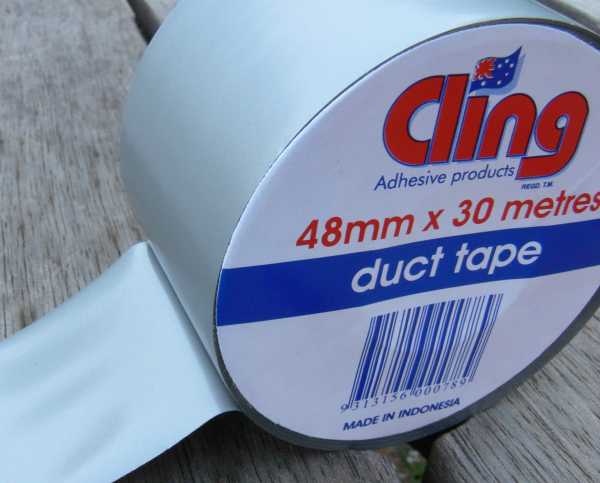
Showing once again that duct tape can do anything except fix ducts, Alaskan pilot, Luke Miller used it to repair a plane.

Miller decided to stop overnight at friend, Gary LaRose's hunting lodge last September. Unfortunately, LaRose had been having problems with a brown bear. Earlier the bear had broken into a meat shed, helping itself to 60 to 70 pounds of fresh moose.

LaRose removed the culinary opportunities for the bear, but the bear continued to break into the shed. On the night Miller stopped by, the bear tried again. Frustrated, the bear turned to LaRose's 1958 Piper Cub. The results were not pretty as the pictures show below...


What happened next is described in an article that appeared in the Alaska Dispatch:
After a few days of meticulous fix-it work, the plane was airworthy enough to fly back to Anchorage. Miller fitted the windows with plywood and Plexiglas, replaced the tires and the horizontal stabilizer (the bear either leaned on it or sat on it), and, according to Miller's dad, fashioned a makeshift fabric skin out of 25 rolls of duct tape and some industrial-strength plastic wrap.


Once again, duct tape saves the day.  It just cannot save your ducts.  You can fly a plane held together with duct tape.  You just cannot hold ducts together with duct tape.

Thanks to Greg McAfee for the heads up about this one.

Wednesday, January 20, 2010

Regime Uncertainty and the Massachusetts Election


Modern economic historians who study the Great Depression are beginning to focus on business uncertainty as a key reason the Great Depression was prolonged. Economic historian Robert Higgs makes the case in a paper, “Regime Uncertainty: Why the Great Depression Lasted So Long and Why Prosperity Resumed after the War (PDF).”

According to Higgs, “Businesspeople may be more or less ‘uncertain about the regime,’ by which I mean, distressed that investors’ private property rights in their capital and the income it yields will be attenuated further by government action. Such attenuations can arise from many sources, ranging from simple tax-rate increases to the imposition of new kinds of taxes to outright confiscation of private property. Many intermediate threats can arise from various sorts of regulation, for instance, of securities markets, labor markets, and product markets. In any event, the security of private property rights rests not so much on the letter of the law as on the character of the government that enforces, or threatens, presumptive rights.”

Higgs quotes economists and historians to support his points that uncertainty freezes investment, the Roosevelt administration created an environment of uncertainty, and business investment stagnated during the Depression.


How Uncertainty Affects Investment…

In an economy where entrepreneurship is decentralized, economic actors will hold back on long-term investments unless the state makes credible commitments to honor its contracts and respect individual ownership rights.

From the book, “Empirical studies in institutional change,” economists Lee J. Alston, Thráinn Eggertsson, and Douglass C. North


Investment spending on an aggregate level may be highly sensitive to risk in various forms…[including] uncertainty over future tax and regulatory policy… a major cost of political and economic instability may be its depressing effect on investment.

MIT Economist, Robert Pindyck


What does provide some degree of protection is the political system, together with the economic pressure groups that ensure that the state does not go ‘too far’ in interfering with the owner’s control over assets. This politically determined thin line may be understood as the real definition of property rights conferred by the state, as distinct from the somewhat fictitious legal notion of property rights. How broadly property rights are defined in this real sense and how effective states’ (largely nonlegal) commitment is to their security is a more serious problem than the issue of legal protections against the more traditional form of takings.

Columbia University Law Professor, Andrzej Rapaczynski


How Roosevelt Created Uncertainty…

[The Roosevelt administration] abruptly and dramatically altered the institutional framework within which private business decisions were made, not just once but several times with the result that regime uncertainty was heightened and recovery substantially retarded.

University of Iowa Economics Professor, Gene Smiley

What kind of uncertainty? Consider the following programs, cited by Higgs, that Roosevelt introduced:

1933
  • Agricultural Adjustment Act
  • National Industrial Recovery Act
  • Emergency Banking Relief Act
  • Banking Act of 1933
  • Federal Securities Act
  • Tennessee Valley Authority Act
  • Gold Repeal Joint Resolution
  • Farm Credit Act
  • Emergency Railroad Transport Act
  • Emergency Farm Mortgage Act
  • Home Owners Loan Corporation Act
1934
  • Securities Exchange Act
  • Gold Reserve Act
  • Communications Act
  • Railway Labor Act
1935
  • Bituminous Coal Stabilization Act
  • Connally (“hot oil”) Act
  • Revenue Act of 1935
  • National Labor Relations Act
  • Social Security Act
  • Public Utilities Holding Company Act
  • Banking Act of 1935
  • Emergency Relief Appropriations Act
  • Farm Mortgage Moratorium Act
1936
  • Soil Conservation & Domestic
  • Allotment Act
  • Federal Anti-Price Discrimination Act
  • Revenue Act of 1936
1937
  • Bituminous Coal Act Revenue Act of 1937
  • National Housing Act
  • Enabling (Miller-Tydings) Act
1938
  • Agricultural Adjustment Act
  • Fair Labor Standards Act
  • Civil Aeronautics Act
  • Food, Drug & Cosmetic Act
1939
  • Administrative Reorganization Act
1940
  • Investment Company Act Revenue Act of 1940
  • Second Revenue Act of 1940
Higgs wrote that, “Taken together, the many menacing New Deal measures, especially those from 1935 onward, gave businesspeople and investors good reason to fear that the market economy might not survive in anything like its traditional form and that even more drastic developments, perhaps even some kind of collectivist dictatorship, could not be ruled out entirely.” Roosevelt, according to Higgs, “expressed a hostility bordering on hatred for investors as a class.”
[Businessmen in the 1930s] are not only, but they feel threatened. They realize that they are on trial before judges who have the verdict in their pocket beforehand, that an increasing part of public opinion is impervious to their point of view, and that any particular indictment will, if successfully met, at once be replaced by another.
Harvard economist, Joseph Schumpeter

Uncertainty rules the tax situation [in the 1930s], the labor situation, the monetary situation, and practically every legal condition under which industry must operate. Are taxes to go higher, lower or stay where they are? We don’t know. Is labor to be union or nonunion?… Are we to have inflation or deflation, more government spending or less?… Are new restrictions to be placed on capital, new limits on profits?… It is impossible to even guess at the answers.
Industrialist Lammot du Pont

For the most part the New Deal relied on private investment to stimulate recovery yet its rhetoric precluded the private confidence to invest. [Roosevelt] lost patience with corporation leaders, and younger New Dealers came to the fore who shared his reluctance to make concessions to conservative business opinion.… The men around Roosevelt were now highly skeptical of the ability of business to act in the national interest.
Cambridge University History Professor, Anthony Badger

Business leaders sincerely believed that the government was in evil hands…and preparing the way for socialism, communism, or some other variety of anti-Americanism.
Former New York University Economics Chairman, Herman Krooss

The Impact of Roosevelt’s Policies…
The failure of the New Deal to bring about an adequate revival of private investment is the key to its failure to achieve a complete and self–sustaining recovery of output and employment.
Economist & Former Chairman of the Philadelphia Federal Reserve, Lester Chandler

Perhaps the New Deal’s greatest failure lay in its inability to generate the revival in private investment that would have led to greater output and more jobs.
University of Leicester History Professor, Peter Fearon

Higgs makes the argument that the regime uncertainty didn’t truly end until, “the death of Roosevelt and the succession of Harry S Truman and his administration completed the shift from a political regime investors perceived as full of uncertainty to one in which they felt much more confident about the security of their private property rights. Sufficiently sanguine for the first time since 1929, and finally freed from government restraints on private investment for civilian purposes, investors set in motion the postwar investment boom that powered the economy’s return to sustained prosperity notwithstanding the drastic reduction of federal government spending from its extraordinarily elevated wartime levels.” “The New Deal,” concludes Higgs, “prolonged the Great Depression by creating an extraordinarily high degree of regime uncertainty in the minds of investors.”


Regime Uncertainty in 2009

A similar, though milder form of regime uncertainty, characterized the United States in 2009. The government nationalized most of the automotive and financial sectors, shoved an increasingly unpopular health care bill through the House and Senate that threatens to nationalize another sixth of the economy, rammed cap & trade (i.e., cap & tax) legislation through the House, created a pay czar to dictate private sector compensation, intends to pass union friendly “card check” legislation, is allowing tax cuts to expire, which essentially means a tax hike, and generally spewed anti-business rhetoric more worthy of Hugo Chavez than the U.S. government.

Much of the uncertainty ended last night with the surprise election of Scott Brown in the Massachusetts special Senate election. Brown provides a critical 41st vote to block cloture and allow the minority to filibuster legislation in the Senate. More important than the vote is the message Brown’s surprisingly strong election sends to moderates. If the GOP can take a Massachusetts Senate seat by a five point margin (i.e., it wasn’t close), all moderates in more conservative areas should be concerned.

Moderates now fear the voters more than their party leadership. Since politicians tend to put their self-interest first, this reduces the risk of passage of significant legislation that will fundamentally alter the business environment. While the administration’s pursuit of Keynesian economic policies will likely hinder, rather than help a recovery, this is a headwind that can be overcome.

The United States has always attracted business investment from around the world for our political and economic stability, reliance on the rule of law, and property rights. With regime uncertainty reduced, expect investment to increase. The business climate just took a tick up.

Even Accidental Plagiarism Can Cost You


Not only can plagiarism cost your company; it can cost you, your company. That’s right; you can lose your company over plagiarism, even without malicious intent on your part.


Click for the full article at Contracting Business by Charlie Greer and Matt Michel. 

Forward this one to your mail list.  Every business owner needs to be aware of the risk from using plagiarized material.

Economic Fundamentals: Crony Capitalism


It's a myth that business is opposed to government interference in the economy. It's not. Business leaders love government interference. They love regulations. They love tariffs. They love them as long as they benefit their companies and/or penalize their competitors.

There are business leaders who will always seek to win politically what they are unable to win in the free market. You can often spot them on television, providing cover for the politician who is introducing some new law that reduces liberty, weakens the free market, and provides a drag on the economy at large, but that helps the business leader's company.

The term for this behavior is "crony capitalism." It's hard to fault business leaders who try to game the system. They're simply choosing the easy path to maximize shareholder value. It's cheaper to buy politicians than to buy share in a free market.

It's up to principled politicians to resist the seductive embrace of the crony capitalist. Unfortunately, politicians too often serve their self-interest rather than the public interest. They distort the free market by tilting the playing field in the direction of a favored few.

As government increases in size and scope, its ability to influence business increases. Market competition takes a back seat to political connections.

Recently, John Stossel focused on crony capitalism. Watch the following videos...

Part 1


Part 2


Part 3


Part 4


Part 5


Part 6

Friday, January 15, 2010

It's Brand Day!


One of the fastest growing trends in the heating and air conditioning industry is contractor branding.  Branding is more than simply slapping a logo on a box.  It's a company's...

  • Reputation

  • Personality

  • Uniqueness

  • Position

  • Promise

  • Image
  Companies with branding programs seize control of their future.  They build equity into their name, not another's name, not a name that's rented to them, loaned to them, or that can be offered to another company somewhere down the road, after the contractor's built up the name. While imitators are arising, there is only one original, turnkey branding program in the HVAC industry.  That's the Retail Contractor Coalition.  The Retail Contractor Coalition offers the most deliverables, the most guidance, and the best expertise in the industry on branding.  It's the only program designed by an internationally recognized branding expert in collaboration with a team of leading contractors.  The President of the Retail Contractor Coalition is Ben Stark, who is the Contractor of the Year for North Texas ACCA.  The Vice President is Steve Miles, named National Contractor of the Year by Contracting Business Magazine.

On February 1 and 2, you can attend Brand Day FREE of charge in Houston, Texas.  Get to Houston and the hotel, meals, and local transportation is FREE.  Learn more about contractor branding.  Learn how you can not only join the Retail Contractor Coalition and start branding your company for FREE, you can actually make a profit from it (though we urge you to reinvest this profit in your brand building activities).

For more information, call Liz Patrick toll free at 877.262.3341.  Hurry!  Reserve your place today.

Marketing Budgeting and Planning


During a contractor panel, Ben Stark was asked how much he budgeted for advertising and marketing. The contractors were interested because Ben built a large, prosperous company in a relatively short time. He employs over 30 people and has over 3500 service agreements.

Ben said his target was 6%, but laughed at the number. In 2008, he spent 8%. Last year he spent 9%.

He went on to explain that he bumped his advertising because of the economy. Good companies do that. They spend more on marketing during times when it's harder to find customers, not less. To retrench is to spiral down.

Ben noted that he's spent a much higher percentage than today. When he was starting out, marketing consumed 14% of his sales.

Steve McKee, president of McKee Wallwork Cleveland Advertising, which helps stalled companies kick sales to a higher level, is the author of "When Growth Stalls." Writing in BusinessWeek, McKee noted:

If you're in a services business, you might want to bump your starting point higher than 5%. For example, like most professional services firms, my company is more margin-oriented than volume-oriented, so fueling its growth requires that we spend a higher percentage of our revenues. Last year, our number was just over 8%, and I've seen companies spend upwards of 15% when warranted—especially young companies that need to invest to build their brand.

It sounds like Ben knows what he's doing (no surprise for those familiar with Ben or his company). Of course the budget will vary based on the nature of the company. McKee explains:

Volume-driven companies tend to spend a tiny percentage of sales on marketing, in part because their large revenues enable small contributions to add up fast, and in part because of the margin pressures they face in having to compete with other high volume companies. By contrast, margin-driven companies tend to spend a larger percentage of sales on marketing: They have room in their margins to afford it, and they're often working from a smaller revenue base.

The bigger question might be, "How do you spend it?"

The Service Roundtable recommends breaking your marketing budget down into three general areas...

1. Customer acquisition

2. Customer retention

3. Increasing your average ticket

The first two, getting and keeping customers, are obvious. Increasing your average ticket? Actually, this can be one of the most important marketing efforts you will make. Increasing your average ticket means dropping more to the bottom line on every call.

You can increase your average ticket by marketing add-on products and services on service calls. The marketing investment might be limited to producing a series of flyers for distribution to the customer in the field. Or, you could produce a full-fledged DVD explaining the wonderful things you can do for the customer and ask the customer to play it during the diagnostic or repair.

You can increase your average ticket by using financing to lower the monthly payments for homeowners so they are able to spend more. Every addition gross profit dollar drops straight to the bottom line. The marketing investment might be to buy down the interest rate or to offer 12 months same as cash.

How much you allocate towards each of the three areas of focus depends on the nature and position of your company. If your company is established, with lots of loyal customers, you will probably spend more on retention than acquisition. If your company is in a growth mode, you will stress new customer acquistion. And everyone should try to increase the average sale.

What's your marketing budget for 2010? What percent will you spend on customer acquisition? On retention? On increasing your average ticket? How much per month?

You can build your own spreadsheet, allocating your budget by month, focus, and ultimately program. The result is a marketing calendar designed specifically for your company.

Shameless plug... The Service Roundtable recently created a Marketing Planning Wizard for HVAC and Plumbing that streamlines and simplifies the process, guiding people step-by-step. It comes with the standard $50 monthly membership. If you're a plumbing or air conditioning company, check it out. Or call Liz Patrick, toll free at 877.262.3341 and ask or a free tour.

Tuesday, January 12, 2010

When is your Black Friday?
With it is the being of a New Year, it signals new opportunity to have learned from last year’s pain or be forced to repeat it. During December, I spoke to several contractors who were not profitable for the year; one said he said he was waiting for his Black Friday.
The concept of Black Friday in the retail business has not been around for a long time. According to Wiki it was originally coined in Philadelphia in 1966 and had to more with traffic in the central area of the city the days after Thanksgiving till Christmas. About 15 years later was morphed into representing the day on an annual basis that a retail organization went from an operating loss to a profit. The truth is that most retailers make a profit every quarter.
Are you making a profit every quarter, month, week or every day? All businesses even seasonal ones should have a goal to be profitable all the time. The thinking that at a given date in a year, you have covered your expenses and the subsequence revenues are all profits is a head in sand approach that could lead to disaster and failure. If you are looking in terms of a year for your horizon, you will miss the chances to preserve the hard fought wins while accepting what falls into and/or off your lap.
With the advent of (1)accounting software like QuickBooks, Peachtree and MYOB to name a few, the ability to manage your business is a mouse click away. Industry specific add-ins makes these tools even more effective. Twenty years ago it took a programmer to generate a report with limited flexibility, now you can make your own report in matter of minutes.
To keep the reports accurate you need the information to be current. It is no longer acceptable to batch items and wait on a schedule. Here is where (2) “Lean Accounting Processes” and (3) “Single/One Piece Flow” pay large dividends. You get an invoice, to put it in the system, you get new order you put it in the system, you finish and ship product/service you invoice immediately. At the end of day a person’s desk is clear and is waiting for the new work of the next day. In essence whether you large or small you can have a reasonable snap shot of the day’s performance, and at the end of the week you should be reviewing the KPIs(Key Performance Indicators) AND THEIR TRENDS. KPI’s will differ for each company, but reflect the elements that most important in the life of that entity. Some standards, Cash, Days of AR, AP, WIP, GM, Projected Net Profit and a 13 week cash flow projection.
Back to the original question when is your Black Friday? My answer to you is; Every Friday should be your Black Friday. Because if it is not Black then you have something to be working on to correct that next week, not next year or even next month. This information should be shared with the managers along with the expectations for performance and goals. In a perfect situation the managers will react to correct the issue before the owner or superior has to motivate them. This is a goal for your organization to obtain.


1 http://accounting-software-review.toptenreviews.com/
2 http://en.wikipedia.org/wiki/Lean_accounting
3 One Piece Flow refers to the concept of moving one workpiece at a time between operations within a workcell. At the opposite extreme, we might process an entire batch or lot at each operation before moving it to the next operation. 
This idea has many benefits. It keeps WIP at the lowest possible level. It encourages work balance, better quality and a host of internal improvements.  http://www.strategosinc.com/onepieceflow.htm

Matthew R Prazenka


Abacus Business Leaders, LLC
Driving Shareholder Value through Hands-on Leadership
500 Lake Cook Rd. Suite 350. Deerfield, IL 60015
877.412.2228 x1030
mprazenka@abacusbl.com www.abacusbl.com