Are Your Customers Dumping You?
This is a surprisingly good parable put out by Microsoft illustrating the way most companies advertise to their customers and what the customers think about it. This is why customer engagement is so important.
This is a surprisingly good parable put out by Microsoft illustrating the way most companies advertise to their customers and what the customers think about it. This is why customer engagement is so important.

Do you have a Facebook fan page for your company? If not, why not? After all, it's F-R-E-E. And Facebook ads can be more precisely targeted and are more cost effective than Google Adwords.
According to the web analytics company, Compete, Facebook has passed Yahoo as the second most popular website on the Internet...


A little over a year ago, I wrote about Ford's use of the David Bowie song, "Ground Control to Major Tom," for the Lincoln MKS (read post here). It seemed incredibly stupid to promote a car using a song that featured the following lyrics...
For here am I sitting in a tin can… Your circuit’s dead, there’s something wrong.
Standing there alone, the ship is waiting.
All systems are go. are you sure?
Control is not convinced,
but the computer has the evidence
No need to abort.
The countdown starts
Watching in a trance, the crew is certain.
Nothing left to chance, all is working.
Trying to relax, up in the capsule
"Send me up a drink.", jokes Major Tom.
The count goes on
4, 3, 2, 1
Earth below us,
drifting, falling, floating weightless
calling, calling home
Second stage is cut.
We're now in orbit
Stabilizers up, runnning perfect.
Starting to collect requested data.
"What will it affect when all is done?"
thinks Major Tom
Back at ground control,
there is a problem.
"Go to rockets full"
Not responding.
"Hello Major To,. are you receiving?
Turn the thrusters on.
We're standing by."
There's no reply.
4, 3, 2, 1
Earth below us
drifting, falling, floating weightless
calling, calling home
Across the stratosphere, a final message
"Give my wife my love."
Then nothing more
Far beneath the ship, the world is mourning.
They don't realize, he's alive.
No one understands, but Major Tom sees.
Now the light commands
this is my home, I'm coming home."
Earth below us,
drifting, falling.
Floating weightless
coming home
(repeat)
home...

Below is a presentation reminding marketers that prospects do not see themselves as they are, but as they want to be. The presentation creator suggests that your brand message should reflect and speak to the prospect's desired self-image. This is what Leo Burnett managed to achieve with the classic Marlboro Man ads.
It's also the basis of the Nike brand. Take a look at the following Nike wings poster. What does it do to sell shoes? Will Nike shoes give you Jordan's wingspan? Maybe not, but millions of Air Jordans were sold because people wanted to "be like Mike."
What are they trying to do? Based on the ad, I suspect the ad agency decided to position the Dos Equis brand as the beer for guys who don't drink beer. I'll give them this, it's not a crowded position (note: this is why ad agencies need adult supervision).
Flip through the presentation. The author makes his point well.
This is a somewhat bizarre presentation on advertising mistakes that's dead on. Despite its weirdness (maybe because of it), I like it. Give it a look.
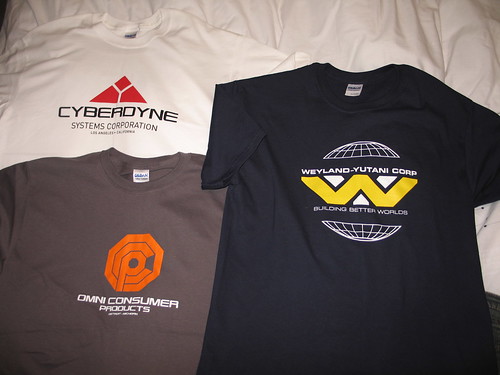
Jason Sadler came up with the idea of renting himself for part of his living. No, he's not renting himself in that kind of way. Pay the guy between $1 and $365 and he'll wear your t-shirt for a day. Jason's rental space sells out months in advance.
Jason's not simply wearing your shirt. He makes videos about wearing your shirt for YouTube and Ustream.tv. He's takes pictures wearing your shirt for his blog and Flickr. He posts on this blog and Twitter. He plugs your company in the blog and on his calendar.
Okay, so it's more than wearing your shirt and slouching around the house. Still, why pay someone to wear your shirt? Why not simply give your shirts to customers and prospects? They'll wear them for free.
When my wife was interviewing orthodontists, one of them gave my daughter a t-shirt. While we didn't select the orthodontist who gave Mackenzie the t-shirt, she wore it for several years. This is the equivalent of a homeowner selecting a different air conditioning contractor for a replacement, but allowing you to put a yard sign in the front yard one day a month for the next two years.
T-shirts are inexpensive giveaway items that help market your company. Why not give them away left and right?
By the way, come to the Service Roundtable's hospitality party at Comfortech and pick up one of our famous party t-shirts, while they last. We're also giving away a music CD you won't get anywhere else.
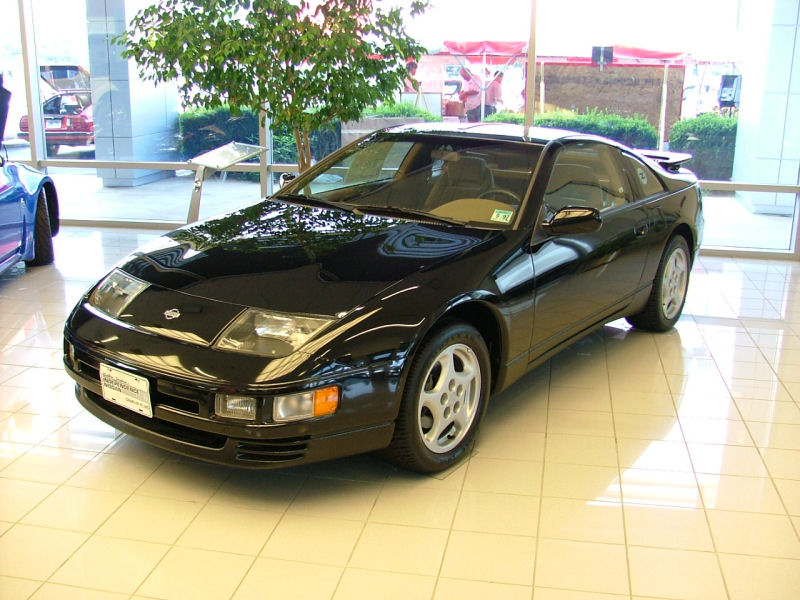
I know Nissan's advertising the Z, but that's corporate talking. They're a little behind the times. The Z car's obsolete. Yes, I can imagine you're disappointed. But hey, I've got a great deal on a Sentra.
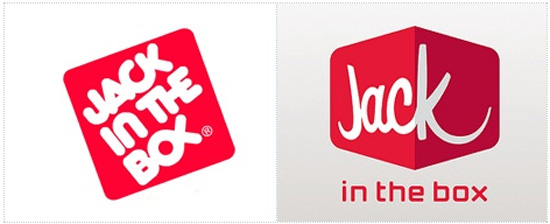
A few months ago, I noticed a new Jack In The Box restaurant being constructed... with an entirely different logo. Some ad genius decided to update the brand, whether it needed it or not.
Actually, this isn't an update. It's a redesign. And as several advertising analysts have pointed out, the new brand logo looks more like a video game logo than a fast food hamburger restaurant logo. It hasn't been doing well in the unscientific preference surveys I've seen.
Personally, I don't have strong feelings one way or the other about the new logo. I do have strong feelings about radically redesigning a familiar and heavily advertised brand. If I ran Jack In The Box, there is NO FREAKING WAY I would allow some ad agency to jack with the Jack In The Box image.
I don't know who brought in the agency, Duffy & Partners, to redo the logo and I'm not questioning the work the agency did. I just wonder, "Why?"
Look at the cost the chain will have to endure. Look at the cost its franchisees will suck up to change the signage. I'm all for aggressive marketing during a downturn, but this isn't aggressive. It's a foolish expense.
Clearly something is wrong in the land of Jack if reports by ad guru, Jim Edwards are correct and Jack In The Box is buying local media in the New York market when the closest restaurant is in North Carolina.
Jack In The Box has benefitted from great advertising by the agency, Secret Weapon. The Jack character has been described as the anti-Ronald McDonald. Distinction is necessary for a player with a much smaller ad budget than its competitors. The Jack In The Box ad spots are designed to appeal to the 18 to 35 year old age group who finds shows like The Simpsons and Southpark amusing. Sometimes, however, I wonder if the ads use too many inside jokes about corporate life.
Still, the spots have been well done, always included an explicit or implicit call to action, and helped distinguish the company. On the whole, Jack has benefitted from solid work by its agency.
Fortunately for Jack, the competition leaves much to be desired. McDonalds is politically correct and bland. And the worst Jack In The Box commercial is far better than anything featuring the creepy Burger King. I bet the Burger King creeps you out too.
Jack In The Box will survive the logo change. But survival is not the same thing as benefitting.
Logo changes should be gradual, made over time, and made so that anyone familiar with the old logo won't doubt its connection with the new logo. This is true for any business, but especially small business. Small business owners simply do not have the budget to instantly redo a brand image that's been built over years.
Great logo designs in this presentation. Watch it full screen.

In church Sunday School, we're studying the Book (or Epistle) of James. If you're familiar with James, it contains the well-known passages about faith and works. An undercurrent of James is theme of doing the right thing.
During our discussion, one member of the class said she was reminded of the television commercials that focused on doing the right thing. She couldn't remember which company was reponsible for the ads. She thought it might be an insurance company. No one else could remember. Someone suggest All-State, but that was quickly rejected.
In the class of 20 odd people, three of us are marketing professionals. The immediate and near unison reaction of the marketers was, "Well, they aren't very good ads if no one can remember the company."
After a second or two, a couple of us announced the company with conviction. We KNEW it was Northwestern Mutual.
The clear purpose of the ads was to imply that the employees of Northwestern Mutual to do the right thing for us as customers by association with ads where people are doing the right thing.
Only it wasn't Northwestern Mutual. It was Liberty Mutual.
Here are two ads from the campaign...
The ads are beautiful. They make you feel good. I'm sure the writer, director, and producer of the spots are all proud of their work. Of course, as a former youth soccer coach, I've got to wonder where the heck the coach was in the second spot.
Yup, it's all good... except for Liberty Mutual.
The company is spending a fortune and the competitor benefits? I would rather run an obnoxious commercial that makes the phone ring than a CLIO winner, which fails to drive sales.
In an interview at BusinessWeek, Stephen Sullivan, Liberty's senior vice-president of communications services said the company's past approach to advertising was to, "interview hundreds of customers and find out what they wanted in an insurance company."
Makes sense to me. Find out what the customer wants or needs and provide it. But that straight forward, traditional approach to advertising is passé for Liberty and it's new agency, Hill Holliday.
Hill Holiday rejected the notion of talking with people who might buy insurance. According to Sullivan, the agency people said, "Wait a minute here. Why don’t we start inside and find out what is core to your company’s values from your employees' point of view."
What does this have to do with selling insurance? Nothing. But it has everything to do with selling advertising to an insurance company.
From an agency's perspective, it's a beautiful thing. Get inside the company. Talk with lots of people. Build relationships. Bond. Make it harder to ever get rid of the agency. Then, build an ad campaign that makes company employees feel better about themselves.
Sullivan said the positioning line selected was, "We will celebrate our customers’ responsibility and relentlessly prove our own."
What does this have to do with selling insurance? And not just insurance, but auto insurance specifically? You see, Liberty Mutual already had a problem with consumers confusing the auto insurer with a life insurance company. The responsibility theme is likely to add to the confusion since it's more in line with a life insurance theme (i.e., responsibility for your survivors).
According to Sullivan, people will think, "Liberty mutual is a company that shares my values. I’m going to get my insurance from them."
Really? Is that how you buy car insurance? Do you look for a company that shares your sense of personal responsibility? Is that the key motivation for selecting one insurance company over another?
Lesley Bielby, the chief strategy officer for Hill Holliday was also interviewed by BusinessWeek about the Liberty campaign. She starts talking about "cultural and social shifts," "ideas that transcend advertising," and creating "something much bigger than the ad it was launched with."
How about something that sells insurance?
Bielby notes that the company's goal was to become one of the top five in its category and notes with pride, "They managed to achieve that goal essentially in less than three short years," before acknowledging the success was, "largely through acquisitions."
Acquisitions? Liberty Mutual turned into an insurance consolidator and in classic fashion paid stupid premiums for the companies it acquired, like the 51% premium to buy Safeco. This acquisition alone bumped the sales volume by 29%. But what did it do for the shareholders?
According to Report Buyer:The [Liberty Mutual] group recorded revenues of $25,961 million in the financial year ended December 2007, an increase of 10.4% over 2006. The operating profit of the group was $2,198 million in the financial year 2007, a decrease of 2.7% over 2006. The net profit was $1,518 million in the financial year 2007, a decrease of 6.6% over 2006.
Doesn't sound like the shareholders benefitted. This brings us back to the advertising. How do you measure the impact of an advertising campaign on a company that's growing by acquisition and making less money?
Like any good agency executive, Bielby's got a ready reply and it doesn't include increased sales, marketing research validating increased awareness, or other outdated approaches. "Results can come in many different forms," she notes.
"In the case of liberty mutual the most gratifying thing for them and also for us as an agency are some of the letters and emails that we’ve been reading around how people are using responsibility."
Huh? I think she said everyone can feel good because they got some nice mail about how responsible they are being responsible. How about the agency's responsibility to the client?
"We’ve had letters from schools and colleges about how they’ve used the ad to provoke a discussion about responsibility and what it means in our society," she beams.
Excellent! And how many policies were written because of collegiate discussions about the role of responsibility in our society?
It gets even better for Liberty Mutual. Using client money, Hill Holliday has launched The Responsibility Project to showcase films and mini-films about responsibility. Check them out. They're entertaining. They're well done. But they don't sell insurance.
Note how the discussion below each film is filled with comments like the following...Because of your film about a guy who would rather play the trumpet than basketball, I'm going to buy my car insurance from Liberty Mutual. Good job!
Forget the best deal. Any company that will pay for the production of a film about an irresponsible Brit and his dog driving irresponsibly through British city streets is reason enough to pick you over the Gecko.
Forget accident protection, I want to buy my insurance from a company with a film about a guy who keeps his blind date from stealing from a dinner party host.
Not.
This is the perfect example of an ad agency that's self-actualizing on the client's dime. As consumers we may be entertained, but we aren't given much of a reason to buy (and that's being generous).
Meanwhile, the competition is focused on buyer benefits...
View this presentation of different, creative types of outdoor advertising (watch it in full screen mode)...
This is stunning research data from the Nielsen Global Online Consumer Survey. I wish the survey had included direct marketing, such as direct mail, shared mail, door hangers, flyers, and shows. Still, it reveals that websites carrying the company brand are more likely to be trusted than any other form of advertising, save word-of-mouth.
By John Jantsch @ Duct Tape Marketing
It is a scientifically proven fact that 5 times as many people read headlines as read the body copy of an ad. So with the headline, you've spent about 80% of your advertising dollar. So from there it's pretty easy to make a case that the headline is the most important part of any ad.
Yet, a very large percentage of advertising that you see out there doesn't even carry a headline. Those that do tend towards cute, catchy slogans. By headline I mean a benefit rich offer that grabs you by the throat.
It doesn't matter what format your advertising takes - postcards, letters, print ads, radio or TV ads and even web sales copy. When you understand this then you begin to realize that should use 80% of your marketing time and energy getting your headlines perfect.
Now I must admit I have found a way to cheat. Oh it's not really cheating. Creating great headlines takes practice, patience, and a fair amount of creativity. I have found a software program that does the hard work and allows you to create power packed headlines in seconds. You can do the work yourself but this makes it much more fun. The program is called Headline Creator Pro. I use it daily!
The headline is the first thing that your reader or prospect sees when they open your letter or flip your postcard. In that moment (about 5 seconds) your reader decides whether or not to read any farther.
So first and foremost your headline must grab your reader's attention. If you don't grab them by the throat and hold them right away, you never will.
Writing powerful headlines is not easy but it can be done if you follow some simple guidelines. Some of the most powerful and effective headlines of all time contain at least 3 of the following points
1. Your headline must give the reader a reason to act now instead of later
2. Your headline must communicate something the reader considers valuable
3. Your headline must scream how you might offer something that is unique
4. Your headline must point to something very specific for the reader
Discover
Easy
Free
New
Proven
Save
Results
Introducing
At Last
Guarantee
Bargain
Easy
Quick
Sale
Why
How To
Just Arrived
Now
Announcing
The Hobaicas think so. Years ago, Phoenix based Hobaica Refrigeration hired a company to prepare of series of jingles. Paul Hobaica played the jingles for his family to get their reactions. He said he choose You'll Lik A Hobaica after catching his kids singing it the next morning. It was sticky. It was memorable. And through the years, it helped build the Hobaica brand in the Phoenix market. The jingle is contained in the commercial below.
According to AdAge, the top ten jingles of the 20th Century are:
1. You Deserve a Break Today (McDonalds)
2. Be All That You Can Be (U.S. Army)
3. Pepsi Cola Hits The Spot (Pepsi Cola)
4. M'm M'm Good (Campbell's Soup)
5. See The USA In Your Chevrolet (General Motors)
6. I Wish I Were An Oscar Mayer Weiner (Oscar Mayer)
7. Double Your Pleasure, Double Your Fun (Wrigley's)
8. Winston Tastes Good Like a Cigarette Should (Winston)
9. It's The Real Thing (Coca-cola)
10. A Little Dab'll Do Ya (Brylcreem)
So what do all of these jingles have in common? It seems to me there are three common traits. First, the jingles are catchy. They get inside your head and you find yourself repeating them.
Second, they were pounded on the airwaves. The advertisers didn't run the jingles a few times, but over and over and over. As a small business owner you may not think you can afford a lot of advertising, but you might be surprised. Cable TV can be segmented to individual communities. The spots might only cost a few dollars each.
Radio can also be affordable, especially if you pick one station and concentrate on it to get the necessary repetition. Just make sure the station's audience matches your target demographic. If women age 35 and up call your company for service, don't advertise on the sports talk station, even if it's your favorite.
Finally, it's been years (even decades) since these jingles last aired, yet they're still memorable. Could you finish, "Two all beef patties, special sauce..." I can and I haven't heard this Big Mac ad in decades.
Build up a jingle's memorability through repetition and it will continue to work for years, even if you get bored with it and move on to something else.
Of course, if a jingle works, why would you ever drop it? Don't drop advertising just because you're tired of it. No one tunes into your name as much as you. Usually an ad is finally starting to sink in about the time the owner is sick of it and wants to try something else.
Service Roundtable members asked for a fall Roundtable. They asked for Las Vegas. We listened.
Hosted at the fabulous Rio All Suites Hotel & Casino, the Las Vegas Roundtable is a wholly new program with an equal focus on HVAC and Plumbing. This power packed two day meeting features some of the most demanded speakers in the industry, plus highly interactive Roundtable breakouts.
Nowhere else in the industry will you get Mark Matteson, Robert C. Viering, Charlie Greer, Ron Smith, and me together for a two day event. You do not want to miss this.
Learn More About The Las Vegas Roundtable