Showing posts with label air conditioning. Show all posts

Friday, February 26, 2010

"John Ward was broke in 1992, and then he met Frank Blau..."


That's the lead for an article in Contractor Magazine about John Ward. John is the magazine's 2009 Contractor of the Year. I wonder how many contractor stories start like John's... The contractor was broke, and then meets Frank Blau. The rest isn't history. It's profitability.

Read the story.

Sunday, January 24, 2010

Anthropogenic Business Climate Change


On this page two years ago I wrote, “What if it doesn't get warmer? What if it gets colder?” After a summer that wasn't and one of the coldest and snowiest winters on record, it certainly seems to be getting colder.

Read the rest at ContractingBusiness.com

Tuesday, December 29, 2009

3 Questions With Steve Saunders


This edition of the 3 Questions For Small Business Podcast features Steve Saunders from Tempo Air and TexEnergy Solutions. Steve gives background on the spin off of Tempo Air from TD Industries, using an ESOP. Next, Steve addresses how Tempo has responded to the contraction of the new construction market by addressing home energy. Finally, Steve offers his projections for the future direction of the air conditioning industry.

Click Here to Listen

Tuesday, December 15, 2009

Mauzy New Customer Gift Card & Referral Card


Matt Mauzy from Mauzy Heating & Air Conditioning in San Diego shared the gift card program he uses with new customers and gave me permission to write about it.

The card works as a bounce back coupon and a referral card. The packaging causes it to stand out. The card is heavy plastic, like a retailer gift card. The bounce back coupon is on one side and the referral card on the other. The card is inserted into a small gift folder. Check it out...


This is the front of the gift presentation folder.


This is the back of the gift folder.


This is the open folder.


The front of the card with a $50 bounce back coupon.  Note that the card is "transferrable."  It can be given to a friend.


The back of the card is the referral program.  Note how the customer is directed to enter the information online, generating a referral lead.

If you do not want to go to the trouble and expense of creating a gift card, but like the concept, create a business card version.

Monday, December 14, 2009

Don't Keep It a Secret


Whenever I take shirts to my cleaners, the cleaners replaces any missing or broken buttons. Your cleaners probably does the same, but do you know about it?

The reason I'm aware is the cleaners sticks a small tag through the matching button hole and staples it. The tag declares, "Replaced Button."

The tag is a reminder of a small added value the cleaners provides. Without the tag, I might forget about there was a button missing or even be aware of it. The cleaners won't get extra credit if I don't know about it. Hence, the tag.

I bet there are little things that you do for your customers they are unaware of. A plumber might clean a faucet aerator. An HVAC technician might notice the time on a digital thermostat is off an hour due to a change in daylight savings time and set the time correctly. An electrician might casually test a GFCI outlet. A pool technician might cut out a small section of pool sweep hose where it's leaking.

Whatever the action, you won't get credit if you don't tell the customer what was done. Note it on the invoice and write, "No charge." And don't just note it. Tell the customer too. Think of the impact if the cleaners employee told me that three buttons were found missing and were replaced at the time I picked up my shirts.

When you do a good deed, even if it's part of the routine, don't keep it a secret.

Tuesday, November 17, 2009

The Social Media Leap of Faith


My new "Rant" is out...

Social media is sweeping the business community. Ford Motors, for example, is spending 25% of its marketing budget on digital/social media. Yet most contractors are slow to adopt it. Stunningly, there's apparently no shortage of industry skeptics willing to speak out and shout down digital technologies, proclaiming everything this side of email to be a fad.

Read More At ContractingBusiness.com

Friday, November 13, 2009

The Return of Earl King

Earl King is leading a seminar on commercial service sales!

The first time I heard about Earl King was during my days at Lennox. It seemed that Earl was writing in every trade magazine and speaking at every conference. When he wasn't writing or speaking, others were writing or speaking about Earl's approach to commercial service sales or the United Service Alliance that Earl started. The guy is a sales legend.

Earl won his first national sales contest at the age of 17. He was the national sales champion at Honeywell for four years, back to back. In two years as a branch manager Earl was #1 in sales and #1 pre-tax profit growth. As a regional director and later, a national sales manager for Honeywell, Earl wrote and/or contributed in the development of the selling techniques for the commercial division.

Earl then joined MCC Powers and realigned the national service agenda. He set out on his own, founding the United Service Alliance (USA), the largest network of independent, commercial contractors.

Earl has consulted with companies like Carrier, Trane International, York, TAC, Schneider Electric, Otis Elevator, Johnson Controls and McQuay. He's spoken at ACCA, MCA, MSCA, SMACNA, BOMA, and IFMA meetings. Earl has written more than 75 feature articles for the trade press. He's trained sales professionals from 32 countries and all 50 states. The guy is good.

For the past few years, he's been completely tied up in consulting work. A few months ago, he began writing once again for Contracting Business. On December 6-9, Earl will teach his first public commercial service seminar in years in Dallas.

Click for more information about the seminar.

Tuesday, October 6, 2009

I Wanna Market Me (The Contractor's Song)

This is for HVAC contractors. You just gotta watch it...

Sunday, August 30, 2009

Life Before Air Conditioning

Photo: Caitlinator

What was life like before air conditioning? A writer recalls...

In the 1940s and 1950s, with the thermometer reaching the 90s, you’d get off the bus in downtown Anderson (bus windows usually were open to capture whatever breeze there was) and head for the nearest dime, drug or department store. The doors would be propped wide open, and when you entered you’d notice giant ceiling fans rotating lazily to stir up the stagnant air as customers and clerks alike mopped their brows to wipe off the perspiration.

Few public buildings had air conditioning. Many church buildings equipped their hymnal racks with cardboard fans, and parishioners hoped the preachers would keep their sermons short.

Air conditioning was unheard of in schools.

Read the whole article.

I'm old enough to remember the drug store in downtown Tallahassee promoting the fact it was air conditioned, courtesy of Kool cigarettes.

"Come in. It's Kool inside," proclaimed stickers on the door.

Some of my friends lived in homes lacking central air conditioning. We tended to cluster in the small TV room with a window rattler during the summer.

Today, air conditioning is a necessity, not a luxury. Yet, for many Americans air conditioning is becoming less affordable. As the government imposes mandates over fear of ozone depletion and the quixotic quest for ever higher efficiencies, no matter how lengthy the payback, some Americans may find themselves returning to the days of window rattlers in the bedrooms and family room during the summer months.

And this is progress?

Why Aren't You Cross Marketing?

Great Steak Houses ad from an airline magazine


In the late 1980s, Vicki La Plant started encouraging contractors to cross market with local, non-competitive businesses. In essence, contractors cross mail to each other's mail lists. They pass out coupons for other companies on service calls, refer each other, and find other ways to help each other, reducing marketing costs. Think of cross marketing as business networking taken to the next level.

Cross marketing can be expanded beyond in-home service businesses. The late Tom McCart once persuaded a pizza delivery company to tape coupons for one of his clients on their pizza boxes. In exchange Tom's client passed out pizza coupons and menus on service calls.

Virginia contractor, Dean Thomasson, used a similar approach when he worked an arrangement with a local fast food restaurant. The restaurant inserted coupons for Dean's company on drive through orders and Dean passed out coupons for free sandwiches on service calls.

Anyone who flies and browses through the airline magazines has undoubtedly encountered ads for the "Great Steak Houses of North America," sponsored by the Independent Retail Cattleman's Association, which appears to be little more than a restaurant marketing alliance run by a Nashville marketing guy. Yet, its endurance is a testament to its effectiveness through the years.

Increasing marketing effectiveness is the reason for cross marketing. Your effectiveness will be best when a high degree of trust exists between the customers of the different companies. When Houston's Hallmark Air Conditioning and Jarrell Plumbing cross mailed to each other's customer lists recommending a service agreement from the other company, it was the single best direct mail initiative the companies experienced.

This makes sense. Depending upon the survey you reference, the number of homeowners who locate service companies by referral runs around 70%, making referrals the number one source of lead generation. Additionally, people tend to assume contractors know who the good contractors are in related trades. Combine the tendency to rely on referrals with the belief that contractors have inside knowledge, add a trust relationship with the referring contractor, and the response rate should be the best experienced.

At the Service Roundtable we've encouraged contractors to form marketing relationships with complementary companies. To make it easy, we've created marketing pieces like flyers and magnets promoting the "Distinctive Service Companies" of your town. We've creatred mail pieces like the one below.


If the Service Roundtable doesn't serve your industry or, for some reason, you don't want to join the Service Roundtable, create an alliance on your own. This is what Jim Ritter of Transworld Electric did in Charleston, SC. He assembled a home remodeling company, kitchen remodeling company, heating and air conditioning company, plumbing company, and pest control company to join his electrical contracting company as the Elite Home Connection.

So far, the Charleston group shares a one-page website linking their companies and a phone number for consumers. Presumably, the call center is an answering service with call forwarding to the appropriate company. More joint marketing may follow, with the cost for each company equal to one sixth of the burden of the cost of marketing independently.

Cross marketing is a proven winner. It increases marketing effectiveness. It reduces expenses. Why aren't you cross marketing?

Tuesday, August 25, 2009

The Oldest Appliance Contest - FREE


As you get ready for the fall home shows, it's a great time to consider running an Oldest Furnace Contest or Oldest Water Heater Contest.

In the early 1990s, I came up with the idea of giving away a furnace at a home show to the homeowner with the oldest furnace, provided the winner paid for the installation. When a contractor ran the oldest furnace contest, it was determined to be one of the most, if not the most successful home show promotions in the history of the HVAC industry.

The simple beauty of the contest was that every lead was a qualified lead. Everyone who registered knew he had an old furnace. Everyone who registered was willing to pay something (i.e., the installation cost) if he won. So, what do you call someone who knows he's got an old furnace (possibly the oldest in the area) and is willing to spend money to get a new one installed? I call him a qualified prospect.

I've presented the oldest furnace concept as part of Comanche Marketing presentations for more than a decade. HVAC contractors have run the contest for furnaces and air conditioners. Plumbing contractors have run oldest water heater contests.

I packaged the necessary elements from the Service Roundtable's content library, made them available in one, easy to implement program, and decided to GIVE IT AWAY. There are no strings. There is no catch. You can download everything you need for "The Greatest Home Show Marketing Idea Ever" for free. Run you own oldest furnace contest, oldest water heater contest, oldest air conditioner contest, oldest boiler contest, or oldest thing-a-ma-bob contest.

Click here to go to The Oldest Appliance Contest page on the Free Stuff section of the Service Roundtable. If you think this, you might also browse some of the other Free Stuff available from the Service Roundtable.

Here's the commercial pitch... Browse around the Service Roundtable's Free Stuff section and compare the what the Service Roundtable gives away to what other groups freely give away. Think how much more must be reserved for members (hint: it's been valued at more than $3 million).

If you like it, try the Service Roundtable for a month. It only costs $50 and there's no long term contract. If you don't like it, quit.

Friday, August 21, 2009

24 Ways to Boost Your Average Ticket – Part III


12. Offer a No-Breakdown Guarantee

Steve Miles, at Jerry Kelly Air Conditioning in St Louis, MO raised service agreement prices $25 during a downturn. Worried about the potential for price resistance, Steve offered a “no-breakdown guarantee.” Once a Jerry Kelly technician has performed a tune-up, the company would pay the repair costs for any breakdowns through the end of air conditioning season.

The customer response was immediate and dramatic. By the thousands, people loved the idea of the breakdown guarantee and gladly paid more.

The guarantee is not as risky as it seems. If the technician finds deficiencies in the customer’s air conditioner, these are noted. The customer can either authorized the company to correct the deficiencies or exclude them from the guarantee. Most opt to correct the problems, which results in additional work for Jerry Kelly.

Next, Jerry Kelly’s technicians are among the best in their area. They are unlikely to miss much under normal circumstances. The presence of the guarantee caused them to slow down and be even more thorough in their maintenance. Few problems, if any, were missed that jumped up and bit the company as the summer progressed.

The company did have to make a number of repairs for free, but the number was insignificant financially. Think about it. With the average repair in the air conditioning industry costing consumers between $350 and $500, Jerry Kelly will make money if fewer than one system out of ten breaks down in the following season after a comprehensive tune-up is performed.

Another benefit of the no-breakdown guarantee is its timing. The guarantee doesn’t take effect until the tune-up is performed. Normally, scheduling spring tune-ups is a hassle for an air conditioning company. People are busy, hard to reach, and scheduling air conditioning maintenance, even if aware of the need, is hardly top-of-the-list. The guarantee put a sense of urgency to the tune-up. The sooner the work was performed, the sooner the homeowner was covered against unpleasant repair expenses. Suddenly, homeowners were going out of their way to be available for tune-ups.

The no-breakdown guarantee drops added revenue straight to the bottom line with little accompanying risk. Steve Miles is excited about the program and tells everyone who will listen how it works, including direct competitors. Yet, few contractors and no competitors offer a similar program. Their response to the risk is emotional, rather than rational.


13. Create “Leave Ahead” Brochures To Give To Customers During Diagnostics


Few service company owners would send people into the field to make repairs without the proper tools and training. Yet, owners think nothing of sending service personnel into the field without sales and marketing tools and the training to use them.

Create informational brochures for service personnel to hand to customers at the start of a diagnostic or service call. The brochures should inform people about products and services your company offers in a dispassionate manner. Because they are handed out at the start of a service call, they’re called “leave ahead” brochures, rather than leave behind brochures.

Most service company owners would agree that the best opportunities for boosting average tickets are for field service people to sell add-on products and services during a service or maintenance call. After all, the customer’s already paid to get the truck and mechanic to the door. It costs less (or should) to sell the add-on today than a week from now.

Unfortunately, most service personnel are not very good at selling add-ons. They could be, but they hesitate to tell customers about all of the wonder opportunities the company provides. The best way to keep a customer from buying a product or service is to keep the customer in the dark about its existence. This is where the leave aheads come into play.

The brochures give the homeowner something to look at while the repair is performed. This can be an uncomfortable time for both homeowner and serviceperson. The homeowner is worried about the repair and cost, even if given a price upfront, and is uncomfortable with a stranger in the home. The brochure relieves anxiety by briefly focusing the homeowner’s attention away from uncertainty.

The mechanic may be comfortable performing a repair, but is uncomfortable with the homeowner who follows him around. The brochure helps redirect the customer away from the mechanic so he can get his job done.

Few homeowners are open to the possibilities of additional work until the current problem is addressed to their satisfaction. Once the repair is complete, the cost is known, homeowners are relieved and ready to consider other products and services. If the leave ahead brochure highlighted a problem the homeowner feels or something the homeowner desires, it’s natural to ask the serviceperson about it.

The mechanic only needs to answer the homeowner’s questions honestly to sell with conviction (assuming the mechanic believes in the product or service, which is where shop training comes in). Service personnel are great answering questions and sharing expertise.

Spend 50 cents per call to provide your people with leave ahead collateral that they are motivated to hand to homeowners to keep the homeowner occupied during the repair and you will invariably boost add-on sales over time.

Your effectiveness will improve if you focus on one or two common issues a month, train your personnel on the products and services you offer to address the issues, train your team on the homeowner benefits from your offering, run a limited time special promotion for the month, and focus that month’s leave ahead collateral on the issue and/or your offering.


14. Create A DVDs For Customers To Play During Diagnostics

A more modern version of the leave ahead is the leave ahead DVD. This offers you the opportunity to fully address an issue, such as water conservation, indoor air quality, comfort problems, carbon monoxide, termite infestations, power quality, salt water pool systems, and so on. Homeowners can better see the process and visualize the outcome when video is used.

Of course, creating a DVD is more expensive than creating a 3-panel brochure. However, mass producing DVDs isn’t much more costly than printing today. And with desktop video, it’s possible to create your own videos in-house. Your risk with DIY video is the result might bore the audience to tears. For this reason, it’s often better to hire a professional. If the budget is tight, consider hiring students from the closest college.

Once the DVD is mastered, it can be repurposed. The video can be uploaded to YouTube and similar sites, with links and tags pointing back to your company website. You can embed the video at your side.

The DVDs can be mailed to mailed to existing customers, offered as free public relations bait pieces, played and distributed during home shows, and sent to customers in advance of a replacement or remodel sales appointment.


15. Create A Page Listing All Options, Their Features, And Benefits For Quotes

One of the biggest reasons people fail to buy upgrades is a lack of awareness about the upgrades. Create a single page listing upgrade options for common repairs, for replacements, and for remodels. Include the features of the upgrades, the concurrent benefits, and the buyer’s investment (total and additional cost via monthly payments).

Options sheets serve three purposes. One is to inform buyers what’s available.

The second is to lay out the options in an easy to understand manner. Thirty-eight percent of the population learns, at least partially, by visual means. Laying out the options so people can “look at them” improves sales.

The final reason is to remind your service and sales personnel about the options. There’s a lot to think about during a sale and even the most seasoned professional will skip things every once in awhile. An options sheet helps ensure no one skips the presentation of upgrades by accident or forgetfulness.


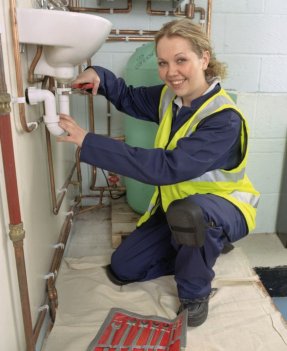
16. Hire Women Service Personnel


There are many arguments service company owners make to avoid hiring women for field positions…

Most women can’t lift a compressor.

I can’t send a woman into a bad neighborhood.

I can’t send dispatch a woman at night.

I can’t find women who want to work in the field.

Yada, yada, yada. The truth is there are times a woman service technician or plumber or electrician might need special accommodations. Those are obstacles, not barriers.

All of the reasons people give for NOT hiring a woman are trumped by the single most powerful reason FOR hiring a woman. Women sell more.

Women sell more because women are usually the decision makers for home service. Ask your call taker who phones in the most service requests, women or men. Ask your field service personnel who’s usually home on a service call, a woman or a man.

Women are service decision makers and women trust other women more than men. In focus groups, women and men both say they are less likely to believe a female mechanic will take advantage of them. While the empirical research is mixed about empathy differences between genders, women are more likely to relate well to other women. Relating better translates into selling more.

My personal experience from running a national franchise organization is women technicians generate higher customer satisfaction scores than men. This is consistent with Ron Smith’s experience at Modern Air Conditioning and Service America. It’s also been echoed dozens of times by contractors I’ve talked with in seminars and on the Service Roundtable.

An added advantage of hiring women for the field is distinction. Because field service is male dominated, women electricians, plumbers, and technicians stand out. Hire them and your company stands out.

Finally, if added sales, more satisfied customers, and more distinctive service are not reason enough to consider women for field service, hire them because there’s a shortage of skilled labor in the U.S., Canada, Australia, and the UK. We can’t whine about the shortage of skilled labor and continue to overlook slightly more than half the population.

(c) 2009 Matt Michel

Thursday, August 20, 2009

Brit Plan To Live Without A/C Fails


A year ago, I wrote a Rant for Contracting Business titled, Is Air Conditioning The Next Tobacco? in response to Joe Klein's screed in Time Magazine, Kill Your Air Conditioning. Well, the Brits tried it. It didn't work.

The UK's Direct.Gov website makes the following recommendation:

You could cool your home naturally instead of using air conditioning, which can damage the environment:

  • create a breeze through your home by opening the windows at the highest and lowest points in the house, or on opposite sides of the house
  • when it’s very hot, open windows at night to let cool air in; close windows and curtains or blinds during the day to trap the cool air inside

The notion of cutting air conditioning is apparently quite popular among British elites.

"Opening a window," exclaimed a London Assembly member, "is the cheapest, most climate friendly way of cooling a building."

So how is the British Department for Energy and Climate Change, which is responsible for cutting carbon emissions nationwide, going to meet its goal of reducing department carbon emissions 10% by March? Why cut the A/C, of course.

"As part of our efforts to save energy over the summer," they announced, "we decided to turn off the air conditioning and open the windows."

It lasted three days...

One...

Two...

Three...

That's a whole 72 hours.

The UK's Daily Mail reported...

The trial was abandoned after three days because officials complained about noise from building works, security risks and "the wrong kind of breeze."

An internal memo said: "We have therefore decided to revert to air-conditioned cooling for the building."

Staff were told other "innovative ways" to reduce the building's carbon footprint would be looked at instead.

Environmental campaigners said the decision sent a terrible message to the rest of the country.

I've lived in southern England. It doesn't get all that hot. Even with London's urban heat island effect, it's still not that hot. The chart below shows average monthly temperatures from Weather.com.


And the committed environmental bureaucrats still couldn't take it more than three days.

Sunday, August 16, 2009

The Impoverished Craftsman


This is an audio version of a Comanche Marketing article called, "The Impoverished Craftsman." It was written for the craftsman who cares about his work and customers, but who can never seem to get ahead.

The file was prepared as a Windows Media Audio (wma) file. Download it from the Service Roundtable's Free Stuff section.

HVAC, Plumbing, & Electrical Salary Data by Zip


MyOpenJobs is providing salary data based on the last 12 months of hiring by zip code, radius, experience level, and type of job. According to the website...

The MyOpenJobs network of sites gather salary data from over 100,000 job seekers each year in the HVAC, Plumbing and Electrical Industries. The survey results include Residential, Commercial, Industrial, Building Facilities & Maintenance, Wholesale Supply and Engineering sectors.

Check it out.

Saturday, August 15, 2009

Good Contractor PR


Steve Miles at Jerry Kelly Air Conditioning in St Charles, MO wanted to help someone in the community who needed a new air conditioner, but couldn't afford one. The challenge is finding someone legitimately in need.

Miles turned to a public relations firm to help find a good candidate. The added benefit is that the PR firm could get the word out about the company's charity. The following is a sampling of the news coverage the company received...

Initial press release @ PR Newswire

AOL Money & Finance

Examiner

Street Insider with links from USA Today

St Louis Today

Lincoln County Journal

Channel 11

In addition, Jerry Kelly was featured on the evening news. Unfortunately, the video is no longer available on the station's website, though Miles may upload a copy to YouTube.

Some small business owners hesitate to take credit and to trumpet their good deeds. This is foolish. Only profitable, successful companies can afford to do good deeds. When you help people through your company, don't be afraid to let the public know.

If you really want to get the word out, use a public relations professional, apart and distinct from any ad agency you might use. The added exposure will more than cover the expense.

If you think the media is filled with negative stories about business, give the news something positive to report. It's good for the people you help. It's good for the consumers who appreciate positive stories about companies like yours. And it's good for your company.

Poorly installed heat pumps spark deluge of complaints


This is from an article in the New Zealand Herald...

Heating and air conditioning engineers say their professional lobby has been deluged with complaints over poorly performing heat pumps, but they can do little to help most victims.

"The issues being raised include quality of installation, building code compliance, the installed solution not performing to expectations and significant power bill increases," said Steve Coatham, general manager of NZ Hevac Ltd.

New Zealand? This sounds sorta familiar. Did Bubba move to New Zealand?

"Our understanding is that many installers do not have... specialist refrigeration, air conditioning, ventilation system skills or provide electrical certification," he said.

A heat pump with less than a full charge of refrigerant could increase power consumption by over 100 per cent of expected levels, he said.

"Poor heat pump installs bring the industry into disrepute with consumers," Mr Coatham said.

I guess the dregs of the industry plague legitimate companies everywhere in the world.

Friday, August 14, 2009

Parrish Services Makes Inc 500 ||| 5000


Congratulations to Service Roundtable member Alan Givens and the Parrish Services team for making the INC 500|||5000 as one of the country's fastest growing businesses. It's companies like Parrish Services that will get the economy moving again.

Read More

No Virginia, There Isn't a Santa Claus For HVAC Contractors This Summer


Click To Enlarge


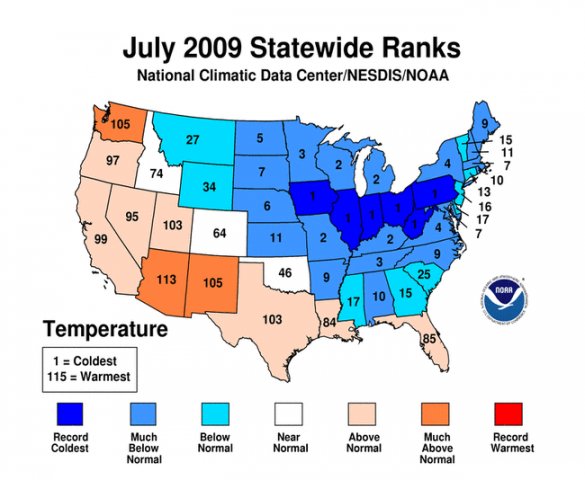
As many air conditioning contractors know, this was a cool July, expecially for the Midwest.

States Recording The Coolest July Ever (Or At Least Since 1895)...

  • Illinois
  • Indiana
  • Iowa
  • Ohio
  • Pennsylvania
  • West Virginia


States Recording The Second Coolest July Ever...

  • Kentucky
  • Michigan
  • Missouri
  • Wisconsin


States Recording the Third Coolest July Ever...

  • Minnesota
  • Tennessee


The air conditioning industry's had to put up with the 13 SEER mandate, the R22 phase-out, a recession, and now cold weather. Why can't we get a little global warming when we need it?

Thursday, August 13, 2009

Steve Fouts On The Service Roundtable

As the owner of a small HVAC company for over twenty years, I can tell you that a lack of effective marketing has been the greatest obstacle to becoming a larger, more profitable company. We joined the Service Roundtable only a few months ago and love it. The material there is exactly what we needed to move forward.

The material we've used so far has proven to be worth more than the annual investment. I'm actually excited by the results. And after twenty years, my getting excited is rare! (I'm glad I started young.) Almost everyone here can see our new potential and wants to contribute. Joining the Service Roundtable was a great business decision.

But business is only a part of it. The rest is less tangible. Most of us small guys haven't found the time or even an opportunity to participate in groups made up of our peers. The choices available are few and usually not suitable. We have enough on our plate as it is.

So we do what we do alone. Sure, it's not necessarily a bad thing. After all, most of us are a little "different" anyway. We chose this gig partly because we like doing our own thing. But I think there's a penalty to be paid for our independence. It's not just lonely at the top, it's not profitable!

There's so much to be gained through sharing information and experiences with those in similar circumstances. A peer group, for lack of a better term, provides an opportunity to do so.

The Service Roundtable brings that peer group to my desktop. Wow. I mean it, this is huge! I now have the ability to plug into discussions with people who have similar histories, who do what I do, who struggle with very similar issues. Just knowing they're out there makes me feel warm and fuzzy all over.

Alright, I haven't felt warm and fuzzy since 1982, but you get my meaning. I'm not alone!!! So before I go all Oprah on you I'll just say Thank You.

Thank You for all the meaningful articles like The Impoverished Craftsman in today's Comanche Marketing piece. We can't be reminded too often of concepts like these. Your insights are right on.

Thank You for all the great marketing material. It's true that real success begins by embracing the right concepts - by shifting one's thought. But then we need resources, especially marketing resources. My opinion: The Service Roundtable has it. There is no more cost effective source of successful marketing strategies and materials for our industry - none. I've checked.

Thank You for all the thoughtful contributions to the Roundtable discussions. Lots of great stuff here. I was a little surprised to find a regular contributor who includes a Wayne Dyer quote in his tagline; I love it. I'm not alone!!! OK, I'll stop. But I hope you don't underestimate the value of the intangibles here. The sense of community built by this Roundtable is for some of us, just what the doctor ordered.

Keep up the great work!

Steve Fouts
United Home Comfort
Bowling Green, OH

The Service Roundtable provides plumbing, air conditioning, and heating contractors with new sales, marketing, and business management tools on a weekly basis, including direct marketing, email marketing, Internet marketing, consumer newsletters, newspaper ads, management tools, pricing calculators, technician flyers and handouts, training pieces, hiring guides, employment applications, recruiting ads and brochures, affinity marketing programs, sales tools, incoming call scripts, press releases, service agreements, and much, much, more. Members gain instant access to a library of more than $3 million of archived content, tap into the Roundtable discussion groups 24/7/365 where instant answers are found to virtually any question, and save on purchases.

The cost? It's only $50 a month. There's no long-term contract. It's not necessary. Try it for a month. If you don't like it, quit.

Take a tour of the Service Roundtable.

Join Now.