Showing posts with label stupid marketing tricks. Show all posts

Wednesday, January 27, 2010

Booth Babes Are Distractions


Whenever I attend a trade show, there's guaranteed to be one or more booths with "booth babes," who are local models or actresses hired to dress provocatively and stand in an exhibitor's booth. Why are they there?

Presumably, booth babes attract prospects to the booth. In reality, they attract suspects... people suspected of being buyers, but who come to the booth to look at the booth babes, not to buy.

As a rule, booth babes hurt exhibitors. Real prospects are looking for information. Booth babes and the people they attract simply get in the way, driving prospects to go away.

Some prospects will avoid the booth simply because they don't want anyone to even think they are attracted by the booth babes. This is especially true if the prospect is male and attending the show with a spouse.

Visiting a booth with booth babes conflicts with the value system of others. Seriously, I've heard plumbers complain openly about a woman "on display" at a plumbing show. And the plumbers who were complaining ran large companies. They were the heavy hitters every exhibitor wanted.

Another issue with booth babes is the effect on an exhibitor's staff. I've seen the staff focused on the booth babe rather than the prospects.

Face it. Booth babes are a distraction. They may attract a crowd, but not the right crowd. Ditto for celebrities or a hot sports car, which is the mechanical equivalent of a booth babe (unless the car is being given away at the show).

There are exceptions. The exceptions are when the booth babe is part of a live marketing program that reinforces the message of the booth. An example is the cave woman hired by Juan Cardona (JC Heating and Cooling in Crossroads, WV) who pops out of a cave he creates to reinforce the Jurassic air conditioner theme, encouraging homeowners to register for his oldest air conditioner contest. Click here to download a free turnkey oldest appliance kit from the Service Roundtable.

Probably the worst  aspect of using a booth babe as eye candy is the messages the exhibitor sends without realizing it...

  • "I have nothing interesting to offer so I'm using a booth babe to drive traffic."

  • "I think so little of my prospects' intelligence, character, and motivation that I believe a booth babe will drive sales."

Whether at a trade show or a home show, booth babes are distractions.

Tuesday, January 26, 2010

More Stupid Marketing Tricks at Ford

A little over a year ago, I wrote about Ford's use of the David Bowie song, "Ground Control to Major Tom," for the Lincoln MKS (read post here).  It seemed incredibly stupid to promote a car using a song that featured the following lyrics...

For here am I sitting in a tin can… Your circuit’s dead, there’s something wrong.

Guess what?  They're doing it again.  Here's the new ad for the Lincoln MKZ...


Cool ad, right? This time the song is "Major Tom (Coming Home)" by Shiny New Toys. Check out the full lyrics...


The lyrics read...

Standing there alone, the ship is waiting.
All systems are go. are you sure?
Control is not convinced,
but the computer has the evidence
No need to abort.
The countdown starts

Watching in a trance, the crew is certain.
Nothing left to chance, all is working.
Trying to relax, up in the capsule
"Send me up a drink.", jokes Major Tom.
The count goes on

4, 3, 2, 1
Earth below us,
drifting, falling, floating weightless
calling, calling home

Second stage is cut.
We're now in orbit
Stabilizers up, runnning perfect.
Starting to collect requested data.
"What will it affect when all is done?"
thinks Major Tom

Back at ground control,
there is a problem.
"Go to rockets full"
Not responding.
"Hello Major To,. are you receiving?
Turn the thrusters on.
We're standing by."
There's no reply.

4, 3, 2, 1
Earth below us
drifting, falling, floating weightless
calling, calling home

Across the stratosphere, a final message
"Give my wife my love."
Then nothing more

Far beneath the ship, the world is mourning.
They don't realize, he's alive.
No one understands, but Major Tom sees.
Now the light commands
this is my home, I'm coming home."

Earth below us,
drifting, falling.
Floating weightless
coming home
(repeat)
home...

Why promote the technological advancements of a car with a song about the technological failure of a spaceship? Did any executives at Ford listen to the whole song before giving the agency approval? Apparently not.

Tuesday, September 15, 2009

Brand Reflection


Below is a presentation reminding marketers that prospects do not see themselves as they are, but as they want to be. The presentation creator suggests that your brand message should reflect and speak to the prospect's desired self-image. This is what Leo Burnett managed to achieve with the classic Marlboro Man ads.

It's also the basis of the Nike brand. Take a look at the following Nike wings poster. What does it do to sell shoes? Will Nike shoes give you Jordan's wingspan? Maybe not, but millions of Air Jordans were sold because people wanted to "be like Mike."


As the presentation notes, it's also what Dos Equis is attempting with their incredibly stupid ad series about "the most interesting man in the world." They're stupid because the guy in the ad says, "I don't always drink beer, but when I do, I prefer Dos Equis."

What are they trying to do? Based on the ad, I suspect the ad agency decided to position the Dos Equis brand as the beer for guys who don't drink beer. I'll give them this, it's not a crowded position (note: this is why ad agencies need adult supervision).

Flip through the presentation. The author makes his point well.

Saturday, August 29, 2009

Common Advertising Mistakes

This is a somewhat bizarre presentation on advertising mistakes that's dead on. Despite its weirdness (maybe because of it), I like it. Give it a look.

Thursday, August 27, 2009

From Second Tier to Top Tier


Fred's a crack plumber, but his plumbing company is second tier. Yet, he aspires for the recognition that comes with tier one status, and so do six of his competitors.

The local paper considers Fred's chance to join one of the tier one companies slim at best. "Imagine Pop Warner football players trying to move up to the NFL," wrote the plumbing beat reporter about the prospects for Fred and the other six second tier plumbing companies to join the tier one companies.

While Fred works towards tier one status, it doesn't dominate his life. After all, he's still got a business to run. He's got to recruit and train plumbers to help elevate his game. He's got to attract customers.

Among other duties, Fred's service manager, George is tasked with training. George is an innovative guy. He came up with an innovative way to provide training with less effort and little or no cost.

George's idea? Let Cheap Depot do the training. Since Cheap Depot holds regular DIY classes for homeowners, George'll just slip a few of his crack crew in the classes. Not only that, Cheap Depot sells a few plumbing items at prices below the supply house (as long as quality's not a huge issue and internal plastic components will do instead of brass).

Being a self-starter, George launch's his Cheap Depot training program. Fred finds out what's going on and catches George just before he calls the local Business Journal to brag out his training innovation.

If you were Fred would you Tell George...

Wow, what a great job. Boy-oh-boy will this help our image. We'll be seen as a conservative, prudent company. They'll have to elevate us to the top tier now.

Or...

What? Are you insane? Even if you're set on trying something this lamebrained, don't tell anyone. Do you think this is how a top tier plumbing company performs? Do you think the top tier plumbers use Cheap Depot training?

My guess is Fred chooses the second option. It's what anyone would do, right? Maybe a top tier company could try sliding people into a Cheap Depot class and people would applaud, calling it guerrila training. A second tier company with top tier aspirations, however, cannot appear to be pulling a second tier stunt.

Using Cheap Depot for the company's training program would make the company the laughingstock of its peers. It would hamper the company's ability to recruit qualified plumbing apprentices, journeymen, and licensed master plumbers to its ranks. If that's not enough, it would also cause consumers to doubt the company's quality and skill level. Does the average consumer really want a plumber who's training comes from Cheap Depot?

No one in their right mind would do something that stupid, right? Make that, no one other than a college professor.

You see, this is exactly what a business professor at Texas Tech University did. Instead of keeping it quiet, the university's trumpeting its innovation.

For non-Texans, Tech is one of seven tier two public universities in the Lone Star state. Texas has two tier one schools: Texas A&M and the University of Texas. Tech wants tier one status, but is like a Pop Warner player seeking to make an NFL roster according to the Dallas Morning News.

So what did the professor do? He published "the first-ever graphic novel textbook on management." Think "comic book." That's right, he's teaching business students from a comic book.

According to the university's website, "Students used to get detention for reading comic books in class. Now a similar format is being used as a way to engage them in learning."

This may truly be an innovative approach to education, but promoting the use of comic books as the textbook for a business management course is stupid marketing. It makes the university sound like a joke, which is not the right positioning one should seek when trying to become a tier one university.

The prof admits others look askance at the comic as a collegiate teaching method...

“Some colleagues initially find the idea of a comic as an educational tool to be strange, but after I tell them that the Federal Reserve has been putting out comics on topics such as monetary policy for years, the 9/11 commission report was in graphic novel format, that the graphic novel 'Maus' won the Pulitzer Prize, and that many movies were originally graphic novels, they are generally won over and quickly embrace the idea once they see the finished work.”

Of course, the Fed's comic books are designed for kids, not college students and the 9/11 Commission Report is not in comic book form. It's a 600 page report.

A couple of comic book creators, with credits "Richie Rich" and "Casper The Friendly Ghost" as credits, produced a comic book version of the 9/11 Commission Report. According to the Washington Post, "The creators say they hope their book will help attract young readers and others who might be overwhelmed by the original document."

Is the Tech professor implying that Tech business students would be overwhelmed by a management textbook? I hope not, but it appears so.

Certainly, Maus is an outstanding work. It helps bring home the horrors of the holocaust in a similar way that Orwell's Animal Farm taught about totalitarianism. However, it's Pulitzer was a special citation of "Letters," which is the form of Pulitzer given to Dr. Seuss. "Oh the places you'll go" with a children's book/comic book education?

And is the professor really making the case that comics are suitable replacements to academic textbooks because movies were made from the Spiderman, Superman, Fantastic 4, X-Men, Captain America, DareDevil, and who knows how many other comic books?

Look, Tech is a good school. I know a lot of very bright and capable graduates of Tech, but the school isn't doing past or future graduates any favors by trumpeting a comic book curriculum. Hiring authorities will have to wonder about the quality of education degreed students received from a comic book and worse, the quality and capability of students who require a comic book to learn.

Maybe Harvard or Yale could pull off a comic book approach to an academic education and we would all be amazed by their innovations in matriculation. Tech cannot.

Creative Brilliance + Business Stupidity = The Nissan Barbie Ad


Nissan 300ZX


One of the all time great commercials is the Nissan Barbie spot. It's also one of the stupidest. If you don't remember it, watch:


When discussing the spot, the ad agency's creative director remarked, "I was just looking for something that could be dynamic. I couldn't believe it when Nissan bought it."

It's no wonder he got excited. The spot generated awards for agency and earned the creative director a guest spot on Oprah. There was even talk about an animated television series based on the commercial.

According to the creative director, Nissan executives instructed him, "'Let's do something different, let's break the rules.' To a creative person, that's as close to nirvana as it gets."

I'd say so. It's kind of like a politician going to a town hall meeting and encountering angry grass roots protesters calling for higher personal income taxes, more debt, government expansion, and greater spending.

Nissan spent over $1 million producing the spot and then made it the centerpiece of a $200 million ad campaign with placement on Seinfeld and Friends during their height and on Monday Night Football.

The head of the agency said, "People don't really like car advertising. It's all the same; it's all sheet metal, features and usually some kind of deal at the end. We're changing the rules of how car advertising can be done."

Yawn. Those boring calls to action. That stupid stuff that sells cars. This is post-advertising advertising.

Alarm klaxons should have sounded at Nissan over the agency head's comments.

Nissan did hire a marketing research company to test the spot, but the research firm asked the wrong questions. The research firm asked if people liked the spot. Of course they liked the spot. It's great. It's highly entertaining. It's also hugely ineffective.

A Nissan dealer commented at the time, "Yeah, it's cute, and everyone's talking about it. It's a good talking piece when you go to a party. Otherwise, nothing's really happening. The only time a commercial gets people coming in is when you put a price in it."

In other words, the commercial didn't drive people into the showroom, didn't drive leads, and didn't help increase sales. Why would it?

The ad, featuring the 300Z, started running in August 1996. Nissan ceased production of the Z in 1996 and didn't resume production until the launch of the 350Z in 2002!

Can you freaking believe an ad agency
would spend $1 million producing an ad
that's the centerpiece of a $200 million
campaign that features an obsolete product?

What if the ads drove sales? What if people packed dealer showrooms seeking Z cars? Can you hear the salespeople...

I know Nissan's advertising the Z, but that's corporate talking. They're a little behind the times. The Z car's obsolete. Yes, I can imagine you're disappointed. But hey, I've got a great deal on a Sentra.

This may be the greatest example in history of an agency run amok. The purpose of advertising is to drive sales. If you want to entertain prospects, buy movie passes. It's cheaper.

Source: New York Daily News, New York Times, & eHow.

Tuesday, August 18, 2009

Jack In The Box' Stupid Marketing Trick


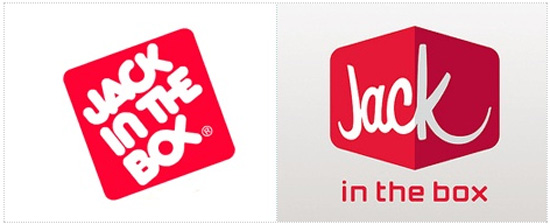
A few months ago, I noticed a new Jack In The Box restaurant being constructed... with an entirely different logo. Some ad genius decided to update the brand, whether it needed it or not.

Actually, this isn't an update. It's a redesign. And as several advertising analysts have pointed out, the new brand logo looks more like a video game logo than a fast food hamburger restaurant logo. It hasn't been doing well in the unscientific preference surveys I've seen.

Personally, I don't have strong feelings one way or the other about the new logo. I do have strong feelings about radically redesigning a familiar and heavily advertised brand. If I ran Jack In The Box, there is NO FREAKING WAY I would allow some ad agency to jack with the Jack In The Box image.

I don't know who brought in the agency, Duffy & Partners, to redo the logo and I'm not questioning the work the agency did. I just wonder, "Why?"

Look at the cost the chain will have to endure. Look at the cost its franchisees will suck up to change the signage. I'm all for aggressive marketing during a downturn, but this isn't aggressive. It's a foolish expense.

Clearly something is wrong in the land of Jack if reports by ad guru, Jim Edwards are correct and Jack In The Box is buying local media in the New York market when the closest restaurant is in North Carolina.

Jack In The Box has benefitted from great advertising by the agency, Secret Weapon. The Jack character has been described as the anti-Ronald McDonald. Distinction is necessary for a player with a much smaller ad budget than its competitors. The Jack In The Box ad spots are designed to appeal to the 18 to 35 year old age group who finds shows like The Simpsons and Southpark amusing. Sometimes, however, I wonder if the ads use too many inside jokes about corporate life.

Still, the spots have been well done, always included an explicit or implicit call to action, and helped distinguish the company. On the whole, Jack has benefitted from solid work by its agency.

Fortunately for Jack, the competition leaves much to be desired. McDonalds is politically correct and bland. And the worst Jack In The Box commercial is far better than anything featuring the creepy Burger King. I bet the Burger King creeps you out too.

Jack In The Box will survive the logo change. But survival is not the same thing as benefitting.

Logo changes should be gradual, made over time, and made so that anyone familiar with the old logo won't doubt its connection with the new logo. This is true for any business, but especially small business. Small business owners simply do not have the budget to instantly redo a brand image that's been built over years.

Tuesday, August 11, 2009

What Does This Have To Do With Selling Insurance?


In church Sunday School, we're studying the Book (or Epistle) of James. If you're familiar with James, it contains the well-known passages about faith and works. An undercurrent of James is theme of doing the right thing.

During our discussion, one member of the class said she was reminded of the television commercials that focused on doing the right thing. She couldn't remember which company was reponsible for the ads. She thought it might be an insurance company. No one else could remember. Someone suggest All-State, but that was quickly rejected.

In the class of 20 odd people, three of us are marketing professionals. The immediate and near unison reaction of the marketers was, "Well, they aren't very good ads if no one can remember the company."

After a second or two, a couple of us announced the company with conviction. We KNEW it was Northwestern Mutual.

The clear purpose of the ads was to imply that the employees of Northwestern Mutual to do the right thing for us as customers by association with ads where people are doing the right thing.

Only it wasn't Northwestern Mutual. It was Liberty Mutual.

Here are two ads from the campaign...


The ads are beautiful. They make you feel good. I'm sure the writer, director, and producer of the spots are all proud of their work. Of course, as a former youth soccer coach, I've got to wonder where the heck the coach was in the second spot.

Yup, it's all good... except for Liberty Mutual.

The company is spending a fortune and the competitor benefits? I would rather run an obnoxious commercial that makes the phone ring than a CLIO winner, which fails to drive sales.

In an interview at BusinessWeek, Stephen Sullivan, Liberty's senior vice-president of communications services said the company's past approach to advertising was to, "interview hundreds of customers and find out what they wanted in an insurance company."

Makes sense to me. Find out what the customer wants or needs and provide it. But that straight forward, traditional approach to advertising is passé for Liberty and it's new agency, Hill Holliday.

Hill Holiday rejected the notion of talking with people who might buy insurance. According to Sullivan, the agency people said, "Wait a minute here. Why don’t we start inside and find out what is core to your company’s values from your employees' point of view."

What does this have to do with selling insurance? Nothing. But it has everything to do with selling advertising to an insurance company.

From an agency's perspective, it's a beautiful thing. Get inside the company. Talk with lots of people. Build relationships. Bond. Make it harder to ever get rid of the agency. Then, build an ad campaign that makes company employees feel better about themselves.

Sullivan said the positioning line selected was, "We will celebrate our customers’ responsibility and relentlessly prove our own."

What does this have to do with selling insurance? And not just insurance, but auto insurance specifically? You see, Liberty Mutual already had a problem with consumers confusing the auto insurer with a life insurance company. The responsibility theme is likely to add to the confusion since it's more in line with a life insurance theme (i.e., responsibility for your survivors).

According to Sullivan, people will think, "Liberty mutual is a company that shares my values. I’m going to get my insurance from them."

Really? Is that how you buy car insurance? Do you look for a company that shares your sense of personal responsibility? Is that the key motivation for selecting one insurance company over another?

Lesley Bielby, the chief strategy officer for Hill Holliday was also interviewed by BusinessWeek about the Liberty campaign. She starts talking about "cultural and social shifts," "ideas that transcend advertising," and creating "something much bigger than the ad it was launched with."

How about something that sells insurance?

Bielby notes that the company's goal was to become one of the top five in its category and notes with pride, "They managed to achieve that goal essentially in less than three short years," before acknowledging the success was, "largely through acquisitions."

Acquisitions? Liberty Mutual turned into an insurance consolidator and in classic fashion paid stupid premiums for the companies it acquired, like the 51% premium to buy Safeco. This acquisition alone bumped the sales volume by 29%. But what did it do for the shareholders?

According to Report Buyer:

The [Liberty Mutual] group recorded revenues of $25,961 million in the financial year ended December 2007, an increase of 10.4% over 2006. The operating profit of the group was $2,198 million in the financial year 2007, a decrease of 2.7% over 2006. The net profit was $1,518 million in the financial year 2007, a decrease of 6.6% over 2006.

Doesn't sound like the shareholders benefitted. This brings us back to the advertising. How do you measure the impact of an advertising campaign on a company that's growing by acquisition and making less money?

Like any good agency executive, Bielby's got a ready reply and it doesn't include increased sales, marketing research validating increased awareness, or other outdated approaches. "Results can come in many different forms," she notes.

"In the case of liberty mutual the most gratifying thing for them and also for us as an agency are some of the letters and emails that we’ve been reading around how people are using responsibility."

Huh? I think she said everyone can feel good because they got some nice mail about how responsible they are being responsible. How about the agency's responsibility to the client?

"We’ve had letters from schools and colleges about how they’ve used the ad to provoke a discussion about responsibility and what it means in our society," she beams.

Excellent! And how many policies were written because of collegiate discussions about the role of responsibility in our society?

It gets even better for Liberty Mutual. Using client money, Hill Holliday has launched The Responsibility Project to showcase films and mini-films about responsibility. Check them out. They're entertaining. They're well done. But they don't sell insurance.

Note how the discussion below each film is filled with comments like the following...

Because of your film about a guy who would rather play the trumpet than basketball, I'm going to buy my car insurance from Liberty Mutual. Good job!

Forget the best deal. Any company that will pay for the production of a film about an irresponsible Brit and his dog driving irresponsibly through British city streets is reason enough to pick you over the Gecko.

Forget accident protection, I want to buy my insurance from a company with a film about a guy who keeps his blind date from stealing from a dinner party host.

Not.

This is the perfect example of an ad agency that's self-actualizing on the client's dime. As consumers we may be entertained, but we aren't given much of a reason to buy (and that's being generous).

Meanwhile, the competition is focused on buyer benefits...

  • Geico: save money; easy to buy

  • AllState: accident forgiveness

  • Progressive: save money; easy comparisons

Ad great David Ogilvy once said, "A good advertisement is one which sells the product without drawing attention to itself."

As a business owner you should demand no less.

(c) 2009 Matt Michel

Friday, August 7, 2009

Did Someone Really Claim Ceiling Fans Lower Ambient Temperature 5 Degrees?


I did a double take. The article didn't claim ceiling fans lower temperatures did it?

You really can’t beat a fan for cooling efficiency; a $100 ceiling fan costs less than $10 a month to operate 12 hours a day and can cool a room by 5 to 7 degrees!

Source

It said it. What bunk!

Ceiling fans cool people, not air. If anything, ceiling fans raise the air temperature slightly due to heat generated by the motor.

By increasing air movement, ceiling fans help people feel more comfortable at a higher ambient temperature by increasing the evaporation of perspiration. Air movement facilitiates the anatomical air conditioning system that God gave each of us.

It works like this... People perspire whether aware of it or not, and the evaporation of perspiration pulls heat from the skin as the perspiration changes state from a liquid to a vapor. This change of state requires energy. The energy comes from heat sucked from the surroundings, lowering skin temperature. It's why we pretend Phoenix is almost bearable without air conditioning because it's a dry heat.

But ceiling fans are only effective when humans are in the room to benefit. Leave the fan on after you leave the room and you're simply paying to turn the blades with no benefit. Fail to change the thermostat setting and there's not even a benefit when you're in the room.

Even Consumer Reports acknowledges this simple fact of physics...

Unlike air conditioners, ceiling fans won't lower a room's temperature or remove humidity. Save energy and money by using ceiling fans and turning off the air conditioning or by turning up the A/C's temperature a few degrees and letting the fan do the rest. But remember that ceiling and portable fans cool you, not the room, so don't run them when you aren't there.

Well, guess what? Most people don't turn the fans off when leaving a room. Most people don't even change the thermostat setting, according to Arnie Katz at Advanced Energy.

"A study in Florida," noted Katz, "found that there was no difference in thermostat settings for people using fans and not using fans. If you don't turn up the thermostat, then the AC will run just as much, and you won't save a dime."

Katz continued, "In order to be economical, you have to think of the fans like you think of lights. Or, rather, like my grandmother thought of lights. You go into a room, you turn on the light (fan). You leave the room, you turn it off. Blowing air onto your living room carpet or onto your bed, when no people are there, will cool nothing except the dust mites. I go into houses all the time and find three or four or seven ceiling fans running. And folks actually believe they are saving energy."

Okay, so it's one rogue guy, posting made up numbers on the Internet. That's nothing to get all worked up about.

Well, I'm not sure it's one rogue guy. The link at the end is to a ceiling fan manufacturer. If they're responsible for the claim, I wonder what else they're lying about.

The other problem is stuff like this has a tendency to grow legs and run around the Internet, especially if its clothed in green. While I advocate improving energy efficiency when the consumer wants it and the ROI justifies it, much of the green movement loses touch with economics, physics, and freedom of choice. Someone makes up some numbers to back up a made-up claim and the next thing you know, Congress is passing mandates.

This goofy claim is already getting repeated in an article obscenely titled How To Live Without Air Conditioning (The mere thought makes me shudder). There are even claims suggesting it's possible to save 33% on energy bills with ceiling fans.

As a nation if we're going to make investments in energy efficiency and energy production, we need to make those investments where the returns are best. That leads to greater national wealth and it's only wealthy countries who can afford to keep the environment clean. If uneconomic and ill-conceived mandates and restrictions that reduce wealth are forced on people in the name of the environment, a backlash against the green movement will arise.

This isn't an anti-ceiling fan screed. Personally, I like ceiling fans. I like the air movement. I think they look cool. I've got them all over our office building and in most rooms at home. Yet, I don't change the thermostat setpoint and at home, no one shuts them off when leaving a room. I don't pretend I'm saving money by running ceiling fans.

This isn't a screed against ceiling fans, it's a screed against phony data and claims.

Thursday, March 12, 2009

You Can't Save Your Way To Prosperity

Originally Published 11.4.2008

Circuit City announced the close of 155 stores, around one out of every five. Reporters blame this on a down economy. Phooey.

Best Buy is fighting the same economic conditions. Best Buy’s profitability is down from a year earlier, but still strong. And Best Buy executives are nearly salivating at the prospect of Circuit City stores closing. The company’s executives are planning on grabbing attractive Circuit City locations and buying market share. While Circuit City retreats, Best Buy advances.

If it’s not the economy, what caused Circuit City’s problems? Let’s go back to 2003. Some green eye shade Circuit City executive came up with a great idea for saving money. Stop paying sales commissions.

The company got rid of commissions for sales personnel, put them on hourly pay, cut 1,800 jobs, and saved $130 million.

The most successful salespeople, when converted into hourly employees, became the highest paid. Guess who got cut? The highest paid employees, which meant the best and most knowledgeable salespeople.

Four years later, in 2007, Circuit City did it all over again. According to a March 2007 Washington Post story, “Circuit City fired 3,400 employees in stores across the country yesterday, saying they were making too much money and would be replaced by new hires willing to work for less.”

It sounds like Circuit City was trying to save its way to prosperity. Instead, it saved its way into six straight quarters of losses, leading to the current store closings. This time, 17% of the domestic workforce will be laid off.

Even in good times you can’t save your way to prosperity. It never works. Sometimes you need to make cuts, but only the foolish cut their ability to generate sales.

Never cut your rainmakers. Never cut the best paid salespeople and most productive technicians to save money. When times are tough, you need more rainmakers, not less.

Don’t cut your advertising. Don’t cut your marketing. If you can’t invest more, invest smarter. Just don’t cut your ability to generate sales when you need sales the most. This is like a drowning man trying to conserve energy when he should swim for the shore. While he may not make the shore, he’ll definitely drown if he tries to tread water more conservatively.

Best Buy and Circuit City provide the perfect contrast. In 2003, Circuit City started down the path to bankruptcy by cutting their most productive, most experienced, and best paid personnel. Circuit City manager thought they were cutting costs. Instead, the company cut sales, cut service, and ultimately cut profitability.

By contrast, Best Buy is moving aggressively to take advantage of the opportunity opened by Circuit City’s challenges.

Are any of your competitors creating opportunities you can exploit? Are you willing to act like Best Buy? Or will you follow the path of Circuit City?

© 2008 Matt Michel

Stupid Marketing Tricks

Orginally Published 10.24.08

Have you seen the new television ad for the Lincoln MKS? The ad is visually appealing with lots of high end, digital special effects. This was not a cheap ad to produce.

But get this, the music for the ad is a remake of the old David Bowie song, “Ground Control to Major Tom.”

Huh? You’re kidding, right?

“Ground Control to Major Tom” is a song about a spaceship that has a problem, leaving Major Tom stranded on a spacewalk, making a plea to tell his wife he loves her. The song suggests the guy’s going to die because of a space vehicle technical mishap. And the Lincoln ad uses the lyrics to identify the MKS?

For those who don’t remember, here are the lyrics…


Ground control to Major Tom
Take your protein pills and put your helmet on

Ground control to Major Tom
Commencing countdown, engines on
Check ignition and may God’s love be with you

Ten, nine, eight, seven, six, five,
Four, three, two, one, liftoff

This is ground control to Major Tom
You’ve really made the grade
And the papers want to know whose shirts you wear
Now its time to leave the capsule if you dare

This is Major Tom to ground control
I’m stepping through the door
And I’m floating in a most peculiar way
And the stars look very different today

For here
Am I sitting in a tin can
Far above the world
Planet Earth is blue
And there’s nothing I can do

Though I’m past one hundred thousand miles
I’m feeling very still
And I think my spaceship knows which way to go
Tell me wife I love her very much she knows

Ground control to Major Tom
Your circuit’s dead, there’s something wrong
Can you hear me, Major Tom?
Can you....

Here am I floating round my tin can
Far above the moon
Planet Earth is blue
And there’s nothing I can do.

So a car ad uses a song that includes the lyrics, “For here am I sitting in a tin can… Your circuit’s dead, there’s something wrong.”

Wow.

Some ad exec better be emailing his resume over this one. Of course, this was a David Bowie song. Thus, the trip into space was probably meant as a trip on drugs where Bowie loses connection with reality or overdoses. I don’t know what’s worse, connecting a car to mechanical failure and death or connecting it to drugs and death.

© 2008 Matt Michel