Monday, August 2, 2010

Why Executives HATE Social Media (from DemingHill)


Note:  This excellent white paper on executive resistance to social media and why executives should reconsider is getting a lot of play online.  While it was written for large company executives, it is equally applicable to small business owners.  If you're unsure about social media and consider it a waste of time, it might be worth a small investment of time to read this white paper.

Reprinted With Permission

I’m an executive and I HATE social media.  There, I said it.  It’s finally “out there.”  But before you Twitter a flaming flash mob link to assemble pitchfork-wielding Second Life villagers outside my door, I urge you to take a deep breath, put down your double frappuccino, remove your earpiece, step away from your iPad, and set your iPhasers to stun, for I come in peace.  If you’ve ever wondered why your CEO ALSO hates social media, social networking and, well, socializing in general, I urge you to continue reading.  Just as Fox TV’s Masked Magician series demystified the tricks of the world’s most famous illusionists, I offer the following as both a behind-the-scenes peak and a confessional of sorts, into the mind of the executive.  For to truly understand the conflicting yet predictable stonewalling in this domain, one must search deep below the surface, plumbing the depths of the executive psyche, motivations, and worldviews, for only then will you be able to “crack the code,” engage us in our native tongue and communicate in a vocabulary and language to which we will respond.  Consider this your own personal backstage pass to the inner sanctum of the Executive Suite.


Executive: More Perception Than Position

For starters, the term “executive” isn’t a title as much as it is a mindset or a set of attributes – often leading to career success and the achievement of such rank – but what might surprise most is that this ambition and executive mentality often begins to manifest itself early in life.  For example, while most were partying and hanging out in high school, we were already taking college-level classes while holding down several part time jobs.  And when most were “finding themselves” in college and still deciding on a major after three years, we were serving in student leadership, doing internships, or doubling up on classes to finish college a semester early.  And when most were finally in the workforce, instead of clubbing and playing in multiple softball leagues, we were completing an advanced degree in night school, pursuing professional certifications, and framing out retirement plans.

Executives are high achievers – that’s just how we’re wired.  Give me a mountain and I’ll climb it.  And if you don’t have a mountain, I’ll find my own mountain and I’ll climb it.  And if I can’t find a mountain, I’ll build one – just so I can climb it. But here’s what most people don’t get about executives. Once a CEO climbs a mountain, he doesn’t feel the need to Tweet to the world that he did it.  He doesn’t have the natural desire to blog, “Look what a great climber I am” and include multiple pictures with links to his Facebook and LinkedIn account.  He did it because it’s in his DNA.  He doesn’t require the attention, approval, or applause of others, and therein lies the fundamental source of the problem – executives are non-narcissistic in a YouTube world.  We’re outliers.  In a society that brags, blogs, and Tweets about the tiniest personal minutia, we could care less because, frankly, we expect success, it’s normal to us.  It’s like Vince Lombardi’s admonition to his running back after an overly exuberant display, “Next time you make a touchdown, act like you’ve been there before.”


Eagles Don’t Flock

Executives are “eagles,” and unlike seagulls, eagles don’t flock. We’re not joiners and we’re not groupies, which is why we overwhelmingly prefer challenging single-person sports like running, cycling, weightlifting, and our one concession to “group sports” – golf (which is still technically a single-person sport, but more fun in groups).  Lance Armstrong didn’t win his titles without leaving the peloton, and ditto for greats like Sampras, Tiger, and Arnold.  They had to go above and beyond the group to achieve greatness, and for this reason it truly IS lonely at the top (not that we mind).


Social Networking: The Problem is “Networking”

The reason we hate social networking is the same reason we hate REGULAR networking.  Exchanging small talk for 2 hours in a room full of strangers, with a drink in one hand and a business card in the other, and a “Hi, I’m Doug” nametag peeling off my lapel, and standing – my goodness the standing – and looking unsuccessfully for ANY food with some protein in it, and wondering if this guy with the too-firm handshake is going to see if we can “LinkIn” after sharing an elevator ride, before glancing at my watch and counting the minutes until I can leave and get back to work.  It’s a nightmare.  Why?  Because – surprise, surprise – most executives are actually introverts, who value their time and their privacy and are constantly evaluating the ROI tradeoffs of every hour of every day.  (Quiz:  How many times have you heard a CEO describe himself as a “People Person”?)

To say that we are ANTI-social would be a huge misrepresentation, but when you combine the word “social” with “networking” – let’s just say it sends shivers up my spine.  Do I like the company of others?  Sure I do – but I want the time to be well spent.  Instead of random, shallow, unfocused SMALL talk, CEO’s would much rather sit around with a small group of peers for 2 hours and discuss BIG specific challenges – and their solutions.  In fact, the reason so much business gets done on the golf course is because it’s one of the few places leaders actually congregate and feel relaxed enough to discuss what’s really on their minds.


Social Networking: The Problem is “Social”

The next hurdle for executives with social networking are the implications of the root word “Social”, and, by its very spelling, its association to Socialism. Socialism is defined as, “Any system of social organization in which the means of producing and distributing goods is owned collectively,” and further, “An economic and political theory based on public ownership or common ownership and cooperative management of the means of production and allocation of resources.”  (At least that’s what someone wrote on Wikipedia). The premise and value of the “social media” movement is the power of the collective in the production, distribution, and ownership of goods, and the reason executives resist this model is that it flies in the face of their existing worldview which, quite frankly, has been pretty successful to date.  If it ain’t broke, don’t fix it, right? Most of us have a pretty big chip on our shoulders, attributing our career success to the years of diligence, education, ambition, delayed gratification and sacrifices we’ve made to reach the leadership levels we’ve achieved.  Therefore, the anti-capitalistic notion that my work and contributions would be homogenized with the uninspired masses, and that ultimately my value would be determined by the randomness of the collective is a jarring and unpalatable departure.  I want to control my company!  I want to control my brand! I want to determine my destiny!  It’s too important to leave it to chance (or simply be outvoted by the uninformed bourgeois)!  Unfortunately and tragically for us executives, the beauty and power of social media is only fully unleashed when we LET IT GO, and that, my friends, is the hardest thing for us to do (…and also explains why we hate checking luggage at the airport).


Beware of Geeks Bearing Gifts

Okay, I promised that this would be a confessional, so here’s a shocker.  Over time, there is a tendency for CEO’s to get inflated EGO’s.  Now granted, a healthy ego can serve as a necessary defense mechanism to provide protection from the relentless attacks from subordinates, peers, and the media, but too much amounts to just plain pride.  We like to think of ourselves as a pretty smart bunch, and our position is such that even if we don’t completely understand something, we often project to our colleagues that we do.  A classic example of this phenomenon transpired during the Enron debacle, where ranks of senior executives refused to admit that they couldn’t comprehend the mechanics of this powerful conglomerate, until it was too late.  It’s the same with new advances in technology, which has accelerated during our careers from “hit or miss” to “mission critical,” going from bricks to clicks and from mortar to mindshare, while serving as a platform for everything from infrastructure, billing, and product development, to security, scheduling, and sales.  The rapid rate of change in digital innovation has caused CEO’s to feel EXTREMELY vulnerable around technology because it is something on which we have become VERY reliant, but which we understand and “control” so little, and this vulnerability leads to fear, and this fear to irrational decisions and suboptimal outcomes.  When CEO’s don’t have the confidence in their staff to delegate, or lack the humility to admit their ignorance regarding technology advances, they get defensive and act out in fear – or fail to act altogether.


Social Media: Justified Fear?

Executives justify their fear of social media by pointing back to a historic drumbeat of disappointment and unfulfilled promises.  They recall with vivid detail the never-ending parade of new online engagement vehicles and “paradigms” introduced over the past 15 years by turtleneck-wearing gurus with names like Kip or Seth, which were then propagated by self-proclaimed “New Economy” experts sporting titles like “Chief Innovation Officer” and “Director of Chaos,” and then championed by sideburn-wearing hipster foot soldiers who never metafilter they didn’t like.  In the 90’s, we were promised that customers would beat a path to our door if we created something called a “web page” and then “posted” it on this thing called the Internet or World Wide Web or something.  Then they convinced us to buy electronic lists and send out “Email Blasts” to our target markets, and next it was a website redesign, push technology, pull technology, exchanged links, partner intranets, eBusiness, eCommerce, blogging, webinars, podcasts, search engine optimization, YouTube videos, LinkedIn, Facebook, Twitter, yada, yada, yada.  Each time they promised that THIS TIME it would be different, and that this new product/protocol/portal/potion would somehow (magically??) drive revenue, increase efficiency, and optimize utilization (or some other buzz word or invented metric).  You told me to blog, so I blogged.  You told me to Twitter, so I Tweeted.  What’s it going to be tomorrow – scan my body into a mashup simulator to create a hologram so I can telepresence myself into sales calls in Madrid via FourSquare using Flickr?  All I know is that I’ve spent a LOT of time and money on a series of disjointed initiatives and campaigns and so far NONE have performed as advertised.


Don’t Feed Me Another Fad

Look, executives aren’t that complicated.  While I can handle the many nuanced “grey areas” of business leadership, I prefer to see things in black and white; victories and defeats; profits and losses.   I don’t mind making significant, strategic multi-year investments and committing to enterprise-wide initiatives which will improve the future performance of my company – in fact, I ENJOY it – what do you think got me to the Executive Suite in the first place?  Just don’t insult me.  I don’t want to waste any more time or money on the hype of  “the next big thing” or the newest tool or toy, only to be disappointed when the latest flash-in-the-pan fad fades and goes the way of Harvard Graphics.  It’s not that I have a fear of commitment – frankly, it’s just the OPPOSITE!  I have a healthy fear and distaste for doing things randomly just to be doing something; or because someone saw an article in USA Today, or CNBC did a story on it, or out of fear that I’ll be the last one in my circle to “get on board.”  (Believe me, the things that keep me up at night can’t be solved in 140 characters or less).  The truth is, I would LOVE to commit to social media in a significant way, but so far nobody in my organization has stepped forward with a cerebral, strategic, multi-generational, integrated, systematic, and sustainable methodology and roadmap for synergistically capitalizing on this medium over the long haul.


Your Network is Your Net Worth

Executives are uniquely conflicted because we know better than anyone the power of relationships, and the truth of the old axiom, “Your network is your net worth,” yet we are inherently introverts, and gravitate towards solitude versus socializing.  We understand on an intellectual level that none of us individually are “too big to fail,” and that even the Lone Ranger had Tonto and Batman had Robin, yet we find initiating conversations and exchanges with others to be draining, distracting, and exhausting rather than invigorating and inspiring.  Hence we yearn; as a group we pine; for deep within our heart of hearts burns a great bright hope that somehow and in some way this social media movement or platform or culture or whatever could be harnessed and leveraged to cross that chasm and create valuable, authentic exchanges and relevant, real-time dialogue with stakeholders of all persuasions. If we could just develop an all-encompassing framework for how this would integrate into our enterprise-wide strategy, and manage it like a mission-critical project (complete with milestones, deliverables and accountability instead of fuzzy metrics like “buzz”), I am supremely confident that we could achieve escape velocity and – for the first time – truly establish and be able to articulate a synergistic, sustainable, and quantifiable strategy for leveraging “Best-In-Class” social media options to achieve desired corporate outcomes and maximize financial returns.


A Gift From Media To You

You know, it’s interesting.  Somewhere in the convoluted catharsis of composing this confessional, I came to a surprising realization.  Maybe I don’t HATE social media after all.  Maybe I just hate the Quixotic context in which most social media conversations exist, featuring a perpetually moving target, combined with an obsessive, cult-like worship of the default worldview, “If Something is New = It Must Be Good”, and where subjective criteria like “mindshare” and “impressions” are considered quantifiable deliverables and irrefutable barometers of success.

Come to think of it, maybe it’s high time that a C-level individual engaged this topic, and – once and for all –created a high-level overview and synopsis, crystallizing all of the strategic benefits and critical value streams, and distilling them into a language that speaks to executives everywhere in our native tongue – bottom line stakeholder value.  So here you go.  I’ve done the work for you.  What follows is an “Executive Summary” of my findings.


Social Media Value #1:  Unfiltered Feedback

As you already know, some of the scarcest (rarest) yet most valuable information a CEO can obtain is honest, unfiltered feedback.  Think about it.  You interact all day with managers, employees, and handlers working to keep the boss happy and therefore keep their job.  Sure, being surrounded by “Yes men” can be more comfortable, but it can also insulate you from the stark realities of your business.  If done correctly, social media enables CEO’s to hear raw, candid feedback from real people – people who aren’t afraid of being fired because they CAN’T be fired.  The truth is, leaders with their ego in check are already fully aware that they work for the customer – the customer is his boss – so if the customer doesn’t like dropped calls on their iPhone or the sauce on their Domino’s pizza, it’s their job to make it better.  Now, every customer is not always right (or wrong), but if 850 out of 1000 user comments say that the new Sketcher’s Sport shoe caused them to sprain their ankle, then something needs to be fixed – and FAST!  CoolCleveland’s Founder Thomas Mulready is a perfect example of a CEO with this customer orientation.  After emailing out his weekly eMagazine for 7 years, he decided that it needed to be updated, and set about introducing a new format with much fanfare.  In doing so, he also did something revolutionary – he asked all 90,000 of his readers for feedback on what they thought of the new style – and boy did they reply with scores of comments submitted over the span of a few days. But then he did something else revolutionary – he actually listened, modifying and improving the new site to reflect reader tastes and preferences.  Yes, it takes humility (“Who are these people to give ME feedback?  I invented this product! Don’t they know they can just click the links?) but the end result is an engaged audience who now feel genuinely empowered to provide even MORE feedback, emboldened by the knowledge that their  comments actually impact (and can improve) the end product.


Social Media Value #2:  Authenticity

Hand-in-hand with the unfiltered feedback above is the ability to leverage social media to authentically communicate with your employees, partners, customers (and non-customers), investors, and media, directly engaging ALL of your brand ambassadors efficiently and economically.  Rather than layers of staff, spokespeople, and sterile press releases, social media now offers an elegant and effective medium for disseminating information either “straight from the heart” or “straight from the horses’ mouth” depending on your preferred idiom. Dan Gilbert’s recent LeBron James “rant” would qualify as both, capturing the owners’ anger, frustration, and competitive resolve just moments after James’ announced his departure.  As you’ve probably noticed, NOBODY can tell the company story and embody the company brand like the CEO (think Steve Jobs) and by offering the ability to immediately and directly engage stakeholders – whether on a typical day, during a product launch, and/or especially during a time of crisis – social media provides an invaluable medium for maximizing brand value and minimizing potential brand degradation.  Social media helps firms “Keep it real” but couches it in a positive brand-reinforcing context.


Social Media Value #3: Six Sigma (Low Cost)

In case you were wondering, executives LOVE things like Six Sigma because, 1. It reminds us of our Greek fraternity days in college, 2.  The other soccer Dad’s don’t understand Value Stream Mapping, and 3. Six Sigma and lean processes are all about SPEED and COST SAVINGS, two of our favorite topics.  By its very architecture, social media is positioned to leverage firms’ Six Sigma orientation by expediting interactions, exchanges, customer service, feedback loops, product launches, marketing, and advertising, AND enabling it at a fraction of the cost of traditional media, to a much more targeted audience, and in a far more nuanced and contextual value exchange.  Social media options allow your message distribution format to evolve from shotgun to sniper, from billboard to message board, and from broadcast to narrowcast.  PLUS, it takes your marketing posture from a one-way, blanketing, bullhorn approach to a more intimate, just-in-time interaction; offering the opportunity for a more detailed, valuable and more PROFITABLE conversation and connection with your audience (and you don’t need a Black Belt to do it).


Social Media Value #4:  Balancing Transparency AND Privacy

The only thing worse than NOT using social media tools is using them in the WRONG way.  Your firm could very easily invest time and money on social media, and then end up spending even MORE time and money doing damage control because you did it wrong the first time – talk about a lose-lose situation.  With social media, there’s a “right way” and a “wrong way” to do things – so if you’re GOING to do it, do it RIGHT.  Remember, anywhere-anytime-anyone social media channels must be handled as the “nuclear options” that they are, with the capability to destroy your brand value in a single Twitter, email, or YouTube video that goes viral.

With great power comes great responsibility, and a healthy respect for the global reach and impact of social media must emanate directly from the CEO, who knows better than anyone that the same programs allowing firms to connect and influence the marketplace can also be turned against you to alienate them.  And just as social media can provide the market with a transparent window into the soul of your company, it can also showcase you at your worst, doing more harm than good.  Let’s face it, your firm is ALREADY dabbling in social media as it is – so you might as well manage your risk and liability by codifying corporate expectations, establishing specific ground rules, and educating your stakeholders regarding proper use of these seemingly innocent yet powerful tools.


Social Media Value #5: Supporting Statistics

Executives rely on market research to support and substantiate any designated course of action, and devour facts, stats, and data-points like shrimp at a wedding reception.  Summarized below are a few statistics buttressing the explosion of this social media trend, and detailing how Corporate America is leveraging it to realize significant revenue and market share growth going forward.


  • In the last 7 years, Internet usage has increased 70% PER YEAR. Spending for digital advertising this year will be more than $25 billion and surpass print advertising spending (forever)

  • Lenovo has experienced a 20% reduction in activity to their call center since they launched their community website for customers

  • Blendtec quintupled sales with its “Will it Blend” series on YouTube

  • Only 18% of traditional TV campaigns generate a positive ROI

  • Naked Pizza set a one-day sales record using social media: 68% of their sales came via twitter and 85% of their new customers

  • Software company Genius.com reports 24% of social media leads convert to sales opportunities

  • Dell has already made over $7 million in sales via Twitter

  • 37% of Generation Y heard about the Ford Fiesta via social media BEFORE its launch in the US and currently 25% of Ford’s marketing budget is spent on digital/social media

  • 71% of companies plan to increase investments in social media by an average of 40%

  • A recent Wetpaint/Altimeter Group study found companies that widely engage in social media surpass their peers in both revenue and profit


(Sources for Statistics: meyersreport.com lenovosocial.com George Wright Blendtec Mashable.com econsultancy.com businessweek.com )


Getting Your Board On Board


Lest we forget, even the Boss has a Boss – they’re called the Board of Directors – and these are the people that recruit and hire CEO’s for the purpose of serving as a charismatic and visionary leader of their organization.  And so I urge you, don’t disappoint them when it comes to leveraging social media within your organization.  The “Bang for the Buck” value proposition is too compelling to ignore, and the fact is – your competitors are already entering this arena and establishing new service baseline norms and minimum threshold expectations – so standing still amounts to losing ground and therefore is not an option.  What you need is a plan.


An Offer You Can’t Refuse


My associates and I are going to go out on a limb and try something a little crazy, something we’ve never done before.  We are going to offer senior leaders an exclusive, live, invitation-only Executive Briefing entitled“Maximizing Your Social Media Strategy” and presented by the top brass at DemingHill.  This executive-to-executive webinar will feature a deep-dive into the ROI and business case for leveraging social media, and will allow participants to ask questions and interact real-time with the authors of this article. (Because there is no charge, we must limit this event to executives and/or members of their management teams. Held August 10 & 11th).


Do I STILL hate social media?  No, BUT I’m only going to embrace it on the “executive terms” that have served me so well to this point in my career and they are, “If you’re going to do something, go ALL IN and do it right.”  From now on, all social media, social marketing, and social networking will be discussed in the context – not of a CAMPAIGN (which starts and ends) – but as part of an ongoing, strategic, and systematic DIALOG with our stakeholders and marketplace.


Executives have the focus and vision to roadmap strategies playing out 3, 5, and 10 years into the future.  But, we’re also “plodders” and are comfortable with short, measured, consistent steps – day in and day out – as long as we know that they are aligned with reaching a desired goal.  When we discuss your social media strategy, the focus will be on consistency and sustainability over the long haul.  Remember, executives don’t have the ego needs, risk profiles, or the TIME to be on the bleeding edge, or even the cutting edge.  We just want it to work.


I can confidently predict that every month for the next 100 years there will be a new “Must Have” application, portal or community that one of your employees will discover, and then try to convince you that your company will implode if you don’t immediately join, link, or Retweet.  In five years, all but three of these ideas will probably be forgotten.  During our meeting, we will discuss how to frame out an enterprise-wide social media strategy, predicated on the foundation of proven tools and that have stood the test of time and offer “Best-In-Class” results, so that you will be empowered to handle these conversations proactively in the context of a larger roadmap, rather than reacting to these weekly ambushes in a dismissive defensive way.  Remember, our goal for social media is not a lark, but a LIFESTYLE, and work-shopping a strategy which builds on stable, scalable tools, yet also affords the flexibility to address unprecedented “Black Swan” technology developments, provides you with a welcome buffer from being whipsawed by a weekly website.  Between the two of us, we’ll finally take that reliable “80/20 Rule” and apply it to social media, and then spend time focusing on the 80% of stakeholder value that can be extracted with 20% of the effort (while knowingly and purposefully ignoring the remaining 20% of value which takes up 80% of the effort).


The Bottom Line


In the Forward of Geoffrey Moore’s bestseller “Crossing the Chasm” Regis McKenna writes:


Fundamentally, marketing must refocus away from selling product and toward creating relationships. Customers don’t like to be ‘owned’ if that implies lack of choice or freedom. But they do like to be ‘owned’ if what that means is a vendor taking ongoing responsibility for the success of their joint ventures.  Ownership in this sense means an abiding commitment and a strong sense of mutuality in the development of the marketplace. When customers encounter this kind of ownership, they tend to become fanatically loyal to their supplier, which in turns builds a stable economic base for profitability and growth.”


While there will always be a “me” in media – social media, social marketing, and social networking tools were designed to work best as a conduit for enabling information exchange, establishing a dialog, and creating a two-way conversation with your audience.  At the end of the day, social media is simply about creating and maintaining relationships – and even and executive can do that.


Authors:


Chief Marketing Officer VendorCert

Chief Executive Officer DemingHill

Executive Vice President DemingHill


Thursday, July 29, 2010

Guerrilla Marketing by Jay Conrad Levinson

This is an hour long presentation by Jay Conrad Levinson, author of the excellent Guerrilla Marketing books. Levinson is speaking live over a series of slides. If you're a little ADD, like I am, it's painful to watch this type of presentation. However, anything by Levinson is worth watching. So, you'll want to watch it while you're doing something else (in my case, I watched with signing all of the Roundtable Reward checks going out to Service Roundtable members - and yeah, it took just about an hour to sign them all).

Get Microsoft Silverlight

Tuesday, July 27, 2010

The Raving Fish Got Cheesed And Didn't Get It

Are you a fan of business parable books? You know, the little books that spin a fictional tale with underlying meanings that pertain to business. Fish, Who Moved My Cheese and Raving Fans are just a few examples.

Perhaps this is a tale of my own ignorance, but I hated parable books with a passion. Once I reached the age of fifty however, I began to mature. Looking back it wasn't the books that cheesed me off, it was corporate America's mandate: "Here is a copy of Fish. Read it. Afterwards we'll have a meeting to discuss how your morale KPI charts. We're expecting a significant increase."

Other than Mark Matteson's work, parable books had been off my radar for a long time until recently reading, They Just Don't Get it! Leslie Yerkes' book is about those times when you're trying to tell someone something and they just don't get it and what you need to do to transform their resistance into understanding.

Holy light bulb Batman! You mean if I read Leslie's book I'll be able to transform my technicians into correct-paperwork-completing-machines? Maybe. Maybe not. I'll give you one hint but you really need to read the book. Transformation begins with that really good looking person in the mirror.

A super huge red flag moment for me came when I read what some others had to say about They Just Don't Get It! To sum up: "I could read five bullet points about the book, get it, and save fifteen bucks." At first I thought wow, they don't get it! Then I thought, no, their left brain gets it. If they could only step off the Hamster Express for just a few minutes and engage their right brain a whole new world of possibility will pop right before them. At this point their left brain will kick back in and say, "the return on this fifteen dollar investment will pay back in 1.15 days."

Next week I'll offer suggestions on how to read business parable books using the right side of your brain.

Photo credit, Jan Tik

Sunday, July 25, 2010

Zag

Recently, I read the book, Zag. Zag is about branding and while I don't agree with everything in the book, I thought it was generally pretty much on the mark and recommend it. This presentation, based on the book is terrific. Take a few minutes and flip through it.

Thursday, July 22, 2010

Famous Failures

It doesn't matter how many times life knocks you down. It only matters how many times you get up. If you doubt it, take 76 seconds to watch this video.

Tuesday, July 20, 2010

Do You Hire People?


A world renowned career specialist lists the five worst ways to look for a job:

  • Looking for employer's job postings on the Internet
  • Mailing out resumes to employers at random
  • Answering ads in professional or trade journals, relative to your field
  • Answering local newspaper ads
  • Going to private employment agencies or search firms for help
This same gentleman tells his readers there are five questions that people who have the power to hire want to know:
  • Why are you here?
  • What can you do for us?
  • What kind of person are you?
  • What distinguishes you from nineteen other people who can do the same tasks that you can?
  • Can I afford you?
If you're in a position to hire people, you're probably saying, "This information is of little use to me."

Really? Think about it for a minute. Do you search for prospective employees using any of the methods described above? Are you quantifying exactly what you need from prospective employees during the interview process? How does your hiring and interviewing process correlate with the advice being given to people looking for jobs by a world renowned career expert?

Sometimes we need to view our problems through a different lens. Instead of using a resource designed for hiring managers, consider a resource designed for job seekers.

The author I refer to here is Richard Bolles. Richard began writing What Color Is Your Parachute? way back in 1970. With the exception of 1971, he has revised and republished it every year since. Translation: It contains a boat load of relevant wisdom and knowledge. This book is one of the best books that I've ever read. I highly recommend picking up a copy today!

Sunday, July 11, 2010

To Win The War On Business: Advertise


This is my latest "Rant" in Contracting Business...

Private enterprise is under assault in America to a degree not seen since the Great Depression. While Hollywood and the media attack business with rhetoric, the government uses rhetoric, regulation, and taxes. It doesn't bode well for those struggling to find employment, though it might present an opportunity for your company.


Read more at Contracting Business (and be sure to add a comment in the new comment box at the bottom of the column).

Saturday, July 10, 2010

How Cavs Owner Dan Gilbert Screwed Up In His Rant About LeBron James

Photo Credit:  Dave Hogg

I had little passing interest in basketball star LeBron James' move from Cleveland to Miami until the Cavs' majority owner, Dan Gilbert, launched an online tirade against James.  Gilbert considers himself betrayed by James' move.  Apparently a lot of Cavs fans feel the same.

Anyone who has ever taken a chance on a new hire and invested in the employee's development only to see the employee leave for a competitor knows how Gilbert feels.  It's natural to feel betrayed.  It's stupid to rant to the world about it.

By all accounts, LeBron James is about as clean-cut as a tattooed NBA superstar can get.  He worked hard. He fulfilled his contract.  He made a move for reasons known to him.  Maybe it's a better opportunity to earn more money over time.  Maybe it's a better opportunity to win a championship.  Maybe he's sick of snow.  Maybe it's a move designed to avoid paying taxes as the Wall Street Journal notes in LeBron's Tax Holiday.

James has every right to pursue his career the way he wants.  What loyalty?  Do you think Gilbert would be offering James a new contract if he had a career ending injury a few months ago?

Gilbert's problem is his rant poisoned the well against a potential return by James after he fulfills his contract with Miami.  Since you never know what the future holds, it's foolish to close doors.  Moreover, budding NBA stars might look at Gilbert's behavior and question whether they really want to work for such a lunatic.  Why not play for Sacramento where the weather's better to boot?

When good employees leave, resist the urge to lash out.  Wish the employee the best and extend to the employee the opportunity to return in the future.  You might get a good employee back when he discovers the grass really isn't greener on the other side of the fence (and what a powerful lesson that will be for anyone thinking about leaving!).  At the very least, the employee will be more inclined to say good things about you to his peers and on social media.

Treating departing employees poorly gains nothing and risks sullying your reputation.  Don't do it.

Friday, July 9, 2010

The Service Roundtable Business Alliance Will Support Solar Contractors


The Service Roundtable (www.ServiceRoundtable.com), an Internet based contractor business alliance is launching a dedicated business support program for solar contractors, company officials announced today.

The “Solar Roundtable” will be headed by Jim Hinshaw, one of the top sales trainers in the solar industry. Since 2007, Hinshaw has trained over 1,000 solar contractors on the sales and business side of contracting.

“Most solar contractors know the physics of solar,” noted Hinshaw, “But my experience is that many have questions concerning sales, marketing, advertising, that sort of thing. The Solar Roundtable can help solar contractors answer their questions and solve their problems on almost any topic: business, application, engineering, employees, compensation, advertising, marketing, and sales.”

Since 2002, for a $50 monthly subscription, the Service Roundtable has provided contractors with sales, marketing, and business management tools served over the Internet. Examples include direct mail letters and post cards, consumer newsletters, social media marketing pieces, service agreements, eBooks, training tools, business forms, operations and management tools like pricing calculators, recruiting ads, interview guides, policy guides, employment applications, and more.

The Service Roundtable also hosts moderated peer support groups where contractors post questions about their business and receive input, guidance, and support from other contractors and industry consultants.

In 2010, the company added a free buying group, called Roundtable Rewards. Members receive discounts and cash rebates based on purchases from a variety of vendors who use the program as a way to boost sales and reduce marketing costs.

In addition to solar, the Service Roundtable serves HVAC, plumbing, and electrical contractors. The company also operates Service Nation Press, the Retail Contractor Coalition product and company branding program, and Service Roundtable MoneyMail turnkey monthly email marketing program.

Service Roundtable contractors hail from all 50 U.S. states, most Canadian provinces, the United Kingdom, Europe, Australia, the Caribbean, and Oceana. For more information visit www.ServiceRoundtable.com or call 877.262.3341.

Wednesday, July 7, 2010

Solar Can Brighten Your Company’s Outlook


Are you tired of fighting economic headwinds?  Why not try a business opportunity with massive federal, state, and utility tailwinds?  Why not add solar to your business mix?

Solar is a natural add-on for HVAC contractors.  You’re already well positioned as home energy experts with consumers.  You already have relationships with your customers.  You know how to sell high ticket items.  You know how to use financing.  You know how to utilize government and utility incentives.  Plus, HVAC contractors tend to be the best marketers in the service trades.


Read More at Contracting Business

Friday, July 2, 2010

This Says It All About The Yellow Pages


If you're marketing to consumers over age 60, the yellow pages are still necessary.  If you're marketing to consumers under age 40, you probably don't need a presence at all.  If your target customers fall in between 40 and 60, a yellow page presence may be necessary, but not on the scale (and expense) of the past.

The death of the yellow pages makes marketing more complicated for service companies.  You can no longer take out a big yellow pages ad and simply wait for the phone to ring.  Today, you must use search engine local search, SEO, SEM, and increasingly, social media.  Are you?

For HVAC contractors attending HVAC Comfortech in Baltimore in September, I'm teaching a class on social media.  Be sure to attend.  I'm also starting on a book titled, "Social Media for the Service Contractor," that will be given away to anyone attending my class at Comfortech.  If there are any copies left, I'll make them available for sale.

Saturday, June 19, 2010

Gentlemen, This is a Pipe Wrench


At the start of each season, legendary football coach Vince Lombardi would call a team meeting, hold up a football and declare, "Gentlemen, this is a football." Lombardi focused on the fundamentals, on blocking and tackling. So should you.
Revisiting the fundamentals is a necessary part of any business. It seems especially necessary for plumbing contractors. Most plumbers advanced through their skill at turning a wrench. However, once they hang out their own shingle, they advance by their skill at turning a profit. The skill sets are different and many allow their companies to backslide into bad habits over time, thus, the need for blocking and tackling.
Here are 10 questions to ask yourself about your fundamentals:


Read more at Contractor Magazine.

Friday, June 18, 2010

Technology for the Aging


The following article by Matt Michel was published in Southern PHC Magazine...

The number of senior citizens will double over the next 25 years, which means opportunities for the contractors who cater to their needs. Here are ten products you should add to your portfolio.


1. Grab Bars

While it’s the lowest of technology, it’s an essential aid as people age. Every senior should have grab bars inside showers and on walls above tubs.


2. Bathtub Safety Handles

Safety handles fit over the side of a tub to provide something secure to grab when entering or leaving a tub. Typically, these are clamped to the tub wall and not permanently installed.


3. Walk-In Tubs

If the senior is unsure about stepping over the side of the tub, even with a safety handle, a walk-in tub may represent a good solution.


4. Mixing Valves

Seniors and small children are the most susceptible to scalding from hot water. Installing a mixing valve at the water heater is the optimum solution to reducing the risk of scalding by holding the temperature of hot water delivered to the taps at 120 degrees.


5. Hand-Held Shower Spray

Many seniors sit to shower, making hand-held shower sprays much better than standard showers.


6. Elevated Toilet Seats

Seniors can have a difficult time getting up from a toilet. Elevated seats are small risers that raise the sitting height. Many include arms for seniors to grab on to when standing from a sitting position. There are also platforms that can be placed under the toilet, raising it several inches. Some consider these unobtrusive platforms more aesthetically pleasing.


7. Toilet Hand Rails

If no problems are present with the seat height seniors may still need hand rails. These are typically attached under the toilet seat.


8. Large Screen, Simple Digital Thermostats

As people age, vision declines. Backlit digital thermostats with large readouts and simple operation are easier for seniors to operate.


9. Air Cleaners

Not only can seniors benefit from the better filtration of electronic air cleaners or pleated media filters, but the reduced frequency of cleaning and/or replacement give seniors one less thing to bother with. This is especially important for attic and crawlspace installations.


10. Carbon Monoxide Detectors

As with scalding, seniors are more sensitive to carbon monoxide than the general population. This makes the presence of carbon monoxide detectors critical.


Selling to Seniors

Most seniors will be reluctant to admit they might need the aid of disability products. Ironically, they will be quick to suggest these are the exact products needed by friends of theirs. Don’t even hint to a senior that he needs a grab bar even if it’s obvious he does. Instead, suggest that he might want one installed for his wife. Or say that while he might not need it yet, it would probably give his children peace of mind to know he’s taking precautions. Often, seniors take action out of concern for a spouse or children.


Marketing to Seniors

Put together one to two page flyers displaying the products (and remember, use large print). Mail these to seniors you’ve identified in your database and distribute them on service calls. Pass them out at home and garden shows. Talk about home safety at service clubs and networking groups. Mail the flyer to your entire database before the holidays, noting that these can be the perfect gifts for the parent who is impossible to buy for.

As people age, they begin to recognize everyday tasks are more difficult. Yet, they tend to be unaware of the many solutions available to help. Merely making them aware will result in more sales. Sometimes the simplest technology can be the most profitable.

Thursday, June 17, 2010

Good News: We Won't Run Out of Oil


There's a lot of demogoging surrounding the great gulf oil leak.  Listening to some of the recent speeches, one might conclude that we're about to run out of oil.  Hardly.

In a year old article, Jim Ostroff with the Kiplinger Letter identified America's untapped oil bounty.  He wrote:
The U.S. is sitting on the world's largest, untapped oil reserves -- reservoirs which energy experts know exist, but which have not yet been tapped and may not be attainable with current technology. In fact, such untapped reserves are estimated at about 2.3 trillion barrels, nearly three times more than the reserves held by Organization of Petroleum Exporting Countries (OPEC) nations and sufficient to meet 300 years of demand -- at today's levels -- for auto, truck, aircraft, heating and industrial fuel, without importing a single barrel of oil.
So why not "drill, baby, drill?"  Ostroff says, "Those untapped reserves are located in places that either Uncle Sam has put off-limits for environmental reasons or are too costly to get -- or a combination of both."

And since this article was written, we've made even more finds. 

Rather than flog the oil industry over an accident, we would be better served to promote oil extraction R&D and free up land and close-in coastal areas for safe extraction.  Economically, this could lead to a boom.  Our trade deficit would close.  We wouldn't need to sell debt to foreign powers who are hardly our friends.  The geopolitical importance of the Middle East would lessen.

Our current energy and economic policies are the definition of insanity.

Click to read the Kiplinger article in full.

Wednesday, June 16, 2010

The Impact of Awareness


It’s killing your sales. In fact it may be the single greatest barrier to the growth of your company. It’s prospect and customer ignorance about the products and services you offer.

Read more at Contracting Business.

Wednesday, June 9, 2010

Laurel & Hardy, Plumbers


We've got a slab leak in our house.  It's not the first time.  I wrote about the first slab leak, repaired under warranty in the PHC Profit Report and entered the article in a national contest by Terry Love about the worst consumer plumbing experience.  It won first place.  While I have much higher expectations from the Service Roundtable member (the staff rotates our plumbing calls among local plumbing members), when my wife texted me, "Giant hole in floor full of muddy water," I couldn't help but remember Laurel and Hardy.  It follows...

We had a slab leak in our house, while still under warranty. The builder sent technicians from the installing plumber to take care of the problem. The good news is that they seemed to be technically competent to handle the plumbing. As far as the rest…

The leak was located under the slab in the master bedroom closet. I pointed out the general area where I thought the leak was and not wanting to be a pest, I left them to do their job. I was reading in the living room when the first plumber (Call him Laurel) came out and asked, "How do you unlock the closet door?"

"Well," I said, "You don't because there's no lock on the door."

"Oh," said Laurel and disappeared.

I sat for a minute then decided I better check and see what was going on. I went to the master bath room and heard the other plumber (call him, Hardy) exclaim, "Ouch, that hurts" from behind the closet door.

"Watch it," said Laurel, "that's a sharp knife."

"I just figured that out," muttered Hardy.

I asked, "Is something the matter?"

"He's locked himself in," said Laurel.

"I can't see what I'm doing," said Hardy.

No light was coming from under the door, so I suggested, "Try the light switch. It's on the right, next to the door."

Light poured out of the bottom of the door. "Hey, that's a lot better."

"He's trying to take the door handle off," explained Laurel, "It's the only way he can get out."

Remembering the comment about the knife, I asked, "Do you want a screwdriver?"

Laurel just looked at me, like the concept of a screwdriver to remove a screw was foreign to him. Then again, maybe it was.

I went to get a screwdriver, but by the time I got back, Hardy managed to get the door handle off. He was standing there holding the knife in one hand and wiping blood on his shirt with the other. I left the room to keep from laughing.

A few minutes later, I revisited the scene. Laurel was busy trying to reassemble the door handle. He couldn't quite figure out how to do it, so he left it hanging halfway on the door (it only took me five minutes to fix it after they left).

Since Laurel couldn't get the door handle back on, he was afraid he or Hardy might lock themselves in again (even though the door doesn't lock, never had before, and never has since). Laurel decided to tape the door's bolt open (apparently it never occurred to them to simply leave the door open). All he must have had was some kind of super tacky black duct tape because he covered the door with it. Once applied, parts of it never came off. There are still black marks around the door handle that won't come off. Eventually, I'm going to have to repaint the door.

Laurel located the leak. Trying to be conscientious, he carefully moved the refrigerator back from the wall in the kitchen and took everything off the top. "These might come off when we jackhammer," he said.

I appreciated his thoroughness. However, the refrigerator was fifteen feet away from the leak. Laurel failed to move my wife's treasured breakables that were placed around the master bathtub, around five feet from the leak. Of course, once Laurel started jackhammering, the breakables broke.

Laurel finished the jackhammering and located the leak. He then declared he had to run to the supply house, but that Hardy was staying. A few minutes later Hardy came out and asked for a cup. I thought he was thirsty, so I have him one, filled with ice water. He looked at me like I was strange and disappeared back into the bedroom. I went back to my book in the living room.

A few minutes after that, Hardy came walking out the front door carrying a bucket. He repeated the process a few minutes later and again, a few minutes after that.

Curiosity got the better of me and I went to the closet. Hardy was on the floor over the slab leak using the cup I gave him to scoop water from the hole in the slab and fill the bucket. He was using one hand to scoop the water while he held the other, cut hand, in the air so that he didn't get it dirty (or dirtier). The water was gradually rising in the hole.

"Don't you have a pump?" I asked.

"Pump?" Hardy looked befuddled.

I had to leave to keep from laughing.

After a while (i.e., enough of Hardy's bucket trips that I lost count), Laurel returned. They eventually got the water under control, though the cup was ruined in the process.

Laurel came out to tell me someone from the shop was coming by to pick up Hardy for another job, since he wasn't needed to finish up. I decided to run some errands and told Laurel I was going to Lowe's.

"Could you pick up some rebar?" he asked, "I forgot it."

About the time I returned with Laurel's rebar, the mini-pickup from the shop showed up for Hardy. The truck had been hit somewhere down the line. One rear quarter panel was pushed in so far that the top of the tire was exposed. The bumper was bent straight up over the tailgate, then forward, then sideways, then down, in a pretzel configuration that looked more like a preformed radiator hose than something done to heavy gauge steel. By now, this was the type of vehicle I'd come to expect from these guys. My wife and I call their installation truck, the Exxon Valdez, since it's as big as a tanker and leaves an oil slick everywhere it goes.

Laurel eventually finished. He didn't clean up, though he did move the refrigerator back. He left to door handle hanging partially assembled, with back tape holding the bolt. He never offered to replace the cup or pay for the rebar (remember, this was warranty work). Fortunately, he did get the slab leak fixed.

While this sounds like a funny plumber story, it's really a scary one. Later, when the builder was asking about the repair, he mentioned that the plumbing contractor had sent their best crew to our house. Now that's scary.

The Problem with Codes

If you've ever scratched your head about some of the more inane aspects of building codes and energy standards, the following article from the Ludwig von Mises Institute is an excellent article to read.

The problem with codes and regulations is everything gets treated like a nail by the regulatory hammer. This is why consumers living in northern parts of the U.S. who run their air conditioning a few hundred hours a year are required to buy air conditioners so efficient, they'll never pay off (and create dehumidification problems at the same time). It's consumers living in areas without water shortages are forced to buy toilets designed for areas with scarce water. It's why we're about to lose the incandescent light bulb.

Read the article here.

Wednesday, June 2, 2010

Fred The Truck


Contracting Business will neither confirm nor deny the accuracy of the following transcript.
VOICE: Hey Matt!
ME: What? Hey, who’s talking?
VOICE: Me.

ME: Who are you?

VOICE: Your truck.

ME: My truck?

TRUCK: Yeah, your truck. And I’ve got some things to tell you.

Read the rest at Contracting Business.

Saturday, May 22, 2010

1099 Insanity

In a fit of legislative insanity, the massive health care bill that no one read included provisions for businesses to issue 1099s to other businesses whenever more than $600 in purchases is made in a calendar year.

According to an article on CNN/Money, “Starting in 2012, that changes. All business payments or purchases that exceed $600 in a calendar year will need to be accompanied by a 1099 filing. That means obtaining the taxpayer ID number of the individual or corporation you're making the payment to -- even if it's a giant retailer like Staples or Best Buy -- at the time of the transaction, or else facing IRS penalties.”

Wait. You gotta be kidding me, right?

The CNN article quoted Tom Henschke, president of SMC Business Councils, who said, "Just with business travel it would include hotels, rental cars. Phone service: 1099. Computer service: 1099. Whoever does your postage meter: 1099. You do a little advertising, Yellow Pages: 1099. Your landlord: 1099. You might as well just keep them in your pocket and hand them out as you go around every day."

It takes an average of 30 minutes to prepare a 1099. Small businesses file around 10 a year. Henschke’s group estimated the number of 1099s for the typical small business would jump to 200 for services purchased from corporations. The idiotic provision in the health care bill calls for the issuance of 1099s for the purchase of goods and services. How many 1099s is that? Will it double the number? Triple it?

Think about it. Buy a truck. Issue a 1099. Buy tools. Issue a 1099.  Buy almost anything for business and issue a 1099.

Brad Close of the National Federation of Independent Business was quoted in the National Review saying, “On average, small businesses spend more than $74 per hour on meeting their compliance obligations, which represents the most expensive paperwork burden that the federal government imposes on small-business owners.”

So each 1099 costs the company $37. Issuing ten 1099s per year costs $370. Let’s say the required number of 1099s creeps up to 500 when one is sent to every company a small business spends $600 with. At $37 each, this will cost the typical small business $18,500.

According to the Census, there were 27 million small businesses in 2004. At $18,500 per company, the cost of the 1099 paperwork to small business will be $500 billion. And this doesn’t include the need to track down the Federal Tax ID for every company receiving a 1099, correcting mistakes, etc.

Why do it? In the fantasy world of Congressional accounting, the bureaucrats and pols think it’s a revenue raiser. CNN reported that a government study “estimated that establishing additional 1099 paper trails for income could provide up to $345 billion annually in new federal tax revenues.”

This explains why it was stuffed into the health care legislation. It’s one of the accounting tricks the politicians used to offset the costs of the bill.

Let's be honest.  It’s a fantasy that the IRS is going to find $345 billion from requiring every small business to issue a 1099 to Best Buy for purchasing a budget laptop computer and basic software. In fact, I bet the processing expenses alone will cost more feds more than the marginal revenue generated from the provision's enactment. Even if the fantasy $345 billion is realized, it comes with over $500 billion of costs imposed on small business.

In truth, it's even worse for small business. To reduce the paperwork and tracking costs, expect companies to try and consolidate purchases, reducing the number of suppliers. Good news for big box stores.  Bad news for small retailers.

This is no way to run a railroad or a country. Having once been a consultant to the government’s railroad, I observed firsthand how poorly the Feds performed the former. It looks like they’re trying to flub up the latter too.

The lunacy of the law leads one to recall Ayn Rand...
“Did you really think we want those laws observed?” said Dr. Ferris. “We want them to be broken. You’d better get it straight that it’s not a bunch of boy scouts you’re up against... We’re after power and we mean it... There’s no way to rule innocent men. The only power any government has is the power to crack down on criminals. Well, when there aren’t enough criminals one makes them. One declares so many things to be a crime that it becomes impossible for men to live without breaking laws. Who wants a nation of law-abiding citizens? What’s there in that for anyone? But just pass the kind of laws that can neither be observed nor enforced or objectively interpreted – and you create a nation of law-breakers – and then you cash in on guilt. Now that’s the system, Mr. Reardon, that’s the game, and once you understand it, you’ll be much easier to deal with.”
Ayn Rand, Atlas Shrugged, 1957

Friday, May 21, 2010

Your Brand Awareness is Higher Than You Think


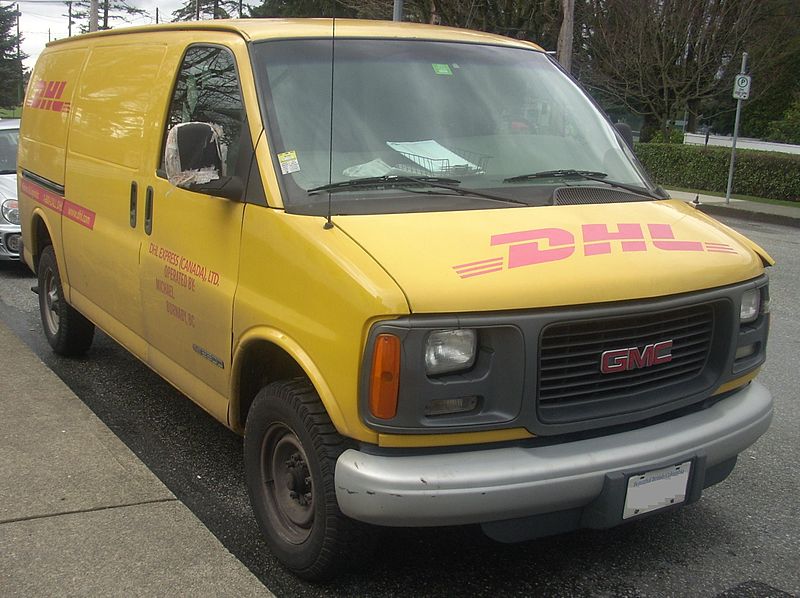
Ask most people what comes to mind when they think of DHL and the most common response is "big yellow trucks." Thus, it shouldn't be surprising to learn that those big yellow trucks helped give DHL a brand awareness of 60%, according to BtoBOnline.com, the web-based magazine for marketing strategists.


Of course, it wasn't just the trucks. After 20 years without any advertising, DHL launched a $60 million advertising campaign. The combination of the ads and the trucks vaulted brand awareness from 11% to 60% in two years. Since then, the company's scaled back on traditional advertising, but nevertheless has managed to maintain high levels of awareness.

To put things in perspective, DHL's brand awareness is double the brand awareness of the best known air conditioning manufacturer and four times the awareness levels of the second best known brand. While $60 million may seem like a lot of money, it's a drop in the bucket of the $108 billion radio and television advertising market. It's not enough to move the brand awareness needle that far, that fast. So how did they do it? Go back to the trucks.

Read the rest in Contracting Business Magazine

Thursday, May 20, 2010

Summer Consumer Newsletter Released at Service Roundtable

As we do every quarter, we've created a consumer newsletter for our Service Roundtable members. There's a separate version for plumbing, HVAC and electrical, and each one is designed to be very easy to customize and modify. It's free for all members, just like all our weekly content.

Wednesday, May 19, 2010

Expanding your circle of influence


If you lived in Lewisville, Texas, a Dallas suburb of 100,000 people, and I could show you how an hour a week could help you get to know the mayor, police chief, county commissioner, the presidents of four local banks, a candidate for U.S. Senate, the owner of the town's leading property management company, one of the area's top developers, general managers from two auto dealerships and a host of other business and community leaders would you invest an hour?

Read More at Contractor Magazine

Customer Dog


Over the weekend, I stopped by a pet store to pick up some dog food. Outside the pet store, one of the Animal Rescue Societies had set up, and was giving away dogs. I noticed a small dog, with long floppy ears. This was the goofy, lovable dog that seemed to have the traits of a half dozen breeds.

“Ah, the classic American mutt,” I said, reaching down to pet the dog.

“I’ll have you know that’s a special breed of dog,” said a volunteer with Hank on his nametag. “Everybody wants him, but they often overlook him.”

“Oh yeah? What kind of breed is this?”

“It’s a customer dog.”

“A customer dog?”

“Yep. Well, I should say he *was* a customer dog. Right now, he’s gone back to being a prospect dog, but he wants to be a customer dog again.”

“So he was a customer dog, but is now a prospect dog and wants to become a customer dog again. I see,” I said, though I didn’t know what the guy was talking about.

Read More at Contracting Business

Dumb Customer. Creepy Plumber.


A Knoxville, Tennessee newspaper reported that a plumber was arrested and charged with photographing without consent. 

Apparently the plumber was called for a leaking shower.  He told the customer she needed to take a shower so he could track down the leak.  She feel for it.  Presumably, he left the room while she proceeded to shower.

After she finished the shower, the woman noticed a lens in the plumber's tool kit.  It was a camera (presumably an operating video camera or there wouldn't be the need for the arrest). 

Clearly the customer's a low watt bulb, but that doesn't excuse the plumber's actions.  The story doesn't report the company name so there's no indication whether the plumber was the Principal or an employee.  However, more information is promised to be forthcoming, which could include the company name.

What if the creepy plumber was your employee?  Yikes!

How do you protect your company from creepy employees?  How do you respond if a creepy employee sabotages your company?

Think through your response in advance.  While you want to avoid hiring creepy employees in the first place, you want to think through how you would respond with calm and without pressure.  During the pressure of the moment, you might not select the best course of action.

Newspaper Source

Tuesday, May 4, 2010

Are You Thanking Your Customers for Choosing Your Company?

There are a number of ways you can say thank you to your new customers - some contractors like using a simple hand-written card, some send a box of cookies or chocolates. This letter does a little more.

We (the Service Roundtable) created this welcome letter that gives you a chance to thank new customers for their business, tell them a little more about your company, and provide them with a gift certificate for future service.

It's an inexpensive way to cement the new relationship and market your other services at the same time. And the gift certificate is just another way to ensure they call you the next time they need service.

Friday, April 23, 2010

New: Service Roundtable Money Mail


The Service Roundtable just introduced a new, turnkey, email marketing program for contractors called Service Roundtable Money Mail.

It's the fastest, easiest way for contractors to market to their target audience. The Service Roundtable Money Mail Program takes the hassle out of email marketing. We do it all, so you can concentrate on running your business. Click to learn more about how you can grow your company through the power of email marketing.

Making Sales Off Facebook

Can a small business make money using social media?  Absolutely!  Gabe Wade took one of the coupons created by the Service Roundtable for contractors to use with Facebook and posted it. 

"Looks great," wrote Gabe about the coupon.  "Thanks.  For the little effort it takes we have made our first sale off of face book!"

Now, think of the effect if all employees posted the same coupon so their friends could benefit?  What if they asked their family and friends to share the coupon?  The numbers could get very large, very fast.

Are you marketing through social media?

How to Make Your Ad Stand Out in a ValPak Envelope

Valpak coupon mailers are sometimes very effective. One problem we see is that after awhile, all the ads start to look alike. We’re attempting to combat that by creating a faux check for our Roundtable members that looks nothing like any of the other ads in the envelope.


If you want to stand out from the crowd, you have to do something different. Don't be like everyone else!

Thursday, April 22, 2010

Earth Day News That Doesn't Depress You... Things are Getting Better


Today is Earth Day. I'm all for the earth. I live here. Unless immigration to Alpha Centauri starts soon, I'm going to keep living here. Since the Feds just canned manned space flight to redirect NASA to monitor global warming, it may be a while before we travel to Alpha Centauri.

I like the earth and I like using natural resources to make my life and those of other people better. If we have abundant coal and can use clean coal technology to generate cheap, reliable electricity, I'm all for it. I wonder why we would spend a fortune building windmills that generate unreliable, pricey electricity.  It does not mean I'm in favor of damaging the environment because I favor cheap coal over high priced windmills.

During my entire career, I've been an advocate of energy efficiency.  I helped design cutting edge ice storage and cold air distribution systems. I've looked for ways to reduce energy in factory operations.  I've marketed and sold high efficiency products.  I don't know anyone opposed to energy efficiency. Yet, I think it's silly to mandate efficiency standards that result in large cost increases for minor efficiency improvements, resulting in economic payback periods that are three times the useful life of the appliance.  Being practical and pragmatic doesn't mean I'm against the environment.

I could go on. Too often environmentalists present a false choice. Either you're for carbon rationing and reduced standards of living or you're for destroying the planet. Frankly the best thing for the environment is unfettered capitalism, economic growth, and wealth creation. Environmentalism is near the top of Maslow's Hierarchy of Needs, next to self-actualization. Impoverished people live near the bottom of the pyramid.  They don't care about their carbon footprint. They care about dinner.

Despite the shill warnings of impending doom, the fact is that we are not destroying the planet; not even close. In fact, we're making things better. The 2010 Index of Leading Environmental Indicators by the Pacific Research Institute's Steven Hayward isn't out yet, but check out the executive summary from the 2009 edition...

Growing evidence that tropical rainforests may now be expanding faster than they are being cut down, though more data are needed to determine the nature and extent of reforestation trends.

The world’s most severe environmental problems, as ranked by the Blacksmith Institute and Green Cross Switzerland, are overwhelmingly problems of poverty in developing nations.

— No American or Western European city ranks among the top 50 cities in the world for air pollution in a World Bank ranking.

— Air pollution levels are falling in the 10 most polluted cities in the United States, by as much as 27 percent over the last decade in the case of fine particulates in Los Angeles.

— Recent ice core studies have found that levels of heavy metals in the atmosphere declined substantially during the 20th century, although heavy metal levels could rise again with increasing use of coal in Asia.

Stratospheric ozone, the “good” kind of ozone—akin to “good” cholesterol in blood—appears to have reversed its long-term decline and is now increasing over the United States. The level of ozone destroying chemical compounds in the atmosphere declined 12 percent from 1995 through 2006.

Water quality monitoring efforts are picking up steam, though it will still be several more years before we have enough data to draw a clear picture of water quality trends on a national basis. However:

— The U.S. Geological Survey sampling of drinking water drawn from surface waters in 17 areas around the continental United States found very low (nonhazardous) or no presence of 258 different man-made chemicals.

— Long-term monitoring of Lake Tahoe on the California–Nevada border has detected an improving trend in the clarity of the lake’s water over the last seven years, reversing decades of slow decline.

The health of U.S. ocean fisheries has improved substantially over the last few years, according to the U.S. National Marine Fisheries Service’s “Fish Stock Sustainability Index.”

— Recent research suggests that the rate of collapse of global ocean fisheries could be cut by two-thirds through the use of a property rights approach, according to a careful study published in Science magazine.

Flat or declining global average temperatures in 2008 have ignited new controversy over climate change. The data show that 2008 was the coolest year since 2000, and there has been no discernible warming for the last decade, after two decades of steady warming between 1978 and 1998.

— Arctic sea ice levels rebounded from the all-time modern low observed in 2007.

— The global ambient level of carbon dioxide rose by 0.5 percent in 2008, a slight increase over the average annual rate of the last 25 years, to 385 parts per million.

— U.S. carbon dioxide emissions rose 76 million tons in 2007 (the most recent year for which data are available), after having fallen 81 million tons in 2006. Most of this increase was attributable to colder weather in the winter of 2007.

Public opinion data on advertising and marketing suggest growing public weariness with “green” messages in general and messages on global warming in particular. In recent polls, 58 percent of Americans declined to identify themselves as environmentalists; 78 percent so identified themselves as recently as 1991.

— A Pew poll in January 2008 found that Americans ranked climate change last among a list of 20 priorities for the nation to address.

— A Rasmussen poll found a slight plurality of Americans (44 to 41 percent) believe climate change is a natural rather than a man-made phenomenon.

The United States is cleaner today than it was during my childhood. It's cleaner because we're wealthy enough to clean up after ourselves. Hamstringing enterprise and commerce with a carbon tax or cap and trade tax and rationing system will not help the environment. It will only increase government waste, fatten the politically connected, and impoverish the citizenry.

Remember, only a wealthy populace can afford to be environmentally responsible. Because of free enterprise, we are wealthy enough to be one of the cleanest nations on earth.  Environmentalists who truly want to clean up the planet should first encourage the creation of wealth.

Click Here to Download the 2009 Index of Leading Environmental Indicators (PDF)

Wednesday, April 21, 2010

Email Marketing 101


My latest CB Hotmail column...

The most basic form of “New Media” marketing and digital marketing is email marketing. In a nutshell, it’s using email to communicate with your customers. Aside from effectiveness, the obvious advantages are cost and speed. Compared to snail mail, email is virtually free and practically instantaneous.


Still, email marketing is not a slam dunk. It has its own protocol. Violate it and you tarnish your company’s reputation at the least and break the law (i.e., the CAN-SPAM act) at the worst. If you are going to communicate with people by email, you need their permission and you need to deliver useful information. Content is king in the digital world. You cannot simply shill.

Read More at Contracting Business

Sunday, April 18, 2010

Where do you find Plumbers trained in sales?

One of the most common questions you hear today from plumbing business owners and managers is “Where do you find Plumbers/HVAC Technicians trained in sales?” I submit you are not going to find very many skilled plumbers, let alone those proficient in sales in today’s market, and the only answer is that you are going to have to train them yourself. According to the Bureau of Labor Statistics, the demand for plumbing and heating workers is projected to exceed the supply, and a general aging of the journeyman ranks will likely create job openings faster than they are filled. Their job opportunities are expected to be very good in the future, and employment in the field is projected to expand 10 percent between 2006 and 2016. However, as we all know, most employers in today’s market are having difficulty finding qualified trades people to do the work right now.

To me, the writing is on the wall, if we do not start recruiting young people into our industry and training them ourselves right now, we will be dealing with an even bigger problem in the future. The potential workforce is out there, we just have to recruit them. I volunteer at our local high school’s Construction Technical Class, which offers some 60 students exposure to some of the construction trades. It does this by having retired tradesmen come in and work with the students a couple of days a week. The volunteers consist of a carpenter, electrician, sheet metal worker, cabinetmaker, and plumber.

The students rotate between all of the trades during the first part of the year, and then they can pick out what trade they would like to finish out the rest of the year with. Due to budget cuts, as of now next year’s class is going to have to cut one class, which means some 50 students that have already signed up will not be able to attend this program. We are trying to raise some money to get the class reinstated, and hopefully we will succeed in doing so. The young people who attend these classes can go on to be trades people, we just have to get them on board. One way might be contacting the High Schools and seeing about a job shadowing or mentoring program.

I am a firm believer in that old saying “What goes around, comes around”, and I propose that we must go back to training apprentices from the git-go as we did for some 60 years during the strong union era. This process takes time and money, but it is proven to have worked for myself and thousands of others who received our training in this manner during the 50s, 60s & 70s.

As for as learning sales skills goes, if they are incorporated in the apprenticeship training process, it will be a very easy process as opposed to trying to teach an old dog new tricks even when you are lucky enough to find one. The reason being, sales is just a dirty word to many of the older generation of trades people. After all, it has taken over 20 years of overcoming huge resistance by the Service & Repair Industry before the Flat Rate Business System become accepted; let alone installing and using a sales program in conjunction with it.

For the sales training itself, we have discussed on the Service Roundtable many times the benefits of using Charlie Greer’s Tech Daddy DVD Series. It is inexpressive, and covers every aspect of what Service & Repair shop technicians will need to become proficient in sales. For management, I also highly recommend attending the Service Roundtable National meetings. You will come away from them being a much better informed businessperson, as well as a sales person. The main thing I have found in my sales training classes is that lack of confidence is what holds most people back. Simply put, if you think you can sell you will, if you think you can’t, you won’t. Roll playing is a great way to instill that confidence, and allow them to believe in themselves and their ability to sell anything. So there it is, just go for it.

Just my thoughts,

Gene B

Thursday, April 8, 2010

The Hope in HVAC


This is from my latest Contracting Business Hotmail Column:

It was difficult to understand the voice on the other end of the phone. “I haven’t been able to work for six months,” he said. “My jaw’s wired shut.”

The contractor called me out of the blue after my phone number was listed in a magazine article. I think he called me because he was lonely. He relayed his story. The contractor was involved in a serious automobile accident. His truck was totaled and he wound up in intensive care. After he was released from the hospital he still couldn’t work.

As a single truck operator, he owned a job, not a company. When he couldn’t work, neither could his company. His wife was forced to refer his customers to a competitor. Goodbye customers. Goodbye business. In an instant, this contractor lost his business, much of his wealth, and most of his hope.

The phone call haunted me. Twenty years later I still think about it. At the risk of going “Bill Clinton,” I can still “feel his pain.”

I wondered how other contractors could avoid his fate. The answer to me seemed obvious. Grow! Build a business, not a job. Create a company that can exist without you. Anything else is not really a business.

Read the remainder of the article at Contracting Business.

Wednesday, April 7, 2010

Ten simple steps to becoming greener


The following is from my latest article in Contractor Magazine...

It's amazing how many articles fill the trade press about "green" plumbing. Most plumbers are aware of the growing consumer awareness about the environmental impact of the choices they make in lifestyle and purchases. Yet, many are uncertain exactly what being "green" really means.
Green practices can affect the products and services you sell, the way you operate your company, and the way you live your life. Few people, including the leaders of the green movement manage to uphold all three areas (it’s that lifestyle thing that trips up many of eco-leaders).
It's your call whether you can credibly claim to be a green company. Whether you believe you are green or not, you can offer green products and services. You can also begin adopting green practices in the operation of your company. This is smart business.
All else being equal, people usually select greener products when given a choice. Often, people will pay more for green products. Thus, greener offerings are more marketable and can be more profitable. Similarly, green business practices are often efficient business practices.
Without addressing lifestyle, here are 10 ways you can make your company more environmentally responsible at Contractor Magazine.

Tuesday, April 6, 2010

Message to the California Solar Industry... Shut Up!


Electric rates in parts of California are staggering.  Try PG&E's punative 50 cents per kilowatt hour for heavy electricity users.

Apparently PG&E has a five tier rate structure.  The top rate gets slapped on the biggest homes in the hottest areas, which are owned by the most affluent.  Get tagged with $0.50/kWh and the affluent will invest in all kinds of energy reducing technology, creating a bonanza for California's solar industry even without additional rebates and tax credits.

PG&E wants to simplify the rate structure from five tiers to three.  The proposed change will dramatically reduce the top rate from $0.50/kWh to $0.30/kWh, but expand the number of people paying $0.30/kWh.  For solar contractors, this should be good news.  The market has broadened.  A lot more Californians just became candidates for solar, especially when the tax credits are figured in.

Unfortunately, some are griping.  ""It feels like this is PG&E's way to thwart the solar industry," complained a solar contractor in a Silicon Valley Mercury-News article. "If the rate changes go through, the savings I am experiencing now and those projected into the future would decline substantially."

A solar manufacturing executive ranted, "I'm very concerned about it.  I don't think this was done with any consideration of how it will impact solar in California. California has sent a strong signal to the market that we want to promote solar. But if you implement rates that discourage solar, it undermines all of the hard policy work that has already happened. You can't have one foot on the gas and one foot on the brake at the same time."

It's one thing to be seen as pro-solar.  It's another to be seen as pro-electricity price gouging.  Why not lobby the state legislature for an unfunded mandate to require every homeowner to buy solar?
 
Everyone likes solar, right now.  It's as warm and fuzzy as a stuffed polar bear.  And if individual homeowners are independently assuming the first costs for solar installations, there's little basis for anyone to object (though some still do, as noted in an earlier post about homeowners associations and solar).  Solar's got great PR!
 
Lobbying for artificially high, punitive electric rates to make the technology feasible in the market is not good PR.  It's horrible PR.  It's akin to Toyota lobbying for $5.00 per gallon gasoline to get Prius sales back on track.  It's like kicking puppies.  It's the type of action that will cause a backlash against solar and the green movement in general.
 
The California solar industry needs to to the rest of the solar industry a favor and SHUT UP!

Monday, April 5, 2010

An Electric Service Truck? Or not?

Photo:  Ford


Will contractors populate their service fleets with electric vehicles?  Ford is counting on it.  The company will begin selling the Transit Connect Electric this summer.

The Transit Connect Electric is a half ton, commercial van with a range of 80 miles (60 miles if the air conditioning's running), top speed of 75 MPH, and capability of climbing a 20% grade.  It's uncertain if the performance figures are for a fully loaded vehicle or an empty one.  It's likely, the latter.

Charging using a 240 volt supply takes six to eight hours.  With a 120 volt supply, it takes 16 hours to fully charge.

Initially, the product will only be sold through fleet purchase.  It will be built in Turkey and shipped to Michigan to be fitted out as an electric vehicle.  Service will be offered at any Ford dealership.

Total cargo space is 135 cubic feet.  The load length is 72.6 inches.  Floor-to-ceiling is 59.1 inches.  Width is 47.8 inches.

On the surface, it looks like Ford might have a winner.  Contractors operating with tight geographic areas might be able to use the Transit Connect Electric for light duty, like maintenance calls.  Those who drive 30 miles between calls are not candidates.

The economics of operation look attractive.  In December 2009, the average commercial electric power rate was $0.0973 according to the Energy Information Administration.  The average price at the gas pump was $2.60.

The Transit Connect Electric is supposed to charge off a 240 volt outlet.  But what amperage?  None of the articles mention amps.  The best case is to assume a 15 amp circuit.  This means the Transit Connect Electric draws 3,600 watts while charging (240 volts X 15 amps).  Over eight hours, that results in 28.8 kWh (3,600 watts/1000 = 3.6 kW X 8 hours = 28.8 kWh).

At $0.0973 per kWh, this results in a cost of $2.80 to fully charge the Transit Connect Electric for its 80 mile journey.

The gasoline powered Transit Connect gets 23 MPG.  To travel 80 miles, the vehicle uses 3.48 gallons (80 miles/23 MPG = 3.48 gallons).  At $2.60/gallon, the same 80 mile trip costs $9.04 (3.48 gallons X $2.60/gallong = $9.04).

The electric vehicle saves as much as $5.57 per day.  If operated 250 days per year, that's an annual saving of $1,560.31.  This is real money.

The Transit Connect Electric seems like a winner.  Use it as a maintenance vehicle, plaster "electric powered 'green' vehicle" all over it, position the company as environmentally responsible, earn green points, and save money.  This looks as good as the decision by hotels to ask guests to save the earth by using dirty towels and sheets.

Everything looks good, except for the one missing piece of information.  What does it cost? 

The gasoline powered Transit Connect lists for $22,245.  How much could the Transit Connect Electric cost?  At $27,000 it would offer a three year payback.  That's very doable.

According to a Fox News report, "people close to the project have previously indicated that it likely will cost at least $50,000 before various green tax credits are factored in."

Gulp!  At least $50,000?  Unless there are $20,000 of dollar-for-dollar green tax credits, it's hard to see the Transit Connect Electric going anywhere.  Maybe this is why Ford is planning on 1,000 vehicles in the first year and no more than 5,000 thereafter.  It seems Ford's not counting on contractors populating their fleets with electric service vehicles after all.

Green "cred" or not, will any contractor pay a $28,000 premium to save up to $5.57 per day for a limited use vehicle?

Sunday, April 4, 2010

Facebook and Old Geezers

We are in the process of getting our Plumbing Heating and Cooling Company Web Page up and running on Facebook, and I am wondering like many others just how to use it in an effective manner for our business. I must admit I do not get all of this Social Media stuff, I mean how much free time do these people have on their hands to be able to post so much personal trivia? However, I believe you cannot just ignore Facebook, as my own experience with Google has shown me how powerful the Internet can be.

A few short years ago, I never even heard of Google, and now I probably use it 5 or 10 times a day. The fact is I just no longer use the Yellow Pages, as I can find anything I need on Google in a few seconds. Obviously, I am not alone in this, as Google has surely taken world by storm, and now Facebook has even surpassed them as far as users go. As for the Yellow Pages, I heard the other day that a Yellow Page Rep said he felt the Yellow Pages as we know them would be gone in 3 years. I do not know if that will be the case, but to me there is no doubt that they are dying a slow death mainly due to the Internet.


One thing driving me in this, is that I am keenly aware of how many people and their companies have failed over the years due to not keeping current with all of the new prospects and possibilities that come along and are necessary for continued success with progress. Change is not easy for many people, as it is just so easy to hang on to what you have done in the past, rather than looking for new and better ways of doing things.

I am also following all of the posts concerning Facebook on the Service Round table, and I am getting some great feedback there. So far, my thinking is to put our company URL Link on our Facebook page, to direct people there, as well as having a discount coupon they can download and printout. I am sure I will discover much more about this Facebook thing as I go along, and it will become one more arrow in quiver of modern day marketing and advertising.

Just my thoughts,

Gene B

Good News: The Polar Ice Cap Isn't Disappearing


Something interesting's been occuring in the Arctic.  The Arctic sea ice, which starts melting around the first week of March, didn't.  It kept expanding.  This means the summer melting period will be less.  It also means that current ice levels are now consistent with the "historic" record. 

Unfortunately, our history is limited to the satellite record, which is roughly 30 years.  Because we've got such a narrow window, we tend to act like the ant who hatched in the morning and by mid-afternoon, noted it was getting progressively warmer.  The ant extrapolates and estimates his world will burn up in a day or so.  Of course, it didn't.  And neither will ours to the dismay, consternation, and frustration of the air conditioning industry.

Saturday, April 3, 2010

Economic Fundamentals: Barstool Economics


I didn't write this. I don't know who did. I grabbed it from Matthew Burke's Freedom Post blog. Burke tried to find the original author and couldn't find him. Whoever wrote it, it's the essence of economics in action. Read it and pass it along.

Suppose that every day, ten men go out for beer and the bill for all ten comes to $100. If they paid their bill the way we pay our taxes, it would go something like this:

  • The first four men (the poorest) would pay nothing.
  • The fifth would pay $1.
  • The sixth would pay $3.
  • The seventh would pay $7.
  • The eighth would pay $12.
  • The ninth would pay $18.
  • The tenth man (the richest) would pay $59.
So, that's what they decided to do. The ten men drank in the bar every day and seemed quite happy with the arrangement, until one day, the owner threw them a curve.
"Since you are all such good customers," he said, "I'm going to reduce the cost of your daily beer by $20."
Drinks for the ten now cost just $80. The group still wanted to pay their bill the way we pay our taxes so the first four men were unaffected. They would still drink for free. But what about the other six men - the paying customers? How could they divide the $20 windfall so that everyone would get his 'fair share?' They realized that $20 divided by six is $3.33. But if they subtracted that from everybody's share, then the fifth man and the sixth man would each end up being paid to drink his beer. So, the bar owner suggested that it would be fair to reduce each man's bill by roughly the same amount and he proceeded to work out the amounts each should pay. And so:
  • The fifth man, like the first four, now paid nothing (100% savings).
  • The sixth now paid $2 instead of $3 (33%savings).
  • The seventh now pay $5 instead of $7 (28%savings).
  • The eighth now paid $9 instead of $12 (25% savings).
  • The ninth now paid $14 instead of $18 (22% savings).
  • The tenth now paid $49 instead of $59 (16% savings).
Each of the six was better off than before. And the first four continued to drink for free. But once outside the restaurant, the men began to compare their savings.
"I only got a dollar out of the $20," declared the sixth man. He pointed to the tenth man," but he got $10!"
"Yeah, that's right," exclaimed the fifth man. "I only saved a dollar, too. It's unfair that he got ten times more than I!"
"That's true!!" shouted the seventh man. "Why should he get $10 back when I got only two? The wealthy get all the breaks!"
"Wait a minute," yelled the first four men in unison. "We didn't get anything at all. The system exploits the poor!"
The nine men surrounded the tenth and beat him up. The next night the tenth man didn't show up for drinks, so the nine sat down and had beers without him. But when it came time to pay the bill, they discovered something important. They didn't have enough money between all of them for even half of the bill!
And that, boys and girls, journalists and college professors, is how our tax system works. The people who pay the highest taxes get the most benefit from a tax reduction. Tax them too much, attack them for being wealthy, and they just may not show up anymore. In fact, they might start drinking overseas where the atmosphere is somewhat friendlier.
For those who understand, no explanation is needed. For those who do not understand, no explanation is possible.
Why does this matter? Our country is beginning to beat the snot out the tenth man in our society. If we allow it to continue, the result is inevitable.

Friday, April 2, 2010

The First Edition of Inside Contracting is Nearly Sold Out


We're almost out of the first edition of Inside Contracting. This is the hardcover edition (makes a great gift). The next edition will be paperback. Order your copy of the first edition now.

Click For More Information

Water Pictures


March 22 was "World Water Day."  Yada, yada.  Regardless, Boston.com posted an unbelievable collection of water pictures from AP, Getty, Bloomberg, NASA, and the National Geographic for World Water Day. 

Click Here to See Them

Thursday, April 1, 2010

Treasury Department Makes Block Purchase of Pricing Book


(WASHINGTON, DC) – The United States Treasury Department announced a block purchase of the book, “The Power of Positive Pricing,” today. The books will be distributed to Treasury employees.

“It’s an amazing book,” declared Treasury Secretary Timothy Geithner. “This is new information for me.”

It’s a surprising statement for the government’s top financial manager. Still, it’s unlikely that Geithner studied pricing as an undergraduate. He was a student of Mandarin at Peking University and Beijing Normal University before graduating with an A.B. in government and Asian studies. However, he did study economics while attending Johns Hopkins University's School of Advanced International Studies where he was an international economics and East Asian studies major.

In discussing the book with staffers, Geithner was overheard exclaiming, “Some of the concepts discussed, like the need for revenues to exceed expenses… I mean, wow. Just wow. Think where we might be today if all of us read this a couple of years ago? Flex pricing, the impact of small changes on net profit, dual overhead, pricing on the margin. It goes on and on. Clearly, we can learn a thing or two from the private sector.”

Geithner, who watched the nation’s financial crisis unfold while overseeing the financial markets as president of the Federal Reserve Bank of New York is considered one of the architects of the TARP bank bailout and government stimulus plan.

As Treasury Secretary, Geithner oversees the Internal Revenue Service. This is considered ironic since it was revealed during his confirmation hearings that he was repeatedly unable to correctly figure his own taxes. Before confirmation, Geithner repaid the government tens of thousands of dollars in unpaid taxes, plus more in interest. Fortunately for Geithner, he was not assessed any fines or penalties for erroneous returns during the tax years 2003, 2004, and 2006. Also, he escaped penalties for mistakes from 2001 and 2002 due to the expiration of the statute of limitations.

“The Power of Positive Pricing” wasn’t written for Treasury officials. The book was written to help service contractors boost their bottom lines while building the top line through strategic pricing approaches. The book can be purchased for $28.95 from the Service Roundtable online store.

Four Year Old Advertising Prodigy Wins Simi Valley Yellow Pages Design Competition


(SIMI VALLEY, California) – Four year old, Jason Whittier’s crayon drawing of a truck with his father’s plumbing company logo and phone number was submitted to the yellow pages directory as a mistake, but was nevertheless the most frequently called phone number during a call tracking competition.

“The yellow pages rep screwed up,” declared Bill Whittier, owner of Peaceful Valley Plumbing. “My son was coloring a truck and tracing our name, phone number, and tagline. I showed it to the yellow pages rep and joked that maybe this would outdraw the ads created by the directory. The idiot took me seriously, but the biggest joke was it did outdraw the other ads.”

University of Southern California marketing professor, Dagesh Ruel, claimed that the Peaceful Valley Plumbing ad succeeded because the yellow pages directories have become little more than a world of sameness.

“When everything looks the same,” said Ruel, “Different stands out. It’s fundamental marketing. They zig. You zag.”

Noting the amounts charged to design yellow pages ads, Whittier has started a new business featuring his son’s graphic designs.

“Jason will create an ad for any plumbing, air conditioning, or electrical company for only $2,000,” quited Whittier. Compared to everyone else, it’s a bargain.

Residential New Construction Contractor Finds Profit in Panhandling


(LAS VEGAS, Nevada) – Jimmy Morris’ technicians used to install air conditioners. Today, they panhandle.

“It’s awesome,” declared Morris. “I send these guys out with signs and buckets and they come back with money. Heck, when I was a new construction contractor, I lost money every day. Now, I make money.”

When asked about shifting his business to the service and replacement market as other contractors have done, Morris expressed skepticism.

“That may be alright for other guys,” Morris said. “But I don’t see the point. You have to spend money on uniforms, shoe covers, marketing, and training. You have to invest in a business alliance and read stuff. This is a lot easier.”

Morris explains that he likes the fact he no longer has to worry about the appearance of his workforce, noting that “the grungier the better.” The only materials he needs are markers. His techs supply their own cardboard from local dumpsters. He gives them the freedom to create their own signs.

“They used to install every air conditioner different, even though we did tract work,” Morris said, “Why shouldn’t they make every sign different?”

Morris’ panhandlers are paid a percentage of their daily take.

Norwegian Researchers Announce New Renewable Energy Source


(OSLO, Norway) – Researchers from the Hans Ole Institute for Environmental Studies announced the discovery of a new renewable energy source, called Skogen.

“Skogen is quite remarkable,” said Peder Hansen, director of the Institute. “Unlike wind power, it can operate during a calm. Unlike solar, it’s effective at night. Unlike hydro, it does not require the taming of a wild river. Unlike nuclear, there is no radioactive material. Moreover, it is plentiful in much of the world and with foresight and planning can be renewed.”

Click Here For An Image of Skogen

New Penguin Colony Discovered

This doesn't have anything to do with small business, marketing, or economics. I just think it's a cool report for a day like this one. From the BBC...