Friday, November 6, 2009

Economic Fundamentals: The Forgotten Depression


Have you ever heard of the other Depression of the 1920s? Sure, you've heard of the Great Depression that started under Hoover in 1929. But have you heard about the one that started under Wilson in 1921?


The Depression of 1920/21

The 1929 depression was characterized by double digit unemployment. The 1920/21 depression was also characterized by double digit unemployment. According to historian Burt Folsom, the 1920/21 meltdown "had economists excited over what was shaping up to be one of the worst crises in American history."

Come again?

Folsom says the end of the Wilson administration was characterized by massive unemployment as troops returned from the Great War (World War I). In 1918, the armed forces employed 2.9 million. By 1920, 320 thousand were in the armed forces. Unemployment reached 12% and was a huge issue in the presidential election.

Mismanagement at the Federal Reserve compounded problems. The Fed raised interest rates from 4% at the end of 1919 to 7% six months later. This choked off credit needed by businesses and consumers at a time when the labor force was swelling with returning veterans.

The economy contracted 6.9%, technically making the contraction a sharp recession and not a depression (a 10% contraction is necessary for a depression). Prices fell by 18% in a single year. Wholesale prices feel by 37%. Automobile production dropped 60%. Overall industrial production fell by 30%.

Technically, 1920/21 may not have been a depression, but it felt like one. Between the end of 1919 and the middle of 1921, the Dow fell 47%. The rate of business failures tripled and solvent businesses experienced a 75% decline in profitability.

Promising a "return to normalcy," Warren G. Harding was swept into office by a 60% to 34% landslide with Calvin Coolidge as his vice president. Half way through his term, Harding died from a heart attack and Coolidge was sworn in as president. Coolidge, one of the country's greatest and most overlooked presidents, continued Harding's economic policies seamlessly.

Harding's Secretary of Commerce was Herbert Hoover. Hoover pushed Harding to "do something." So Harding held a President's Conference on Unemployment. All of the brightest minds of industry, academia, and government were involved. Collectively, they urged Harding to engage in a massive stimulus program, putting unemployed vets to work on infrastructure projects, such as roads and bridges.

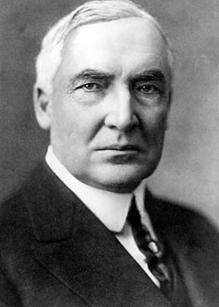
Warren Harding Cut Taxes and Spending

Harding's response? He said the spending would require massive tax increases that would cripple the economy. Instead, Harding did the opposite. He cut taxes and spending, which Coolidge continued after Harding's death.

Harding cut the top income tax rate from 73% to 25%. With better after tax returns, entrepreneurs were willing to risk their capital. If an entrepreneur risked and lost, he lost it all. If he risked and won with a 73% marginal rate, he could only keep 27% of his profit. When the rate lowered to 25%, he could keep 75%. Suddenly, more people were willing to take a chance.

Someone who wasn't taking much of a chance was Harding. As Treasury Secretary, Andrew Mellon said, "Seventy-three percent of nothing is nothing. Twenty-five percent of something is something."
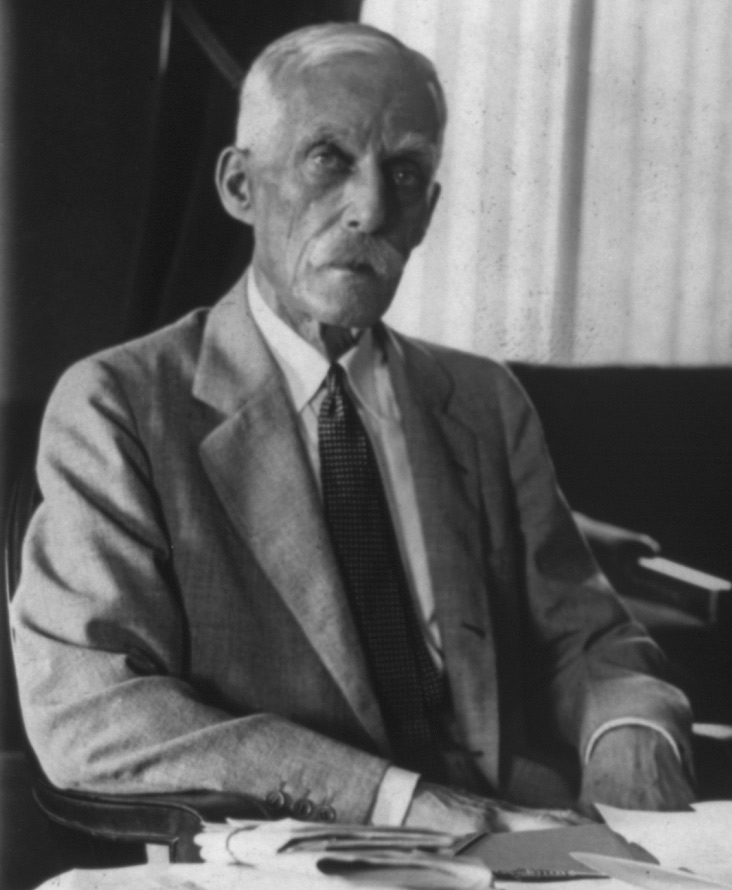

Was Andrew Mellon The Original Supply Sider?

Harding coupled the tax rate reductions with cuts in federal spending. Folsom reports that Harding wanted to keep the U.S. competitive globally and attract investment.

If you think that cutting government spending and tax rates is a recipe for massive deficits, guess again. The economy boomed as entrepreneurial activity was released. Overall tax receipts went from $700 million in 20/21 to over $1 billion by 28/29. The government ran surpluses, cutting 1/3rd of the national debt.


The Best Economic Performance of Any President Was Calvin Coolidge's

During Coolidge's term as president, unemployment averaged 3.3%. According to Folsom, at the end of his presidency, unemployment was 1%. Since inflation was 1%, Coolidge averaged a misery index (inflation + unemployment) of 4.3%, which half any other 20th century president.


The Great Depression

The 1920s depression you've probably heard about is the one that commenced under Hoover and was continued under Roosevelt. Hoover, if you recall, was one of the people who wanted to enact a stimulus program during the earlier depression. In private, Coolidge called Hoover, "wonder boy" and once remarked that, "He's been giving me advice for six years, all of it bad."

In school I learned that the Great Depression was started by the 1929 market crash, which was a failure of capitalism and free markets. The mythology is that Hoover did nothing. He sat back in callous disregard for the plight of the public. If only.


Herbert Hoover Was NOT an Advocate of the Free Market

In reality, the Depression didn't start with the stock market crash. In fact, the markets had started to recover. From mid November, 1929 to April, the Dow recouped half the decline from the peak and was nearly level with the prior year.


The Markets Were Rebounding From The Crash

Milton Friedman, the greatest economist of the 20th century, advanced the belief that the Fed's contraction of the money supply (and increase in rates) kick started the Great Depression. Others blame the Smoot-Hawley tariff. Still others, credit a combination.
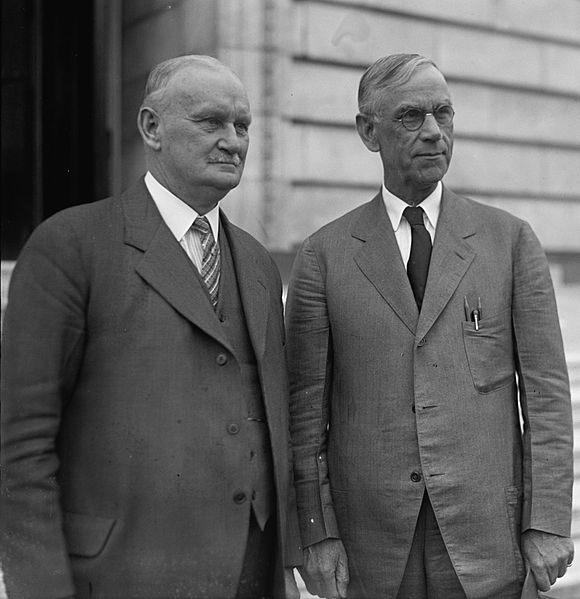

Smoot & Hawley May Have Drafted The Most
Economically Damaging Piece of Legislation In History
(Though Congress Keeps Trying To Get One Worse)

Smoot-Hawley was the largest tariff increase in U.S. history. The merits of free trade is one area with almost no disagreement among economists. Over 1,000 economists sent Hoover a petition urging a veto. Industrialist pleaded with him personally to veto the bill.

Hoover didn't listen. He signed Smoot-Hawley into law, raising tariffs on over 20,000 products, launching retaliatory tariffs around the world. The bill artificially raised prices on products made more competitively overseas. This led other countries to artificially raise the price of products we produced more competitively, killing our exports. Exports fell 27% in 1930, 36% in 1931, and 34% in 1932 (Source).

Next, Hoover launched his infrastructure stimulus program. To pay for it, he raised top marginal income tax rates from 25% to 63%. Unemployment soared to 25% in 1932.


Roosevelt Campaigned On Tax & Spending Cuts... Then, Reneged

Roosevelt entered the picture promising tax cuts and federal spending cuts. The party platform called for spending cuts of 25%. If Roosevelt would have kept his promises, the depression might have soon ended. He didn't and it didn't.

Roosevelt didn't like or trust entrepreneurs (the feeling was mutual). Rather than turn to business people for solutions to the economic problems Roosevelt assembled a "brain trust" of college professors. Yikes!

Folsom described the academic solutions. Farm exports were down, resulting in surplus production, and falling prices. The brain trust's solution? Pay farmers not to produce.

The farmers thought getting paid not to produce was a fine idea, but actually idling good farmland seemed kind of silly. So they cheated.

To stop the cheating, the government hired inspectors to physically check on the farms. So the farmers bribed the inspectors and kept on cheating.

In response, the government hired inspectors to check on the inspectors. When this didn't work because the inspectors split the bribes, aerial photography was deployed with auditors studying aerial photographs.

The Feds were determined and eventually, the U.S. did develop farm shortages. By 1935 we were importing cotton, corn, and wheat because farmers weren't producing enough. Some of the shortfall was due to the 1930's era global warming and the Dust Bowl. Still, it was absolutely ludicrous that we were paying farmers not to farm, importing farm products at a premium, and paying a legion of bureaucrats to oversee the entire mess. As Folsom says, this was only one government program and not even the worst.


The Dust Bowl: 1930s Era Global Warming

We had government sponsored price fixing. Business owners were told what they should charge and literally tossed in jail if they didn't charge enough.

Roosevelt started massive government programs left and right. New regulations and taxes arose in a kind of government schizophrenia that froze business investment out of uncertainty. We saw the creation of gas taxes, tire taxes, telephone taxes, telegram taxes, movie ticket taxes, and on and on.

Roosevelt boosted income tax rates to 79%. Later he even tried to hike the top marginal rate to 99.5%. When Congress resisted, he issued an executive order instituting a 100% income tax on all income over $25,000. Congress repealed this to 90%, which stayed in place until the Kennedy tax cuts in the early 1960s.
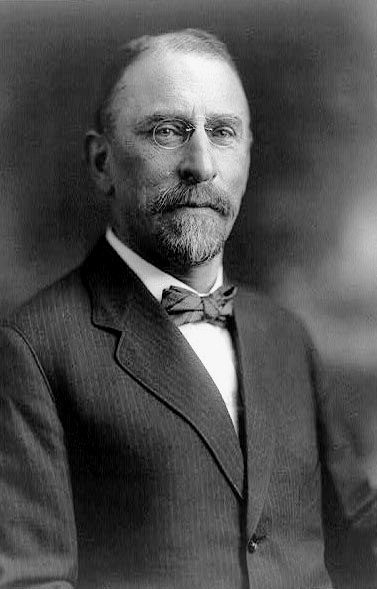

Henry Morenthau Admits The New Deal Failed

The tax and spend stimulus worked so well that U.S. unemployment was still at 19% in 1938, compared to 11% for the rest of the world. The Secretary of the Treasury, Henry Morgenthau, declared privately, "We have tried spending. We are spending more than we ever spent before and it does not work. We have never made good on our promises. I say that after eight years of this administration we have just as much unemployment as when we started and an enormous debt to boot."

The 1920s had two depressions. Harding and Coolidge fought one with low taxes and reduced spending to create an environment ripe for entrpreneurial stimulus. The result was a rapid end to the depression and one of the most prosperous decades in history. Harding and Coolidge were so successful that we don't even remember the depression they confronted.

The second depression was addressed by higher taxes across the board, massive government stimulus, tremendous government debt, and increased regulation that created an environment of uncertainty and froze entrepreneurial activity. Hoover and Roosevelt deepened and expanded the 1929 depression, turning it into the Great Depression.

Listen to the following address to a group of college students by Burt Folsom, where he compares and contrasts the economic policies and outcomes of Harding/Coolidge with Hoover/Roosevelt.


Why We Won't Repeat the Hoover/Roosevelt Experience

The comparisons between today and the Great Depression are eerie. The increased taxes, increased regulations, and protectionist trade measures are especially concerning. The business climate is clouded with uncertainty about government policies. However, it is unlikely that we will repeat the dismal performance of the 1930s for the following reasons...

1. Experience
In the 1930s, we had not experienced full blown Keynesian economics. Today, we have. Moreover, we've had the counter experience of the Kennedy Tax Cuts and Reagan Tax Cuts (not to mention, Harding's). We've felt the impact of Keynesian policies during the Nixon and Carter administrations. We've seen the impact on Japan with their "Lost Decade." While there are still committed Keynesians, they can no longer tout theory without opposition and without ignoring facts and history (though most will try).

2. Entrepreneurial Velocity
The world moves faster today than the 1930s. Businesses and entrepeneurs are simply faster than the slow, heavy hand of government. Think of a river, flowing in its channel. While it's possible to stop the flow by erecting a dam, the river will eventually overflow the dam unless released through a spillway.

The economic dams of government are eventually breached as the Soviet and Chinese experiences revealed. And in the U.S., the government isn't damming up the entrepreneurial river. It's merely tossing large boulders in the path of the river, which flows around or over the obstructions.

3. Information
During the Great Depression, information flow was centralized and limited to newspaper and radio. Roosevelt had an easy time using the bully pulpit of the presidency to dominate the information flow of the airwaves and used the power of the IRS to intimidate the press. Today, traditional media has become curiously incurious and monolithic. It's also rapidly becoming irrelevant as information is decentralized.

4. Taxes
It's simply impossible to imagine any politician advocating and the public accepting the confiscatory tax policies of the Roosevelt era. People forget that the top marginal rate was 90% in 1963! Kennedy brought it down to 70%, where it largely remained until Reagan. While Congress and the administration will foolishly allow the Bush tax cuts to expire next year, there's no returning to the high taxes of the past.


Top Marginal Rates

One area of concern is corporate taxes. Only stagnant Japan has higher corporate tax rates. Add state taxes and the U.S. has the world's least competitive corporate tax rates. High rates drive business and investment to countries offering higher after tax returns. As a nation, we need to get corporate taxes in line with the rest of the world.

Another concern is the recent discussion about a Value-Added Tax (VAT), unless it replaces the income tax. VATs are consumption taxes like the sales tax, only built into pricing and hidden from view. Based on the European experience, VATs tend to ratchet up whenever politicians are forced to prioritize. Carbon taxes, by the way, are also consumption taxes that are hidden from view.

5. The American Public
The populace is better educated and informed today. It is unlikely the public would allow government officials to tinker with their lives over a protracted period like the 1930s. Patience is thin and the voters are likely to return the country to divided government if the economy stagnates.

6. American Entrepeneurs
Personally, I have too much faith in American entrepreneurial ability and all levels. Despite attacks on business and the denigration of profitability by the media, government, and academia, the U.S. remains an entrepreneurial bastion. People are too creative, too resiliant, and too self-reliant to be suppressed. We will succeed in spite of government interference.

Still, imagine what would have happened if the TARP and stimulus funds had been passed along to the public in the form of reduced income, capital gains, and corporate taxes. I have to believe the recession would have ended in a heartbeat and we would be approaching full employment instead of cresting double digit unemployment.

As individuals, we can't control the government and should not let it control us. While it's up to each of us to be vigilant and to influence the governing class the best we can, we cannot forget that we control our own destinies. It is up to each of us to take all necessary steps to chart our own courses. History proves that we can succeed.

During the Great Depression, many companies prospered. They were the companies who acted as though there was no contraction. They aggressively sought new business and took it from their more timid competitors. Advertising executive, Dave Chase, describes what happened:

Generally speaking, those companies that not only survived but also thrived during the Great Depression were those that continued to act as though there were nothing wrong and that the public had money to spend. In other words, they advertised. These are industries that didn't wait for public demand for their products to rise. They created that demand even during the most difficult of times.

Because so many companies cut spending during the Great Depression era, advertising budgets were largely eliminated in many industries. Not only did spending decline, but some companies actually dropped out of public sight because of short-sighted decisions made about spending money to keep a high profile. Advertising cutbacks caused many customers to feel abandoned. They associated the brands that cut back on advertising with a lack of staying power. This not only drove customers to more aggressive competitors, but it also caused financial mistrust when it came to making additional investments in the no-longer-visible companies.

Both anecdotal and empirical evidence support the case that advertising was the main factor in the growth or downfall of companies during the Great Depression. To put it bluntly, the companies that demonstrated the most growth and that rang up the most sales were those that advertised heavily.

During every recessions many prosperous new businesses are created as well. Hyatt, Burger King, IHOP, the Jim Henson Company, LexisNexis, FedEx, Microsoft, CNN, MTV, Trader Joe's, Wikipedia, Sports Illustrated, and GE were all started during recessions (source). These companies started with no revenue during bad times and still prospered.

History has much to teach us if we'll study it. It shows that the American entreprenurial spirit is overwhelmingly powerful when supported and remains impossible to suppress when not supported. Don't let anyone suppress your spirit. Get out there and make something happen!

Monday, November 2, 2009

Some year-end tax planning information for businesses

As the year end approaches, now is a great time to review the tax situation for 2009 for both your company and your personal tax returns. There are some opportunities out there that may help you save money on your taxes but some of them expire on December 31, 2009. Today’s post will discuss some of the business tax provisions.

Businesses

Section 179 Deduction – Typically, an asset purchased must be depreciated (written off) over a number of years. This deduction allows a business to immediately expense qualified property in the year it is bought. The limits for 2008 were extended through 2009. The maximum Section 179 deduction is $250,000 and the maximum investment limit is $800,000. Amounts invested in excess of $800,000 will reduce the allowable deduction dollar for dollar from the $250,000 limit. Qualifying property includes items used in a trade or business. Some examples include machinery, equipment, vehicles (see note below), furniture and off-the-shelf computer software. The Section 179 deduction is limited to the taxable income of the trade or business. Amounts not deductible in the current year because of the business income limitation are eligible to be carried forward to the next year. The $250,000 and $800,000 limits expire on December 31, 2009. The limits for 2010 are currently scheduled to drop to $133,000 and $530,000 respectively. NOTE: Luxury Auto Limits – The Section 179 deduction is limited to $25,000 for SUVs. The remaining purchase price is depreciated over 5 years.

“Bonus” Depreciation – The 50% bonus depreciation provision was also extended by the Stimulus Bill. This provision allows a taxpayer to write off an additional 50% of the adjusted basis of property placed in service in 2009. The property purchased cannot be used. It must be new.

Sample 2009 Depreciation calculation: Contractor purchases $325,000 worth of equipment during 2009.

Purchase Price $325,000

Less:

Section 179 Deduction $250,000


Remaining Basis $ 75,000

Less:

50% Bonus Depreciation $ 37,500


Remaining Basis $ 37,500

Less:

Regular Depreciation

(5-yr. MACRS - 20%) $ 7,500


Net Remaining Basis after all

1st yr. depreciation taken $30,000


The sample calculation shows that the contractor was able to immediately expense $295,000 of the $325,000 purchased during the year on the tax return.

Section 199 Domestic Production Activities Deduction – This is a manufacturer’s deduction that was created to encourage companies to keep production of their products in the United States. The definition of “domestic production” under this section is so broad that it includes “construction of real property performed in the U.S.” Contractors installing comfort systems or plumbing systems in a home may be eligible for a deduction under this section. There is one change to this deduction. The deduction was to increase to 9% for 2010. However, that increase has been revoked so the deduction will stay at 6%. This is a very complex section of the tax code so I encourage you to talk to your CPA about its’ applicability to your situation.

Work Opportunity Tax Credit – This credit allows a business to claim a credit equal to 40% of the first $6,000 of wages paid to employees in a targeted group. The employee must work over 400 hours during the year. Otherwise, the credit is reduced to 25% for those who work at least 120 hours during the year. The 9 targeted groups include qualified veterans of service in the U.S. Armed Forces and disconnected youth. A disconnected youth is someone who is between 16 and 25 years old and hasn’t been regularly employed or attended school in the past 6 months. For the complete list of targeted groups, go to the U.S. Department of Labor website. This program is administered at the state level.

“S” Corporation Built-In Gains (BIG) Tax – The BIG tax was enacted to keep “C” corporations from converting to “S” corporations solely to avoid taxes on appreciated property that would result in taxable gains if sold. It closed a “loophole” in the tax code. The BIG tax rate is the maximum corporate tax rate (currently 35%) at the time of the transaction (sale of property.) For 2009 and 2010, an “S” corporation is not subject to the BIG tax if the “C” corporation elected “S” status prior to 2002 for 2009 (prior to 2003 for 2010). The Stimulus Bill reduced the holding period from 10 to 7 years. So, if your company is an “S” corporation who converted from a “C” corporation prior to 2002, you can sell appreciated property without the fear of having to pay the BIG tax.

U.S. Treasury Department Circular 230 Disclosure: To ensure compliance with requirements imposed by the IRS, we inform you that, unless expressly stated otherwise, any U.S. federal tax advice contained in this communication (including any attachments) is not intended or written to be used, and cannot be used, for the purpose of (i) avoiding penalties under the Internal Revenue Code or (ii) promoting, marketing or recommending to another party any transaction or matter addressed herein. This article is not intended to be comprehensive in nature and competent professional tax advice should be sought in determining the issues that impact your specific situation.


Saturday, October 17, 2009

Green Plumbers USA

When recently attending the Green Plumbers Conference in Las Vegas, I was struck with how far the Green Plumbers have come in the US since being brought over from Australia in 2006. I was one of 110 attendees from all over the country who participated in a very educational five days of intense training classes, and came away with a much better understanding of how to cope with water shortages that are now starting to show up in many parts of the country. During the course of the conference you begin to see how limited the Earth’s fresh water supply really is, and you also realize how large a part the Plumbing Industry will play in making sure everyone will have fresh water in the future. While at the conferance, I also received my certification to teach the Green Plumbers program, which I have been wanting to do for some time now.

The Green Plumbers started in Australia with the advent of a very long and serious drought that still going on some 14 years later, and had the support of local governments, various industry members including manufacturers, as well as the Australian Greenhouse Office (AGO). The goal was to have the Green Plumbers advise and educate the public on how to conserve both water and energy, since the two go together.

The Green Plumbers USA are now doing the same thing in our country, and I can only see them growing in leaps and bounds. Like their Australian counterparts, Green Plumbers USA is also collaborating with many different Agencies and Associations, City and County Governments, Manufacturers, and Water and Energy Utility Companies from all over the country. These include the PHCC, International Plumbers Union, P.I.P.E., Nexstar, and IAPMO (UPC) to name a few, and the list is growing. I do not believe the cooperation between all of these groups would have happened just a few years ago, but it shows just how serious this water and energy problem is becoming in our country.

One thing I noticed was that when the subject of Climate Change was brought up, the room got very tense. People’s feelings run very deep on this subject both pro and con, and there was some heated discussion on the subject. When this was occurring, I determined that it really does not matter how you feel about Climate Change, the “Green” movement is firmly entrenched and moving forward at a rapid pace.

Our industry is at the forefront of making a positive difference in people’s lives, all we have to do is step up and do it. This was confirmed to me, when we attended the Water Sense Show that was being put on in conjunction with the conference, and I saw row after row of new water and energy saving products on display. The show proved how many of the name brand manufacturers have really gotten on board with going Green, and have spent millions of dollars either retooling existing products, or developing new ones. There is no turning back now, as the die is cast.

From a business standpoint, what I like about the Green Plumbers is that they train you to become advisers for your customers on how to conserve water, energy, and therefore money. This allows us to send our Techs into customer’s houses loaded with honest and valuable information, which will in turn help them while making our planet a cleaner and safer place to live in. This program is a perfect fit for Plumbers, and I feel we really need to take advantage of it. After all, we know about water and sewer systems, and we know how to install High Efficiency Plumbing Fixtures. We are invited into people’s homes, and therefore have access to their Plumbing & Heating Systems; all of which makes it a perfect storm for plumbing companies to provide a valuable service for their customers, while growing their companies.

Becoming certified as a Green Plumber requires some money, time, and effort, and involves taking a third party exam. The course itself consists of a 32 hour five part series, which covers all aspects of conserving water and energy. The testing will then be given at the completion of the entire course, so it will behoove everyone to take it in a timely manner. In addition, there is a recertification every three years in order to keep current with all of the changes in the program that are sure to come. I suspect that only the better companies will pursue this effort, and only they for the most part will reap the benefits. I feel very good about all of this, as well as the future of our industry in general.

Just my thoughts,

Gene B

Monday, October 12, 2009

News That Doesn't Depress You: Recovery May Be Stronger Than Forecast Says FedEx Economist


The Journal of Commerce Online reports that Gene Huang, the chief economist with FedEx, thinks the economy is in recovery and could easily hit 3% GDP growth next year. This exceeds the 2.4% consensus forecast. Based on Huang, Morgan Stanley analyst, William Greene advised investors that the concensus was "far too conservative."

While he believes the economy will exceed current expectations, Huang does worry that consumer angst may slow growth below the average recession recovery rate of 5.4%. Consumer recalcitrance may even lead to a "W" shaped recession. Counterbalancing that potential is the stock market's recovery, which to date has restored $4 trillion of household wealth.

Worried about the economy, consumers have increased the savings rate to 4%. This is resulting in $400 billion of increased household wealth each year. Thus, consumers have the wealth to spend. If they regain the confidence to spend, growth would be robust.

Whatever the initial cause(s), it appears that any continuation of the recession or economic anemia moving forward is a crisis of confidence more than cause.

Is HVAC the Best Sales Job in the Country?


Auto industry analyst Ed Wallace doesn't come out and say it, but when he notes that financial sales incentives for new car salespeople are about half of what they were in 1975, he implies that reduced compensation has had an adverse impact on industry sales professionalism. Read Ed's column here.

Selling cars is a challenging job, but not more challenging than, say... selling air conditioners. Car salespeople deal with buyers who walk onto the car lot with a mix of apprehension and antagonism, but also with desire.

With HVAC, the buyer's desire is certainly less and maybe missing altogether. Plus, the location of the HVAC sale is the buyer's home turf. And, HVAC financing programs aren't as good. In contrast to the auto industry, the typical HVAC company doesn't have a financing manager who works with 20 different lenders to get C-credit prospects financed.

Yet, in contrast to the car industry, HVAC sales income has increased over the last 20 years. With industry standard commissions of 8% to 10%, company advertising, company generated leads, and escalating prices (thank you government) leading to fatter commissions, selling HVAC may be one of the more lucrative sales jobs around.

Thinking Beyond Stage One


Thomas Sowell has been called "America's leading intellectual" and with the passing of Milton Friedman, is considered by many to be the nation's top economist. To those of us who view both intellectuals and economists with a skeptical eye, Dr. Sowell is a reminder that worthy individuals remain in each group.

In the preface of his revised edition of Applied Economics, Dr. Sowell offers advice on thinking through public policy decisions that can equally apply to management, marketing, compensation systems, and more. Dr. Sowell writes...

One Stage Thinking

When I was an undergraduate studying economics under Professor Arthur Smithies of Harvard, he asked me in class one day what policy I favored on a particular issue of the times. Since I had strong feelings on that issue, I proceeded to answer him with enthusiasm, explaining what beneficial consequences I expected from the policy I advocated.

"And then what will happen?" he asked.

The question caught me off guard. However, as I thought about it, it became clear that the situation I described would lead to other economic consequences, which I then began to consider and to spell out.

"And then what will happen after that?" Professor Smithies asked.

As I analyzed how the further economic reactions to the policy would unfold, I began to realize that these reactions would lead to consequences much less desireable than those at the first stage, and I began to waiver somewhat.

And
then what will happen?" Smithies persisted.

By now I was beginning to see that the economic reverberations of the policy I advocated were likely to be pretty disasterous-- and, in fact, much worse than the initial situation that it was designed to improve.

Simple as this little exercise might seem, it went further than most economic discussions about policies on a wide range of issues. Most thinking stops at stage one.

While Dr. Sowell is speaking to public policy, his advice applies to most management decisions. In fact, it applies to most life decisions. Much decision making is reactive. We're presented with a problem and formulate an action in response. However, the response results in other consequences, some of which may be undesireable.

Dr. Sowell advocates thinking through the immediate consequences (stage one), and then thinking through the consequences to the consequences (stage two) and their consequences (stage three). As you face a management decision, keep asking yourself, "And then what happens?"

Most service company owners came up through the field. Earlier in their careers they worked with their hands, solving technical problems. In field service, one learns the pitfalls of stage one thinking the first time a symptom is corrected while the underlying problems remains unaddressed. The result of this type of stage one thinking is a callback, with all of the stress, irritation, expense, and embarrassment that accompany it. It doesn't take many callbacks before one slows down and starts thinking problems through.

Management and marketing problems are no different than technical problems with regard to the need to think beyond stage one. The consequences, of course, may be far greater.

When you're faced with a decision, stop and ask yourself, "And then what will happen?"

Sunday, October 11, 2009

It is time to "Just Do It"


Just Do It

I was sitting in a hotel restaurant in Nashville, at breakfast the Saturday of Comfortech. There were a few contractors who were eating but many had left and were on their way home while there were still two “learning” sessions that day (missed opportunities for them). I was by myself and had finished reading the newspaper; my ears were perked to several of the conversations that the contractors were having with associates at adjoining tables. It was no surprised that everyone that was just overwhelmed by the new ideas that they had received. They were fascinated by the success and growth of Morris-Jenkins Contractor of the year. They focused on the key points from earlier classes and they talked about the different things they learned at the social events from other peers and felt that it provided them with a wealth of insights.

Then it came, after all of the positive they had heard and learned the “Buts” and excuses started. For every good thing they talked about, they came up with a reason why these ideas would not work.

· We are too Small,

· We are too large,

· Our employees won’t change,

· The economy is bad, money is tight,

· We do not have or can not hire a person to do that.

· My customer will not accept those changes.

· Look at their results they are unbelievable, we could never implement that

Time after time I heard a great idea extinguished with a belief of an untruth. People who had spent thousands of dollars to attend this meeting of some the best contractors in country walking away thinking they could not achieve greater success. Have we been listen to the news too long where the negative message is the rule and the positive one is passed off as an aberration?

My favorite was “I am just not ready”. Do you think that the auto dealerships that were closed by GM and Chrysler were ready? My point is change is better when we decide to do rather than when forced upon us.

It’s time to take and Embrace the Nike mantra and “JUST DO IT”.

· You only need one reason to succeed and overcome obstacles and barriers “JUST DO IT”.

· It’s waking up with a focus that anything you believe in or conceive can be achieved “JUST DO IT”.

· Every journey starts with a single step and they do not require large strides “JUST DO IT”.

· Start with small ongoing step or increments to achieve the goal you are looking for “JUST DO IT”.

· It requires endurance and persistence, as life and running a business is a marathon not a sprint “JUST DO IT”.

· Once you start it, you finished it, you set milestones for way points and you hold to own deadlines. If you fail to meet your deadlines you impose on your self, then those you impose on others will be missed also “JUST DO IT”.

· Celebrate the wins no matter how small, no matter who it is “JUST DO IT”.

Change is always difficult, but is more frustrating when it pushed upon us. I had the opportunity to share with contractors last month the benefits of social networking and also some great offerings with based upon “cloud computing” better known as Software as a Service (SAAS). We showed people how to leave behind Microsoft and email servers and get access to products at a fraction of the cost. Professional tools that are now accessible to 3-10 man shop. We also shared how social networking cements a relationship with a client and keeps them loyal. All were pretty nifty things and to my surprise very much unknown to majority of attendees. There are many small steps that can be taken, most at low cost and little effort. Some actually will save you money on software.

This was one idea, but there were ideas on sale person recruiting, Marketing in conjunction with a social cause, Building and system performance, Private labeling just to name a few. You also will have ideas and opportunities pop up at dealer meeting, Local Trade association and even chamber meeting. Do not miss the chance to build your company up to be one step ahead of the competition. Just pick one thing and “JUST DO IT”. After you have that one going well time to “JUST DO IT” again with another idea. In many cases you have nothing to lose as the ideas already have a proven track record.

All this drove home and reinforced what I had seen and heard at lunch the day before. I had sat down with Mark Matteson (author and speaker http://bit.ly/BhgS3 ) and we had a contractor sit down next to us. We asked him, which was the best class he had attended. He said the one service agreement was great, but he could not implement any of the ideas for fear of losing customers. He stated that when he went to a prepaid service program he thought he had lost 200-300 clients, because he requested payment in advance to get the best price. We proposed that he considered a tiered service contract program, (good, better, best) and explained it to him. To which he said it would not work for him because he was not comfortable with it. Mark then ask him to fold his arms in front of him, ask him to note which arm was on top. Then Mark instructed him to fold his arms again but with the other arm on top. Mark asked him how that felt, the response was uncomfortable, ask him if there was anything that was really different between the two position other than comfort and the answer was no. The point is that you can change, it is not going to be comfortable, it will take effort, and you will make mistakes and sometimes lose a customer. In the long run you can become a better business person and more successful. You have to choose to do what others fail to do. Accept that you have to be uncomfortable from time to time to make the changes.

“JUST DO IT”.

Best Regards

Matthew R Prazenka


Abacus Business Leaders, LLC

Driving Shareholder Value through Hands-on Leadership

500 Lake Cook Rd. Suite 350. Deerfield, IL 60015

877.412.2228 x1030

mprazenka@abacusbl.com www.abacusbl.com

Friday, October 9, 2009

The Turkish Coffee Story


After learning that I would speak on branding at an international construction conference in Istanbul, I proudly informed my family about the honor. My 19-year old daughter was non-plussed, but immediately declared that I needed to try the coffee.

"Turkish coffee is the best in the world," she declared. "Everyone knows that."

Well, *I* didn't know that. So I filed this piece of useless information away and didn't think about it until months later when I arrived in Istanbul a couple of hours ahead of Mark Matteson.

Mark Matteson, author of Freedom From Fear, Freedom From Fear Forever, and the forthcoming book, A Simple Choice, was the conference keynote and responsible for my invitation to speak. The invitation was a surprise.

One day Mark called to ask if I would be interested in speaking on branding at a construction conference in Istanbul.

"Istanbul, Ohio? Sure," I said.

"No, Turkey," Mark answered.

Mark Matteson is one of the nicest people in the world. He always finds complementary things to say about people. I wondered what I did to cause Mark to call me a turkey.

After a moment of silence, he clarified, "You know, the country, Turkey?"

"Uh, yeah. Right. The place in Europe."

"And Asia. It's on both continents."

"Why me?"

Mark said, "The people running the conference need a speaker on branding, but don't know anyone who knows about both, branding and construction. They asked me if I knew anyone. I thought of you."

Wow, I thought.

"Branding in the construction arena isn't a big field," Mark added. "In fact, you're the only person I know who can cover both."

Whatever. I was still honored to speak at the conference, even if by default.

The day finally arrived when I would fly to Istanbul via London. It's a long haul. I boarded a plane in Dallas and arrived in London the next morning. I had a few hours to bum around Heathrow's massive Terminal 5 (the largest free standing building in the UK) before hopping on a jet for Istanbul, on the other side of Europe, 1500 miles away.

Heathrow's Terminal 5

When I fly to Europe I try to stay awake during the flight and first day. When I turn in the first night, I'll sleep soundly and will wake the next morning, largely without jet lag. By the time I got to Istanbul, got my luggage, and left security it was early evening. With the time zones, I had no idea how long it had been since I slept.

The conference host met me at the security gate. Mark was scheduled to arrive a couple of hours later. The host asked, "While we wait, would you like a coffee?"

I had just traveled 6300 miles, crossed eight time zones, over 20 hours, without sleep. Suddenly, I my daughter's voice came rushing back...

"Turkish coffee is the best in the world."

Like Pavlov's dog,I could feel saliva form in my mouth over visions of Turkish coffee. "Sure!"

And the host led me to...

...Starbucks.

Starbucks? Right in the middle of Istanbul's Ataturk Airport. And not only that, there are 73 Starbucks scattered across Istanbul.

Starbucks in Istanbul's Ataturk International Airport

To get to the Starbucks, we walked past a Gloria Jean's coffee house. There are 30 Gloria Jean's in Istanbul.

Coffee has been a part of Istanbul life since the 16th century. The Turks are quick to note that their's is a "coffee culture."

1878 Istanbul Coffee House


So what gives with Starbucks? Moreover, the Starbucks were serving Christmas blend in Starbucks' Christmas cups. Turkey is 95% Muslim (though Istanbul, at least, is very secular).

Wow, I thought. This is the power of branding.

Later, I did try authentic Turkish coffee. It was good, very good. It makes Expresso seem like decaf. What I especially liked was all of the ceremony and tradition surrounding it, such as the need to drink water to clean the palate before drinking the coffee, the need to slurp the first few sips, the lore about the way the coffee is presented (lots of hidden meanings), the fortune telling from the grounds, and so on.

The tradition and heritage surrounding Turkish coffee made the ubiquity of Starbucks curious. As a rule, local brands trump national brands in their markets. This is especially true for brands with a service component. After all, service is personal. It involves human interactions. It involves relationships. I was still trying to figure out how Starbucks managed to build its brand presence in Istanbul a few days later when it was time to deliver my speech.

Speaking in an international environment is a challenge. Most of the audience is wearing headsets, listening to translators. Speakers are urged to slow down for the translators. This is difficult for me. I tend to speak fast.

Humor doesn't always translate. Jokes guaranteed to bring applause in the States may bring crickets in a multinational venue. Stories, however, tend to work in any language. I opened with the coffee story.

"That," I said, "is the power of branding."

Given the cavernous size of the room, the blare of the studio lights, and the delay for translations, it was hard to tell if anyone was following the story. I paused for a second and added without thought, "But I like Turkish coffee better than Starbucks."

The room erupted. It was the most applause the staid, stuffy contractors, engineers, and architects gave anyone all day.

I realized that while Starbucks may have bought locations it hadn't trumped the local Ottoman coffee house brands after all.

An interview about me in a Turkish trade publication


An article about me in Turkey's primary business newspaper (I was told it was Turkey's equivalent of the Wall Street Journal)


Follow Up

After I returned home, I learned that every Starbucks in Istanbul offers Turkish coffee if asked. Also, Starbucks is operated by a local company in Turkey under license to the Seattle chain. Like the domestic Starbucks, the Turkish locations try to build local identities and relationships through the baristas who work in the cafes. So while Starbucks is international in scope, it tries to act local in practice, which is a good lesson for every company.

The company has done well in the Turkish market, but mostly among students, who consider it trendy. I think the chain also benefits from its American identity. The Turks seemed to regard America and Americans well (as long as no one brings up the century old Armenian issue).

I also think as a visitor I underestimated the strength of the local brands. It's hard to estimate the loyalty to the thousands of centuries old coffee houses tucked into out of the way streets and alleys carrying Turkish names. It's easy to see the green Starbucks signs.

Thursday, October 8, 2009

Surging Ahead In a Storm


One of Jeb Blount's recent Sales Gravy podcasts struck a nerve with me. It's the perfect description for using a weak economy to surge past your competition.

Blount described a pair of cars driving down a highway at a high rate of speed. One car is miles ahead of the other. The second car is driving a little faster and slowing closing the gap, but the distance is far enough and the first car is fast enough that it will take a long time to catch up and pass the leader.

Even so, it's uncertain the second car will pass the leader. The leader could accelerate. The second car's rate of speed could slow slightly. Thus the gap between the two may narrow, hold, or grow.

However, the tough economy, like a heavy storm, slows all cars. The leader, fearful of driving in these conditions, slows, and may even pull over and stop. This opens the possibility for the follower to surge ahead and pass the listless leader. When the storm passes, the former leader will have to regain momentum and play catch up. He may never catch up.

Today's economy is like driving in the storm. Many of your competitors are so afraid of hydroplaning and spinning out of control that they pull over and try to ride out the storm. This creates an opportunity for you. Take advantage of it!

Do not take your foot off the gas. Don't drive your company wildly, but don't slow down out of fear of what might happen. The economy is too resilient to stay down for long. Despite state and federal policy blunders (e.g., spending wildly on transfer payments rather than infrastructure investments, raising the minimum wage, increased trade restrictions, increased regulation, tax increases, flat out stupid energy policy, a climate of uncertainty, etc.), the economy is still growing.

No downturn is permanent. This one will not be an exception. While it may not feel like it, all economic signs point to a slow, gradual recovery. Remember, unemployment is a lagging indicator and will not start to fall until the recovery is well underway.

Now... right now... today is an opportunity to surge past your more fearful, conservative competitors. You may not encounter another economic climate as favorable as this one for aggressive individual company action for decades. Take advantage of it. Surge ahead!

Tuesday, October 6, 2009

I Wanna Market Me (The Contractor's Song)

This is for HVAC contractors. You just gotta watch it...

Monday, October 5, 2009

Failed (or not)...

I didn't know about a couple of these...

Saturday, October 3, 2009

Economic Fundamentals: Revisiting The New Deal


Franklin Roosevelt has been lionized by historians who lived through the New Deal, notably Arthur Schlesinger, Jr. Many of the historians with memories of the New Deal have passed from the scene. Now, a new generation of historians and economists are taking a dispassionate look at Roosevelt's policies.

In terms of pure economics, many of today's historians and economists are coming to different conclusions about Roosevelt. While he was preceded by the disasterous policies of Hoover (a true incompetent), his own policies not only failed to end the Great Depression, but extended and deepened it.

Burt Folsom is one of the historians who is reassessing Roosevelt's policies. Recently, he wrote a book about Roosevelt's economic policies called, "New Deal or Raw Deal?" For an academic, Folsom is highly entertaining. The following videos about his book are from a lecture that appeared on C-SPAN."


In time, I believe Roosevelt will be reassessed as one of the worst presidents in history based on his economic policies.

Friday, October 2, 2009

Goin Green

Yesterday, I attended the West Coast Green Tradeshow in San Francisco, and it was fantastic. The show was held in two huge buildings, and featured hundreds of booths and displays. These included many different kinds of Green Building Materials, Furniture, Photovoltaic and Hot Water Solar Systems, as well as Electric Vehicles, and Heating and Cooling Systems. In addition, there were many different types of Plumbing Fixtures; including a very clever little add-on dual flush water system that sits on top of a standard flush Water Closet lid.

In another building, there were on-going “Green” workshops and seminars all day long. This was the first day of a three-day show, and it was absolutely packed with people on a Thursday. In fact, we had to drive around for 30 minutes or so too find a parking place. I know the event will have many thousands of visitors by the end of the three day show, and I would assume most of whom are either already “Green”, or will be going Green in the future.

This was not a free event, as it cost $20.00 to attend for one day. These people are serious about the Green lifestyle, and are willing to pony up their money to prove it, as well as the inconvenience of very limited parking which required sometimes walking several city blocks to reach the show. As I walked around checking out how many new and innovative products were on display, I thought how about how great this country really is. I am so tired of hearing about how we are behind everyone else in the world when it comes to having new ideas and creating new products. Granted there were many foreign products displayed, but there were many new and innovative American products presented as well.


I really feel the Plumbing, Heating, and Cooling industry, which has been on the cutting edge of Green Technology for years, is in a great position to become one of the real leaders in this huge new “Green” industry. Any business that does not get on board and start participating in this new way of life, is going to be left behind very quickly.

I am also going to be attending the Green Plumber series of five classes next week in Vegas. There are 120 people signed up too attend the weeklong event, and they will be getting all five of their Green Plumbers certifications by Friday. Having 120 people show up in a recession, should prove how valuable being certified as a Green Plumber really is too these people.


While I am there, I am also going too receive my certification as an instructor for Green Plumbers, which I am very excited about. Our local PHCC Chapter is sponsoring my opportunity to become certified, which will provide another benefit to its members, as well as other plumbing companies in our area. I want to start teaching classes at night or on weekends, which will allow employees to become “Green Plumber” certified and not miss work during the day, which is a real issue for many people.

Just my happy Green thoughts,

Gene B

You Can't Send a Duck To Eagle School


The world's greatest mechanic, if he's gruff, rough, and rude, is unfit to work in residential service.

How An HVAC Contractor Rebranded As Aloha Aire


In 2002, Texarkana contractor, John Price rebranded his company. After a trip to Maui, he changed his company name from "Price Service Company" to "Aloha Aire."

The new name spoke to the market about island breezes, comfort, and paradise. It promised benefits.

Changing a company name is not a casual move. If the existing name has equity in the market, the move should be made slowly.

John's decision was easier because his company was relatively new. He established it just seven years earlier. Plus, he put more effort into building equipment manufacturer brand equity over those seven years than in building equity for his own company's brand.

If John had 70 years of local presence rather than seven, he probably would have hesitated more. As it was, he didn't have much to lose.

Still, John proceeded methodically. He sought the council of friends who owned businesses. For months, he and his wife Marilyn considered the change. Then, he acted.

John launched Aloha. At first, he tried to operate both old and new brands, but quickly dropped that idea. Marilyn drafted a letter to existing customers explaining why the company was making the move.

If nothing else, employee and owner enthusiasm for the new brand won the day. They were excited and got the customers excited. Over time, the Aloha brand has grown and established a position.

Aloha Aire is a fun brand. Technicians wear Hawaiian shirts with embroidered company logos. Reach John's voice mail and he answers, "Aloha."

In time, John dropped the manufacturer identity entirely and focused exclusively on the Aloha brand. Today, he's even branded his own line of heating and air conditioning equipment through the Retail Contractor Coalition.

Shortly after rebranding, Aloha Aire's local brand awareness began to exceed Price Service Company's brand awareness. It's continued to grow by leaps and bounds. This shouldn't be a surprise. Look at the trucks.

If the shipping company DHL could build a national brand awareness of 60% by 2007, largely on the basis their fleet of delivery vehicles, how much brand awareness can John build for Aloha? Certainly it's more than he built when the Price Service Company brand was subordinated to an equipment manufacturer's brand.

Aloha's brand promise is "Come home to paradise." And the company delivers.

Thursday, October 1, 2009

Another Plagiarist Exposed


Angel Zapata exposed a plagiarist at his A Rage of Angel blog. Having experienced the same, I understand his feeling. I can even empathize with the fact that Zapata admired the guy's work before he discovered it wasn't really his.

Been there. Done that too.

Like most plagiarists, the guy Zapata uncovered is a repeat offender, a serial plagiarist. People who do this are fundamentally lazy, dishonest, and unimaginative. They don't suddenly become industrious, ethical, and creative. Thus, they steal again and again.

I've got to believe that intellectual property thieves eventually get found out and, at the very least, their reputations are tarnished. If they write fiction, they only hurt themselves and their publishers.

Zapata contacted the publisher, who initially defended the plagiarist. "I have known Richard for over a decade and do not believe it possible for Richard to be morally capable of such an act," wrote the publisher to Zapata. "As a person with a great respect for the law and with such a love of literacy, I do not believe this is something he could commit knowingly, if at all."

Regardless, the publisher took down the site.

A few years ago we caught someone sending plagiarized material to the Service Roundtable for us to publish. Once alerted, we took it down, noted the copyright violation, and linked to the original author's work. Anything we were in doubt about simply disappeared. Only work we were convinced was original remained. We acted fast, proactively, and notified the original writers what happened, what we did, and whether there was anything else necessary. We made sure we were covered.

I worry, however, about business owners who rely on plagiarists' work. If caught, the copyright holder will go after the business first. Remember, the business has the deeper pockets.

The business owner may try to defer to the plagiarist, but since plagiarists are dishonest by nature, don't expect them to take one for the client. Expect the plagiarst to disavow all knowledge, leaving the business owner high, dry, and under siege.

Lynn Frazier at the Writtenwyrdd blog, pondered about Zapata's discovery. Frazier asked, "Does the internet make plagiarism more common, or simply make it easier to find?"

Personally, I think it makes it both more common and easier to find. In the last year, a contractor showed me material a well-known consultant wrote. I could swear I was looking at my words. As it turned out, I was.

The consultant was quoting a marketing manual I wrote in 1995 under copyright to my employer at the time. Because it was hardcopy and not electronic, the text wasn't verbatim. The consultant couldn't cut and paste, so the work was summarized. Summarizing took less effort than retyping word-for-word.

Point after point after point was copied. Dollar amounts, when present, weren't changed. The manual included some off-the-wall ideas and honestly, some of them were pretty bad. The plagiarist copied good and bad ideas with equal vigor. If anyone looked at a comparison, there would be little doubt the original work was plagiarized.

If you used an Internet search engine and searched phrases from the plagiarist's document, you would never find the comparison. For one, the manual isn't available on the Internet in electronic form. For another, the phrasing differs slightly.

I only noticed the plagiarism because I was the original author. A select group of contractors who read the manual and saw the consultant's work might pick up on the similarities, but might not. It's been a long time since I wrote the original manual. My old employer doesn't even use the manual today (though the plagiarist apparently does).

I believe the Internet makes plagiarism easier due to the cut and paste opportunities. I think it also makes plagiarism easier to detect since exact phrases can be searched.

As a business owner, it's incumbent upon you to check the work of your employees, contract writers, and consultants from time to time. Pick unique phrases. Load them into a search engine and see what pops up. You might need to search through a number of pages and even then, you might not catch everything, but you'll stop enough to give you peace of mind.

I know. I do it regularly. I also catch enough intellectual property theft among contract writers to keep checking.

Twelve Dozen Small Service Business Blog Ideas


I was encouraging a contractor to start a blog for her business yesterday. She was stumped by the subject matter. She knew that geekspeak about her products and services would bore customers.

I told her the purpose of a blog isn't to shout product information at customers. It's to build relationships. And then, every so often (but not too often), make a special offer or directly promote the company.

How do you build relationships? Talk about things that interest your customers. Here's a checklist of blogging topics for a small business focused on a geographic market...

Garden Related

  • Growing a herb garden
  • Organic gardening tips
  • Beneficial insects
  • What to plant this month
  • When to fertilize
  • Vegitable gardening
  • Roses and other flowers
  • Planting bulbs
  • Garden design
  • Interesting garden pictures
  • Local botanical gardens
  • Composting
  • Community gardens
  • Butterfly gardens
  • Attracting birds
  • Repelling pests
  • Color in gardens
  • Xeriscaping
  • Bonsai plants
  • Lawns
  • Watering tips

Household Tips
  • Closet organizing
  • Cleaning
  • Simple repairs
  • Decorating
  • Crafts
  • Recipes
  • Grilling
  • Cooking tips
  • Car care
  • Conservation
  • Safety
  • Pets
  • Elderly
  • Health
  • Fitness
  • Coupons

Kids/Family
  • Rainy day activities
  • Healthy kid friendly meals
  • Places to take kids in your community
  • Day trips
  • Parks
  • Hiking trails
  • Fishing
  • Horseback riding
  • Canoe/kayak
  • Birthday party ideas
  • Kid crafts
  • Scrapbooking
  • Dealing with bullies
  • Games
  • Local events for kids
  • Kid safe websites
  • Puzzles
  • Contests

Seasonal
Write about the history underlying holidays, holiday parties, profiles of people, holiday jokes, etc.
  • New Year's Day
  • Martin Luther King Day
  • Superbowl
  • Amelia Earhart Day
  • Ben Franklin Day
  • Chinese New Year
  • Valentine's Day
  • President's Day
  • Fat Tuesday
  • Mardi Gras
  • Ash Wednesday
  • St Patrick's Day
  • First Day of Spring
  • April Fools Day
  • Daylight Savings
  • Palm Sunday
  • Passover
  • Good Friday
  • Easter
  • Earth Day
  • Arbor Day
  • May Day
  • National Day of Prayer
  • Cinco de Mayo
  • Mother's Day
  • Armed Forces Day
  • Victoria Day
  • Memorial Day
  • Flag Day
  • Father's Day
  • Juneteenth
  • Canada Day
  • Independence Day
  • Bastille Day
  • Parent's Day
  • Labor Day
  • Grandparents Day
  • Patriot Day
  • Rosh Hashanah
  • Yom Kippur
  • Leif Erikson Day
  • Columbus Day
  • Halloween
  • All Saints' Day
  • Guy Fawkes Day
  • Veterans Day
  • Remembrance Day
  • Armistice Day
  • Thanksgiving Day
  • Hanukkah/Chanukkah
  • Christmas Day
  • Boxing Day
  • New Year's Eve

School
  • School lunch menus
  • School calendars
  • Performances
  • Superlatives and acheivements (e.g., "Choir wins state competition")
  • Sports results
  • PTA
  • Test results

Community News
  • Police reports/crime reports
  • Local news
  • Business openings
  • Local events (e.g., parades, Founder's Day, etc.)
  • Local business profiles/reviews

Community Organization Profiles
  • Rotary
  • Lion's
  • Optimist
  • Kiwanis
  • Chamber of Commerce
  • Garden Club
  • Local missions
  • Salvation Army
  • Red Cross
  • Goodwill
  • Junior League
  • League of Women Voters
  • Political Clubs
  • Historical societies
  • Humane Society
  • Museums
  • Zoo

Performances
  • Community theater
  • Symphony
  • Ballet
  • Opera
  • Local bands/touring groups
  • Sports/tournaments
  • Lectures

Any item listed can be the source of one or more blog posts. And don't forget pictures from the community, inspirational videos from YouTube, heartwarming stories you receive by email (source or rewrite them), and so on. And then there are all of the blog posts you can make related to your industry, the products you sell, and the services you offer.

© 2009 Matt Michel